Describe the shape you are borrowing
Vintage-inspired styling is more useful when you can name the reference: a broad collar, gentle flare, fuller blouson or relaxed cardigan beside washed denim. Begin there rather than treating a faded-looking color filter as the whole aesthetic. These newly illustrated concepts are not authenticated garments from a historic collection or verified examples of period construction.
A single older-looking proportion can work with ordinary supporting clothes instead of recreating an era from head to foot. Keep a familiar tee, trouser or shoe so you can identify whether collar, jacket ending or lower shape is the part you actually enjoy. Mixing deliberately can make the reference useful for the present day.
Separate reference from the age of a product
A faded jacket in a concept does not prove age; a new garment may use an older-looking cut. If choosing actual vintage clothing later, inspect measurements, condition, construction and care information. A category cannot guarantee quality or make a past size label correspond reliably to a contemporary one without checking the real dimensions.
For styling, inspect shape and color placement first. A lightly flared trouser, generous pleated leg and straight washed jean meet footwear differently. Try actual garments and inspect the rear hem rather than assuming an older reference requires unusually long cloth. The difference that makes a silhouette recognizable need not be an inconvenience during ordinary movement.
| Concept reference | Selected shape | Useful adaptation |
|---|---|---|
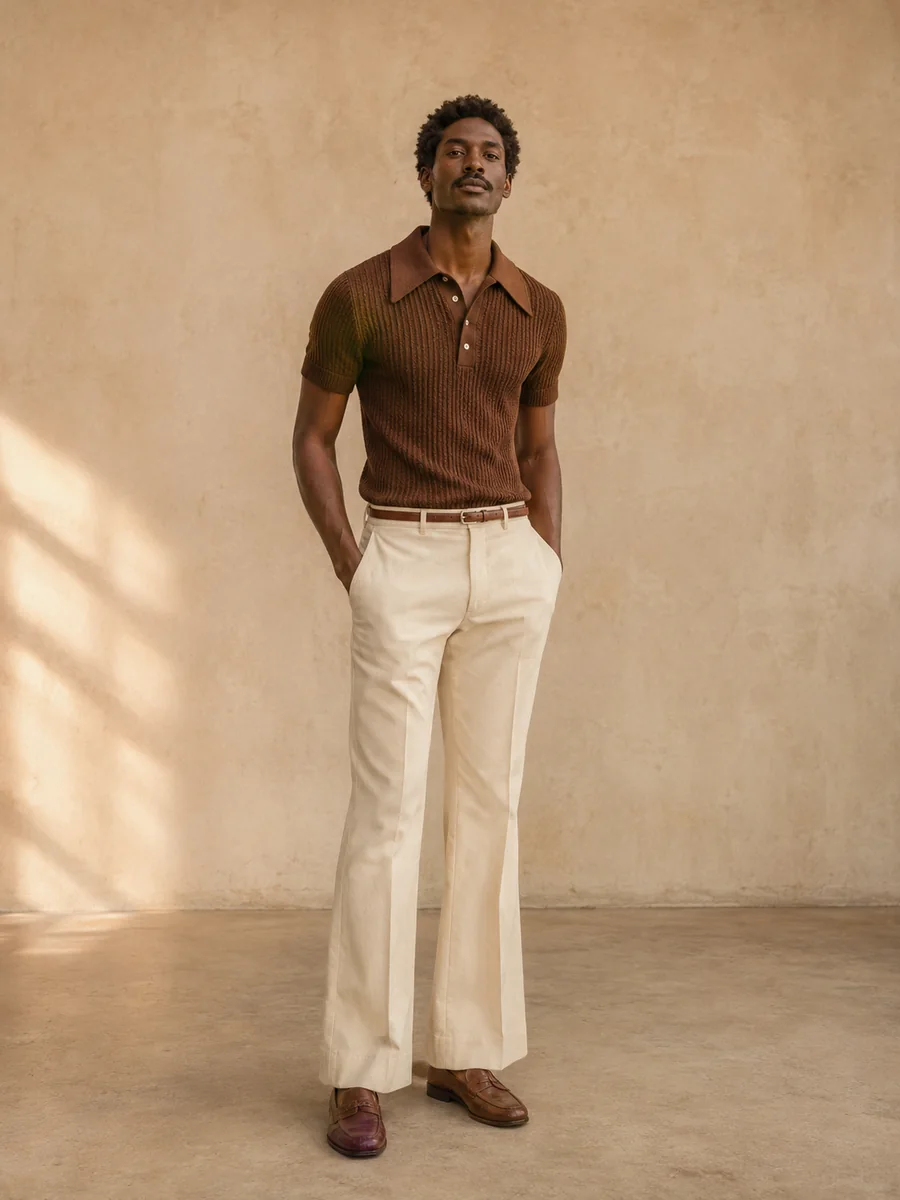
| 1970s-inspired | Broad collar and gentle flare | Keep supporting details quiet |
| 1980s-inspired | Ample short blouson and pleats | Check upper ending against trouser rise |
| 1990s-inspired | Cardigan and straight washed denim | Retain a familiar plain base |
| Mixed retro reference | Faded short jacket with stripes | Describe the pieces instead of forcing an era |
Put a broad collar above a gentle flare
The 1970s-inspired concept uses a brown knit polo with a broad collar over slightly flared ecru trousers. Brown loafers and a fine belt repeat a warm shade without becoming separate focal objects. Collar and lower opening carry most of the reference, leaving the remaining arrangement quiet enough to see those proportions.
Check real neckline and hem above the waistband. A gentle flare can change the lower shape without extreme width or excess length. Set its ending using the intended loafer, since the shoe profile affects how the opening falls. Similar clothing can reproduce the relationship without claiming the pieces themselves are authenticated historical products.
Seventies-inspired brown polo with an ecru flare
Compare a roomy short blouson with pleats
The 1980s-inspired formula puts an ample but short beige blouson around a white tee. Generous gray pleated trousers and cream sneakers create a different lower structure from the flare example. The shorter upper edge leaves more pleated line exposed, making the selected volume part of the formula instead of a random increase in garment size.
Inspect the real jacket over its tee rather than expecting a larger size alone to create the cut. Check waistband and seated room, then choose the trouser break over your sneakers. A few deliberate proportions can communicate the reference without adding every accessory or decorative cue that might be associated with an entire decade.
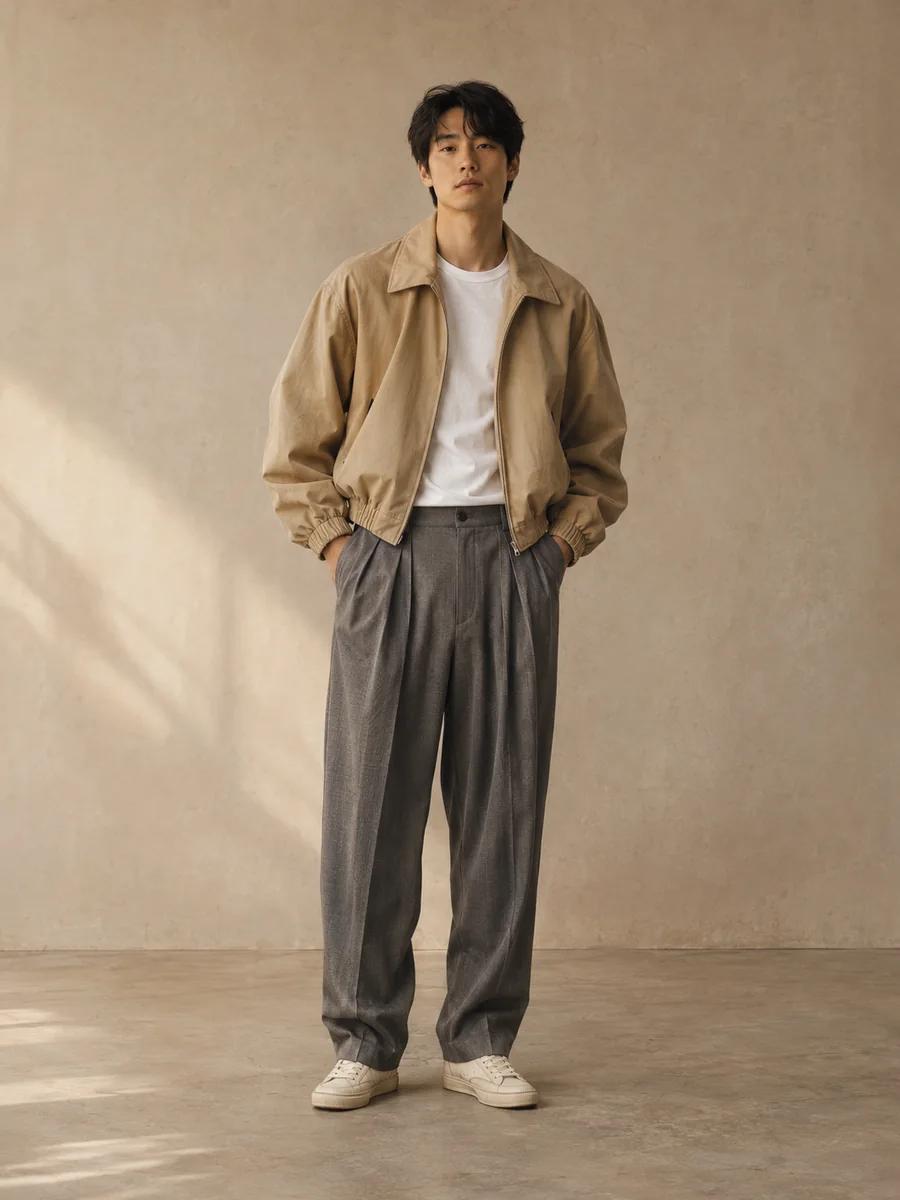
Eighties-inspired beige blouson with generous pleats
Keep the cardigan version familiar
The 1990s-inspired example places a brown cardigan around a gray tee above straight washed-blue denim. Quiet black low shoes make an everyday endpoint. The soft frame and ordinary jean produce a different rhythm from the larger polo collar or full blouson-and-pleat arrangement even though all are included in one broader vintage-inspired browsing group.
Try the actual knit open and inspect the exposed base hem. A very long tee can hide the rise you want visible. Look at the jean wash in ordinary light and keep its cloth above the heel. This uses a clothing formula as a reference rather than asking a concept to establish the age or condition of your real garments.
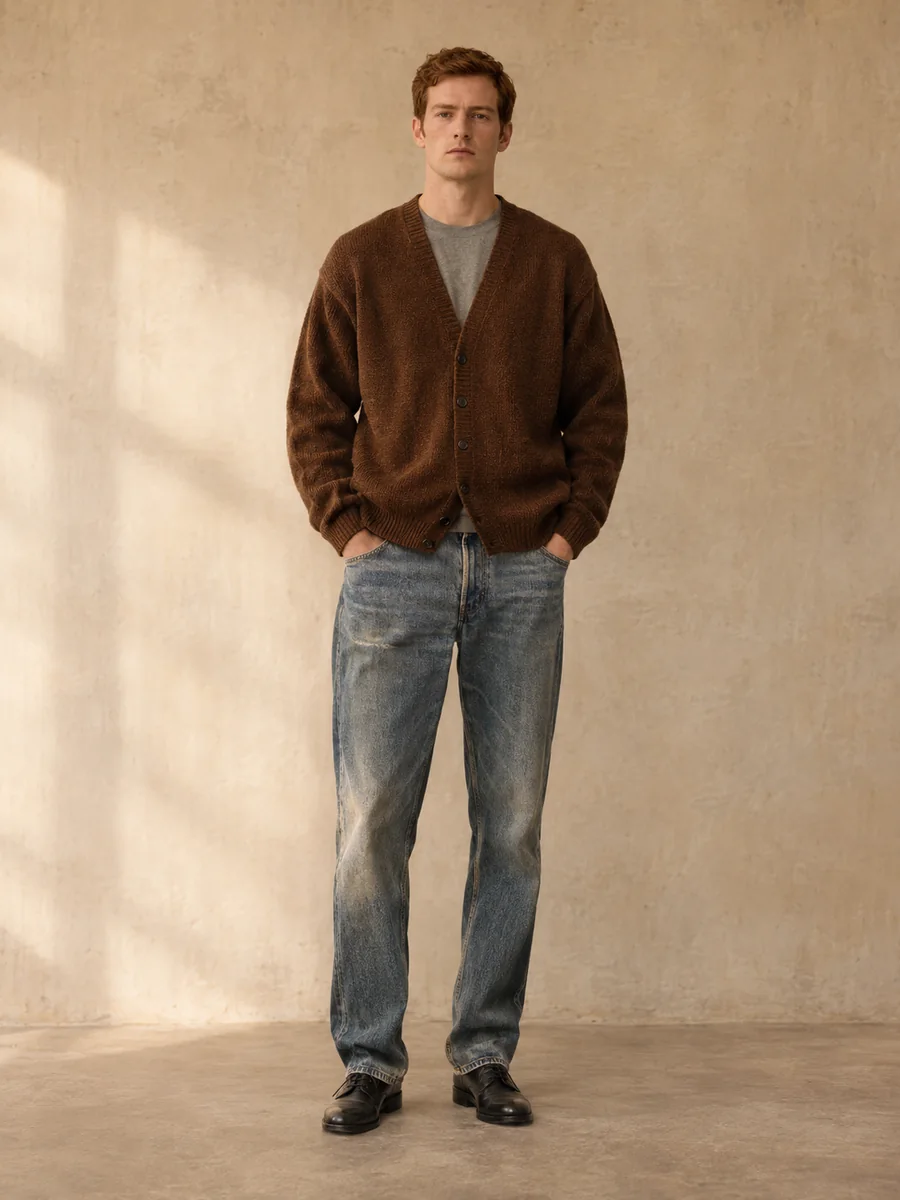
Nineties-inspired brown cardigan with washed straight denim
Use a faded jacket as one quiet cue
A short faded-blue jacket around an ecru striped shirt above straight chocolate trousers creates another restrained retro-looking arrangement. Brown ankle boots continue the warm lower palette. The upper shade and compact length supply the cue without forcing every part to be assigned to the same decade or sourced as a genuinely old garment.
Compare real stripe scale and jacket opening so they remain visible together. Set trouser length over your boots and inspect its behavior around the shaft. Faded appearance cannot verify textile or condition, so use the actual garment for those practical checks and the image for its distribution of color, surface and layer lengths.
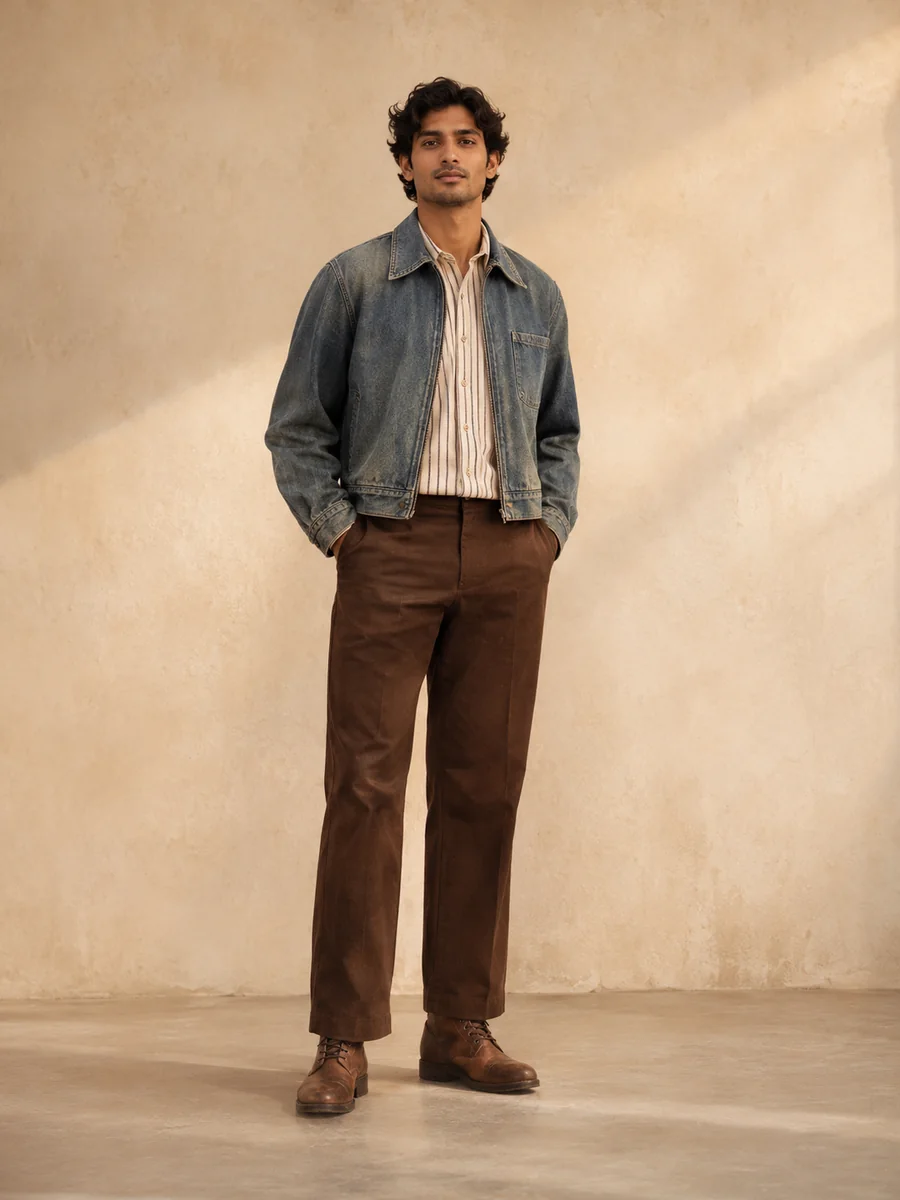
Faded blue jacket with ecru stripes and chocolate trousers
Retain the specific reference when mixing styles
Retro sportswear isolates sporting tops and track shapes, while Y2K and grunge emphasize other selected proportions and textures. Vintage-inspired outfits can share useful clothes with them without replacing their more precise names. Compare complete looks to identify which collar, upper volume or trouser relationship is the part you want to bring into your own wardrobe.
Record actual older garments with measurements and fit notes, then plan combinations that use them. A vintage tag should not automatically match every item to every retro image. The value is a set of repeatable arrangements whose shapes cooperate, not an increasing number of era labels or nearly identical screenshots saved without a real fit decision.
Explore more outfit ideas or compare the style files.