Begin with the lower volume you enjoy
A skater-inspired outfit may start with broad denim, carpenter trousers or longer denim shorts, then add a boxy tee or familiar hoodie. Choose that shape before accessories such as a cap or check shirt. The reference can remain coherent without a visible brand or an effort to recreate another person’s identity through clothing.
Loose pieces still benefit from readable boundaries. Inspect top hem, waistband and footwear together in motion. A larger size does not automatically create the intended cut, and a broad opening does not establish room through the seat or thigh. Use actual garment fit rather than treating oversized as a single reliable measurement.
Connect the lower hem to the shoe
A low skate-style shoe can remain visible or sit partly inside a wide trouser opening. Choose the effect without allowing cloth below the heel. Check the back as carefully as the front because a still image can hide the point where extra length becomes impractical during an ordinary walk.
A boxy tee ending nearer the hip reveals more of the broad leg; a long hoodie changes that balance. Compare both above the same bottom when possible. These styling references do not certify footwear or clothing as protective gear or suitable equipment for skating; actual activity needs require separate checks of real products.
Keep a tee and broad jean formula simple
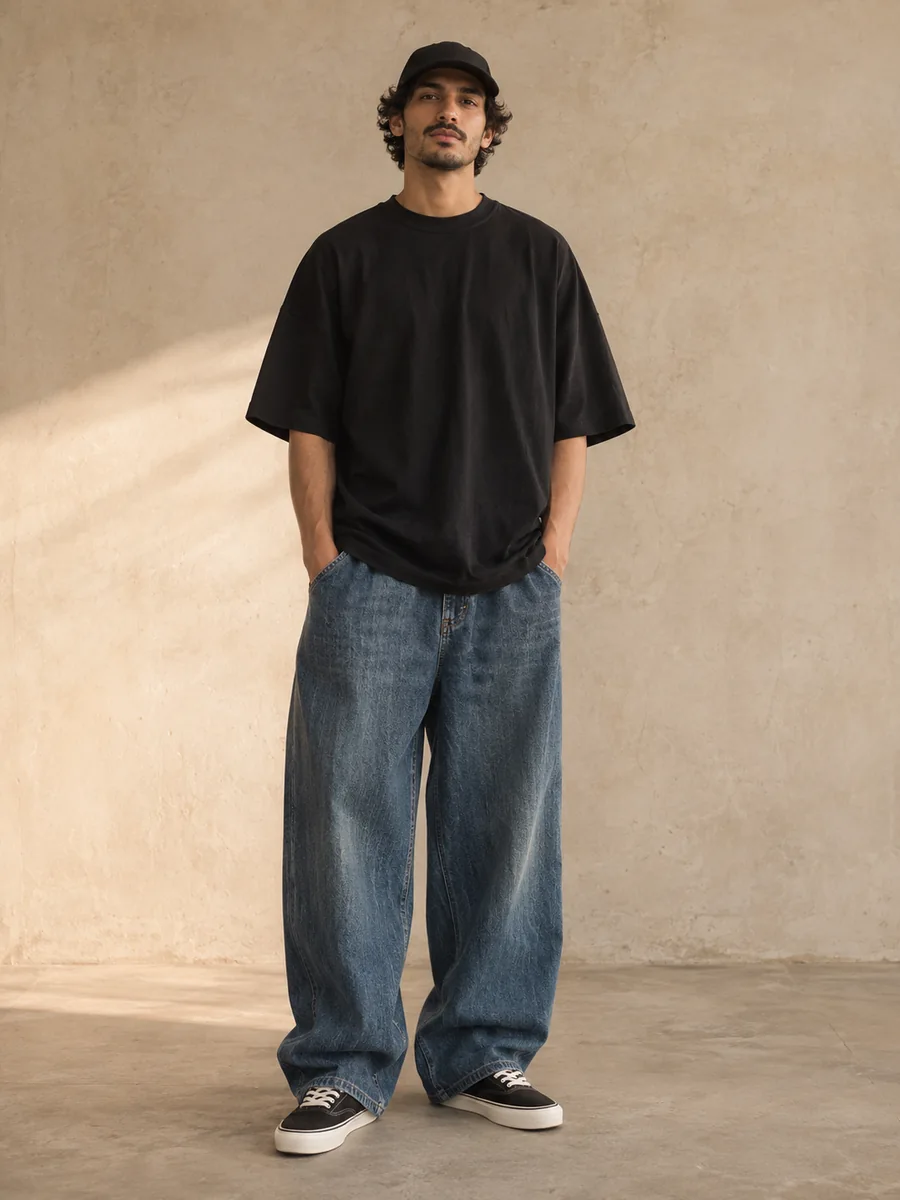
A boxy black tee above very wide blue jeans leaves lower volume as the main statement. Black-and-white skate-style shoes make a clear endpoint and a plain black cap repeats an existing color. The quieter upper surface gives the width and break of the denim responsibility rather than asking another print to carry attention.
Check the actual tee at the waistband and how much denim gathers over the shoe. A slightly shorter top can clarify the leg without needing a tight fit. If the hem catches, change its length or footwear relationship rather than assuming an exaggerated pile of fabric is necessary to make the reference recognizable.
Black boxy tee with wide blue denim and skate shoes
Use carpenter trousers below a hoodie
A gray hoodie above brown carpenter trousers creates a warmer textured alternative to blue denim. Black skate-style sneakers quiet the foot and a burgundy beanie can add a limited accent. The trouser pockets already supply detail, leaving the plain upper layer a useful pause rather than another competing surface.
Try the hoodie’s natural ending rather than holding it in a temporary crop. The trouser should keep its intended room while clearing the shoe. Remove the beanie briefly if the accent feels unnecessary and compare the main garments first; the useful change may be proportion rather than another color decision.
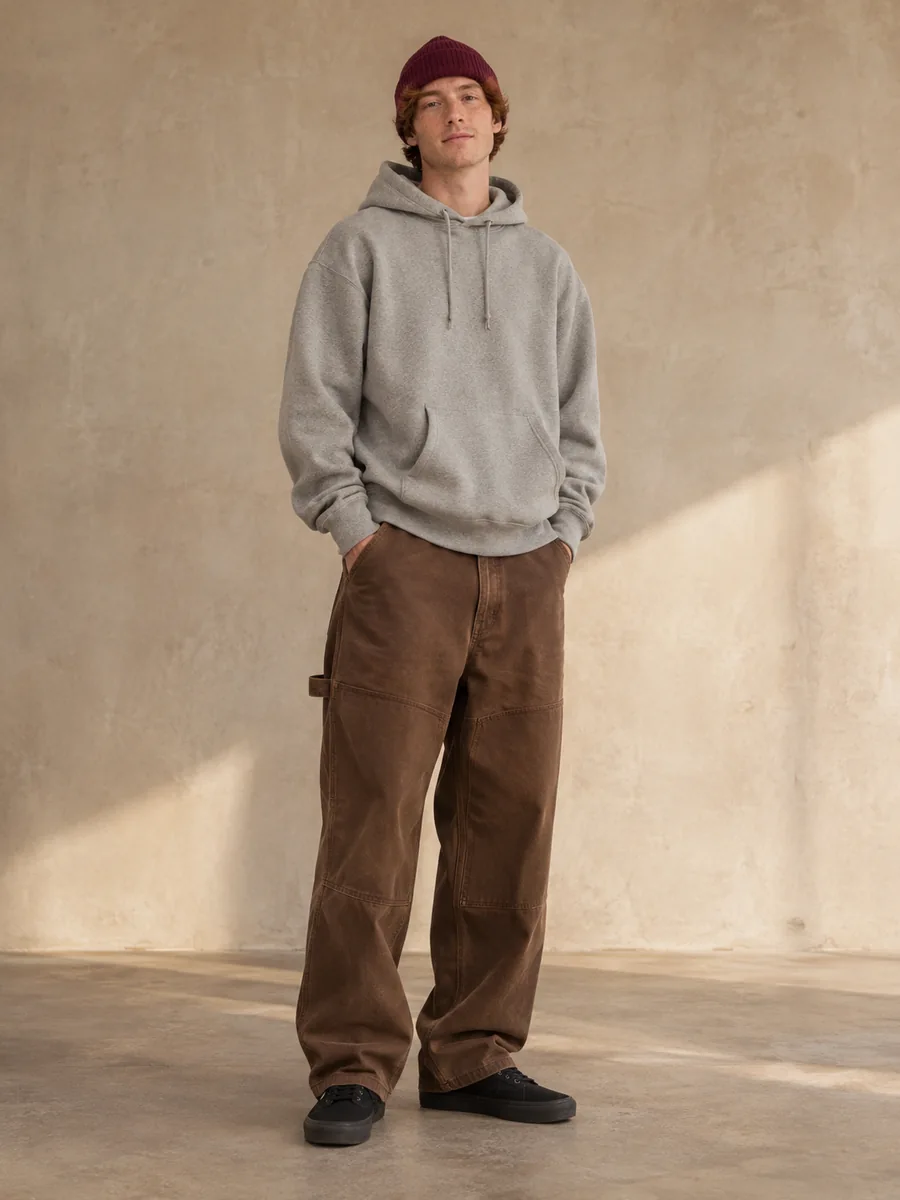
Grey hoodie with brown carpenter pants and a burgundy beanie
Give long black denim shorts their own balance
A white tee, broad black denim shorts and open black-and-white checks create clear layer order through contrast. Black low shoes continue the lower palette. The longer short exposes leg and footwear differently from full jeans, so it needs a separate proportion decision rather than being treated as a shortened version of the same outfit.
Inspect hem relative to knee, width through the thigh, sock height and the real shoe profile. Keep the tee plain enough for the check pattern to lead. The open shirt supplies a removable frame, but the white-and-black base should still have a deliberate shape when that extra layer comes off during the day.
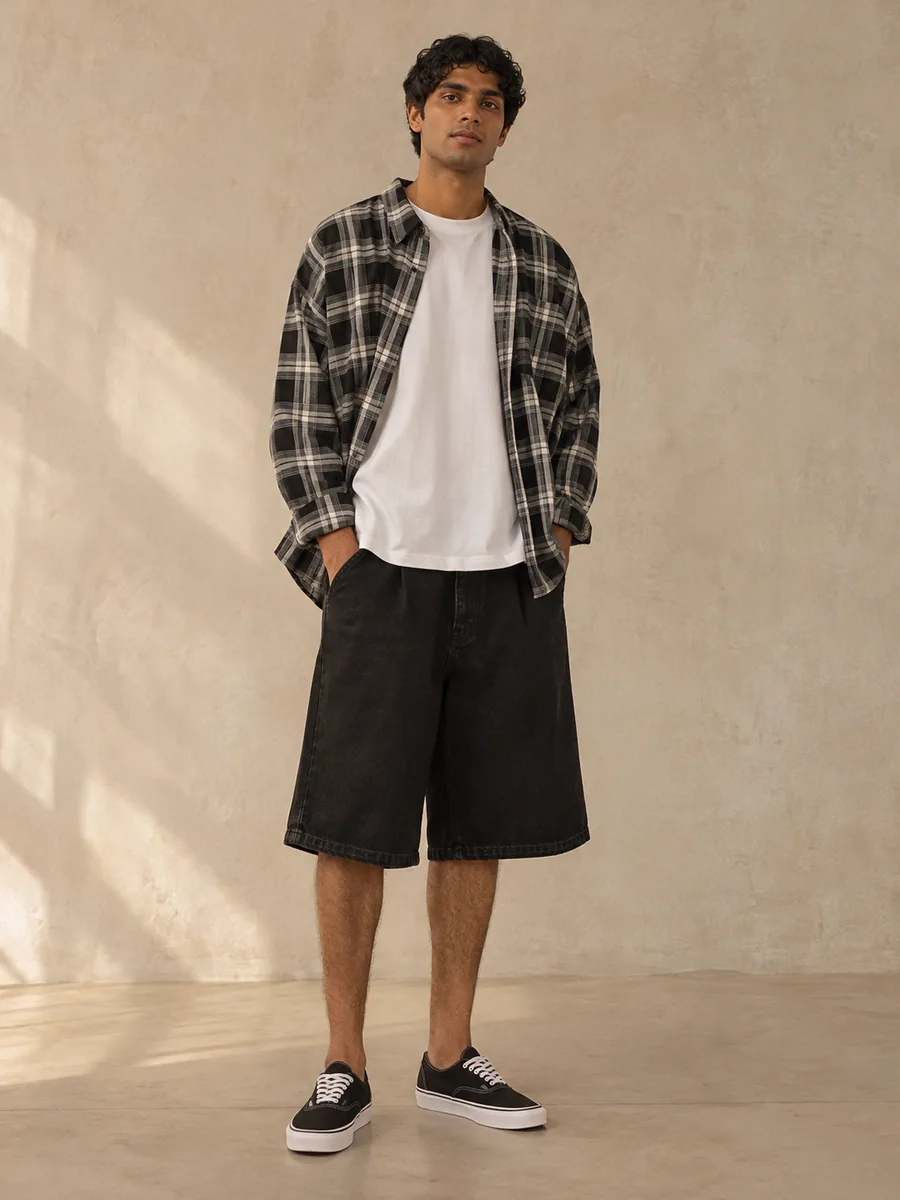
White tee, wide black denim shorts and an open check shirt
Move denim into the upper frame
A washed-blue denim jacket around a gray tee shifts the reference toward the torso. Broad olive trousers provide a quieter utility-shaped bottom and ecru skate-style shoes brighten the endpoint. This is not double denim: the selected lower garment has another construction and color, changing the surface relationship of the complete combination.
Try the real jacket with its base and inspect sleeve room as well as hem. A shorter frame exposes more of the trouser rise and can clarify the wider leg. Keep the cloth above the heel and compare the lighter shoe before adding another accessory, because its contrast may already supply the useful finishing difference.
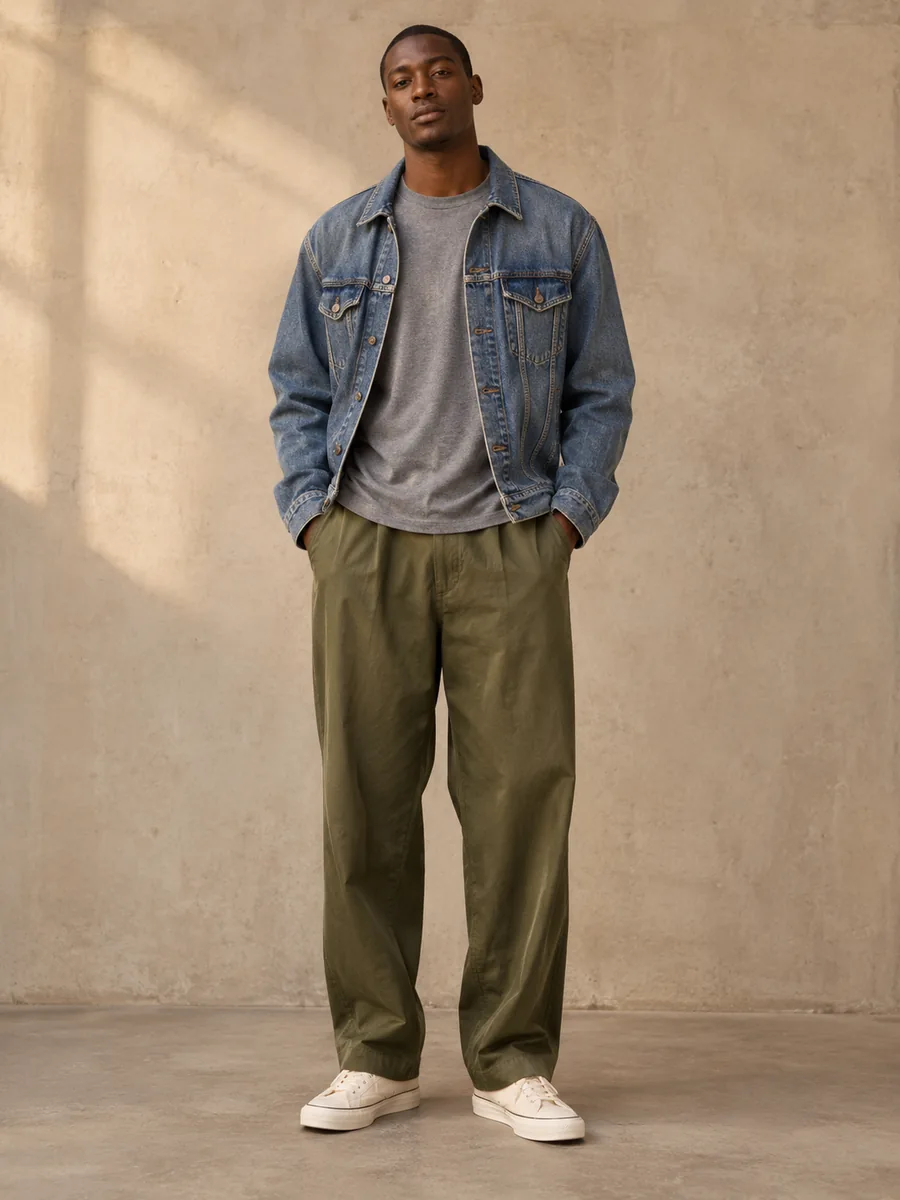
Faded denim jacket with grey tee and loose olive trousers
Build a rotation from the shapes you use
Keep the lower cuts that work and reuse them with different upper frames. A gray hoodie changes direction above blue denim or brown carpenter trousers without requiring a completely new wardrobe. The planner can show those real formulas and make it easier to see which garments are doing the most work across several days.
Compare streetwear and Y2K neighbors for another layer or shoe idea. Their overlap is useful without making every loose outfit identical. Record the hem, rise and top length you preferred so the next variation begins with a real fit decision, rather than another search for an image that happens to have a similar aesthetic label.
Explore more outfit ideas or compare the style files.