Choose one detail to carry the reference
A punk-inspired formula can begin with a short black jacket, checked fabric, worn-looking surface or a deliberate metal accent. Choose what you genuinely want to wear instead of collecting every familiar reference at once. The clothing need not prove taste in music, political identity or membership of a particular community before becoming useful.
Plain supporting pieces give the stronger element room. A black tee and straight denim reveal jacket shape; a quiet knit above checks shifts the focus below the waist. Decide that distribution of attention before adding another pattern or accessory whose presence might hide the original reason you selected the leading piece.
Do not confuse texture with fit problems
Distressed-looking surfaces and relaxed cuts can be deliberate, but useful movement and hem clearance still matter. Check real jacket shoulders and sleeves, then try the jeans seated and walking. A worn appearance cannot establish softness, quality or comfort through a concept image, so practical fit decisions belong with actual clothing.
Inspect back and side as well as front. A short jacket shows more of the trouser rise while a long tee can obscure it and soften the line. Choose that relationship rather than assuming rougher texture also requires every piece to be extremely oversized or tightly fitted to look intentional.
Use a short black jacket as structure
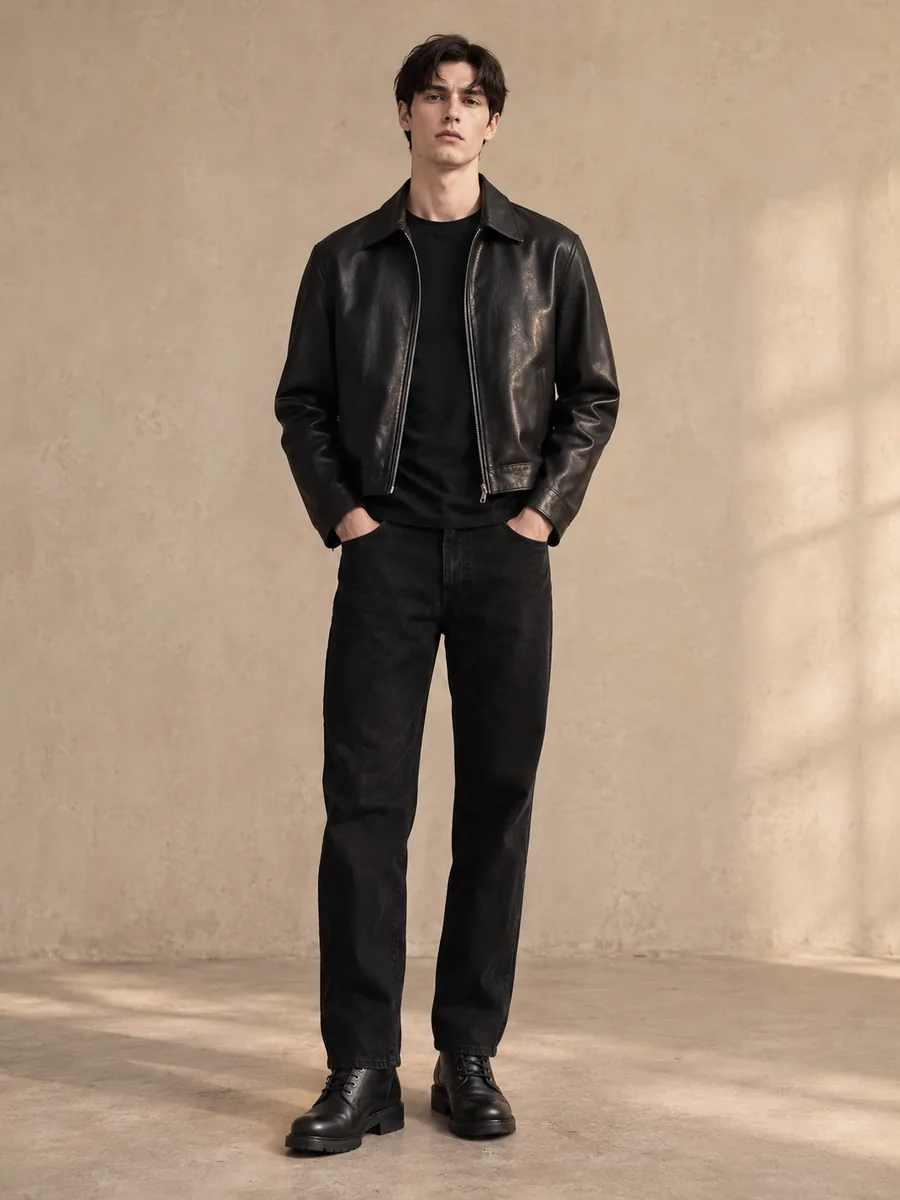
A short black leather-looking jacket over a plain black tee, straight black jeans and lace-up boots keeps the palette close. The jacket opening and boot outline become the strongest lines. With less color separation, texture and the endings of the upper and lower pieces provide more of the visible distinction.
Check the real jean around the boot shaft and keep the back hem above the heel. A substantial boot cannot fix excessive length by itself. This is an everyday fashion reference rather than proof of riding protection or other equipment performance, so any practical requirement still needs a separate assessment of actual products.
Short black biker-style jacket with straight jeans and lace-up boots
Place red-and-black checks above a quiet base
An open red-and-black checked overshirt around a black tee makes the upper half the focus. Closer black trousers and ankle boots keep the lower line more continuous. Compare overshirt and tee hems so that the opening frames the pattern instead of forming several unclear bands across the hip and waist.
Inspect the real trousers at seat and knee, not only the narrow opening. A closer line can still permit ordinary movement. If the check feels too dominant, compare another scale or try the shirt partly closed before replacing every other piece. Keeping the base stable helps reveal which small adjustment actually improves the result.
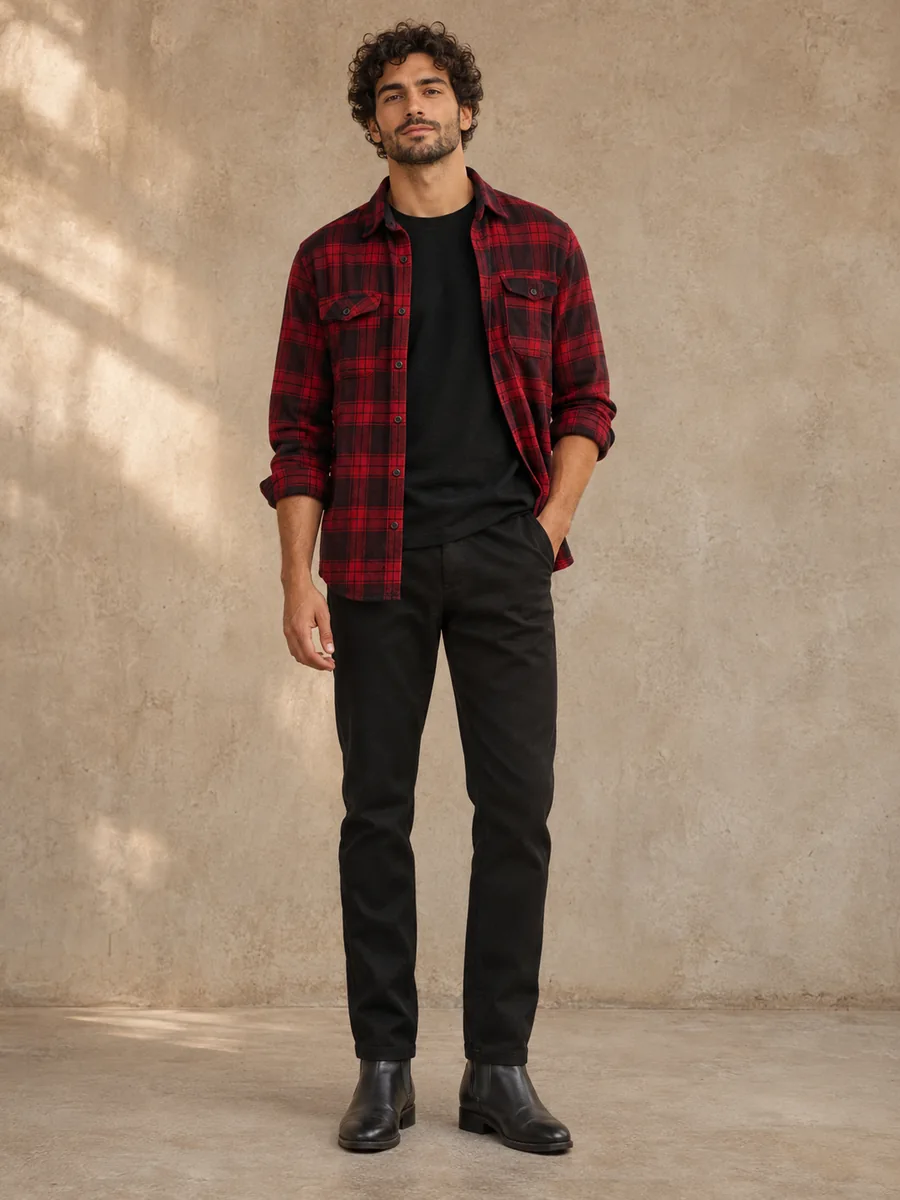
Red-and-black check overshirt with a narrow dark base
Let washed denim change the surfaces
A black denim jacket above a worn-looking cream tee and washed-gray jeans creates a light center inside darker outer pieces. Black boots ground the lower edge. Because jacket and trousers are both denim, wash difference and the exposed tee help show their separate roles instead of merging them into an undefined block.
The concept does not verify garment age or a particular distressing process. Check real material and condition when choosing clothing. For the style decision, compare jacket length and the brighter center before adding a patch or another accessory. A plain opening may already be the detail that makes this darker outfit feel clear.
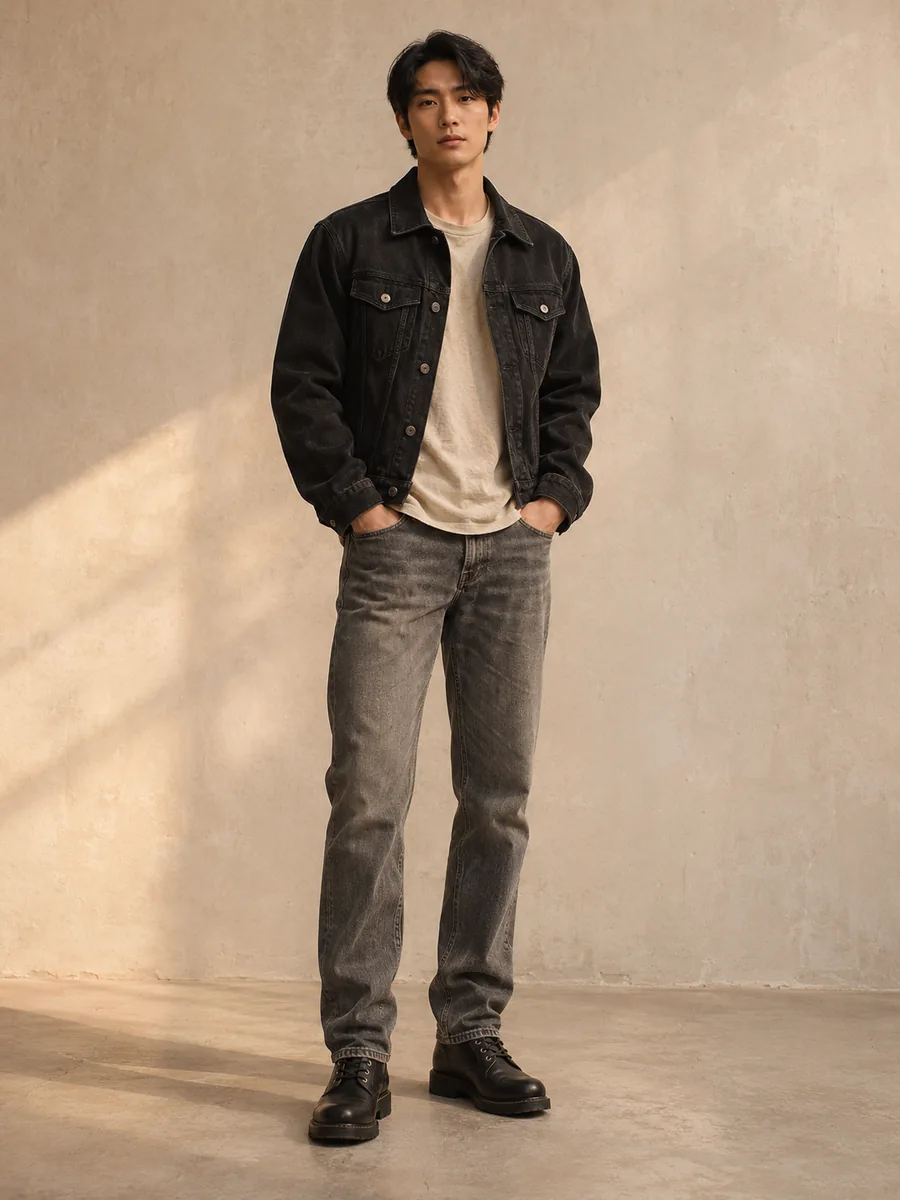
Black denim jacket with a worn ecru tee and grey jeans
Move the checks onto the lower half
A textured black sweater above straight gray-and-black checked trousers places pattern below the waist. Thick-looking black shoes quiet the endpoint and a simple silver-tone chain can add a smaller hard surface at the neckline. The upper half does not need another print to establish the direction or make the formula feel complete.
Try the actual hem over the intended shoe. A strong check reveals folds, so inspect the cloth’s fall instead of assuming a larger sole solves it. Keep the chain proportionate to collar space and compare the outfit without it; an accessory should support the pattern’s role rather than create a second unrelated focal area.
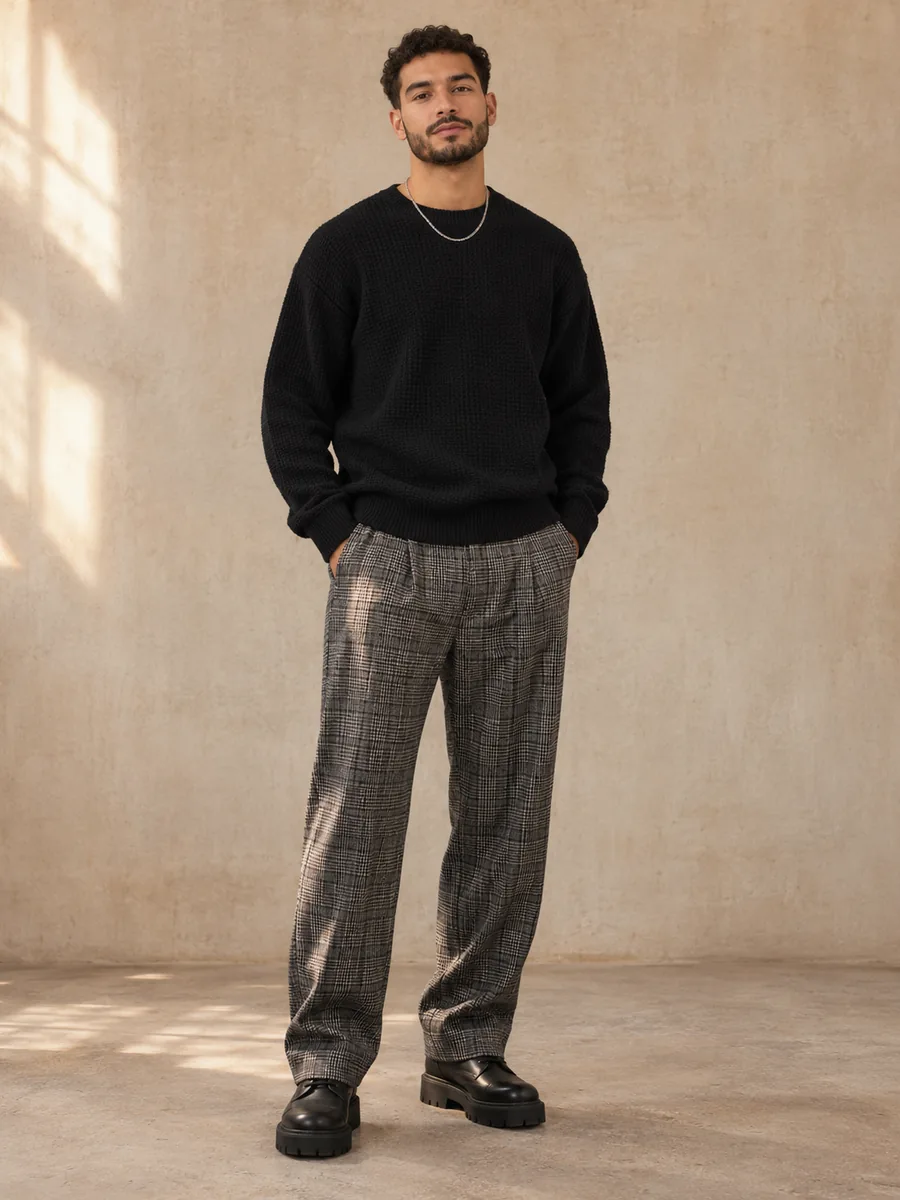
Textured black knit with grey checks and a silver-tone chain
Compare dark neighbors through their choices
Goth may emphasize longer fluid frames, grunge more washed casual surfaces, and opium-inspired outfits larger denim and shoes. The references can share pieces while arranging them differently. Compare cuts and layer order rather than placing every black jacket in one category or expecting a style label to explain the entire outfit.
Use the quiz as an editorial browsing aid and the finder to preserve a chosen garment. Neither should judge identity or assign a subculture. Save the texture and proportions you enjoy, then adapt them through real fit checks and familiar supporting clothes. That makes the reference practical without demanding a copied outfit or another complete shopping list.
Explore more outfit ideas or compare the style files.