Let the outline do more work
To build a minimalist outfit, reduce competing details and make the remaining lines deliberate. Start with top length, trouser width and shoe profile. A plain surface makes those relationships more visible, so inspect the front, back and side in the actual garments rather than assuming that simplicity removes the need for a fit check.
Minimalism does not require black clothing, a high price or an entirely new wardrobe. It can be light, dark, tailored or relaxed. Decide which outline you want and remove details that interrupt it, instead of stripping away every texture or color because a label appears to forbid them.
Choose a small palette with boundaries
Black and white makes a sharp division, while gray and charcoal keep the contrast quieter. Taupe, ecru and brown create a warm tonal relationship. Choose one direction before selecting accessories, and inspect the real garments in ordinary light because similar color names do not guarantee identical undertones or the same amount of visible contrast.
When neighboring pieces merge more than you want, vary surface or lightness before automatically introducing a bright accent. A fine knit above a smoother trouser may be enough. The palette tool can show catalog references, but the final result depends on actual fabric, illumination and how the clothes sit together.
| Palette approach | Main boundary | What to check |
|---|---|---|
| Black and white | Clear lightness contrast | Placement of the lighter area |
| Gray and charcoal | Shade and surface changes | Visibility of neighboring layers |
| Taupe and ecru | Warm tonal relationship | Actual undertones in ordinary light |
Build a black-and-white base
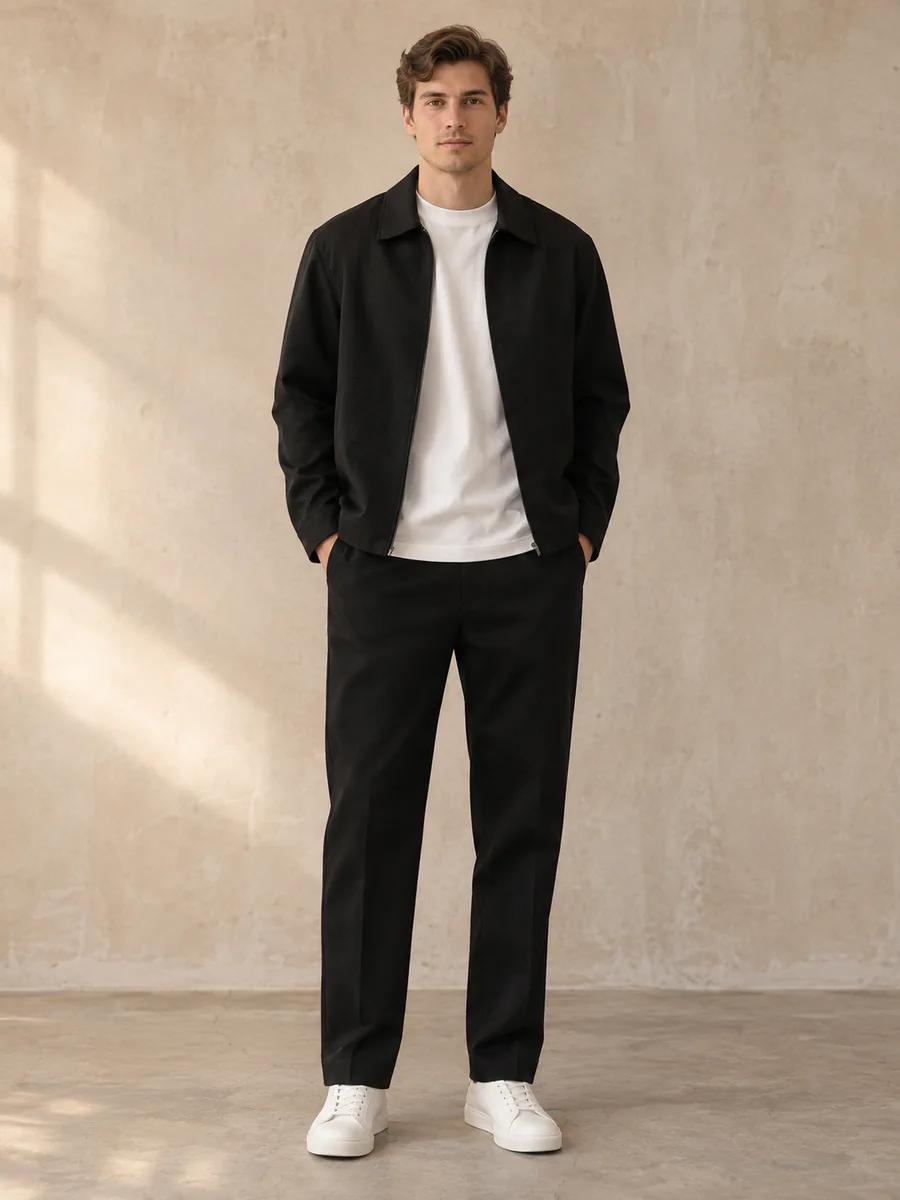
A thick white tee inside a plain black jacket, straight black trousers and white low sneakers creates an echo between the torso and foot. Keep the jacket opening clear enough for that connection to remain visible. The distribution of light and dark does the work without a logo or additional ornament.
Try the tee without its jacket too, since the removable frame should leave a useful outfit underneath. Inspect the trouser hem over your own sneakers and compare a slightly different top length if needed. Changing the width or break can alter the silhouette while leaving the simple color formula intact.
White tee, black trousers and a simple collar jacket
Use pale tones without flattening them
A taupe knit polo above ecru wide trousers moves the emphasis from sharp contrast toward surface and volume. Brown loafers ground the lighter upper area, and a similar belt can repeat that warmth when visible. The polo collar provides a little structure without requiring a jacket to make the outfit feel complete.
Give the actual trousers room to fall as intended, then inspect the hem over the loafers standing and seated. A low opening reveals sock or foot differently from a boot. Make the length decision with the real shoe rather than borrowing an exact measurement from the generated illustration or another person.
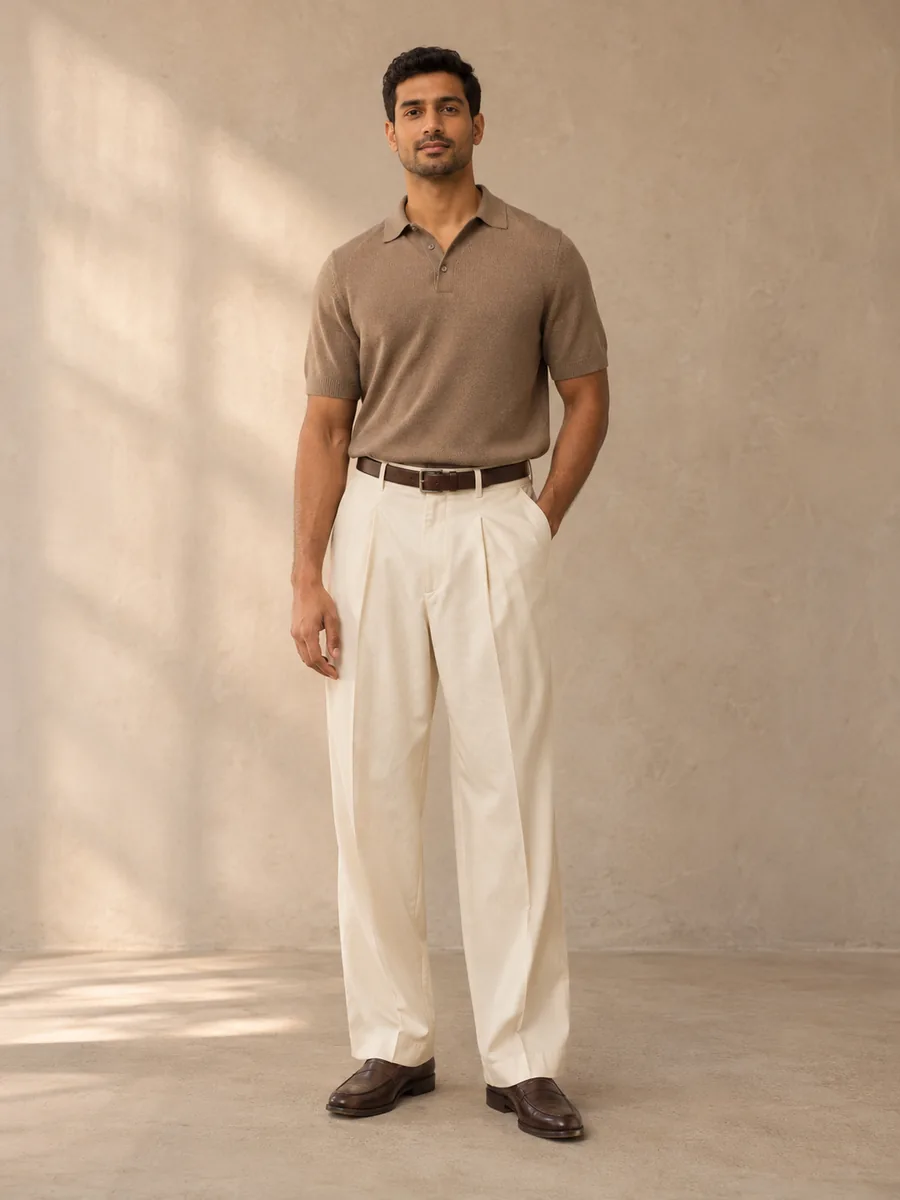
Taupe knit polo with ecru trousers and brown loafers
Separate gray layers through surface and length
A gray sweater, broad charcoal trousers and long gray coat form an achromatic arrangement. The coat supplies the longest frame; knit and trouser divide through shade and surface. Black derby-style shoes give the bottom a quiet endpoint rather than a second strong color family that competes with the simpler upper construction.
Make sure the actual coat has room over the knit. A calm palette cannot correct sleeves that bind or a front that pulls when seated. If the layers look too continuous, adjust one hem or choose a small shade difference before adding a scarf that hides the very neckline or opening you want to clarify.
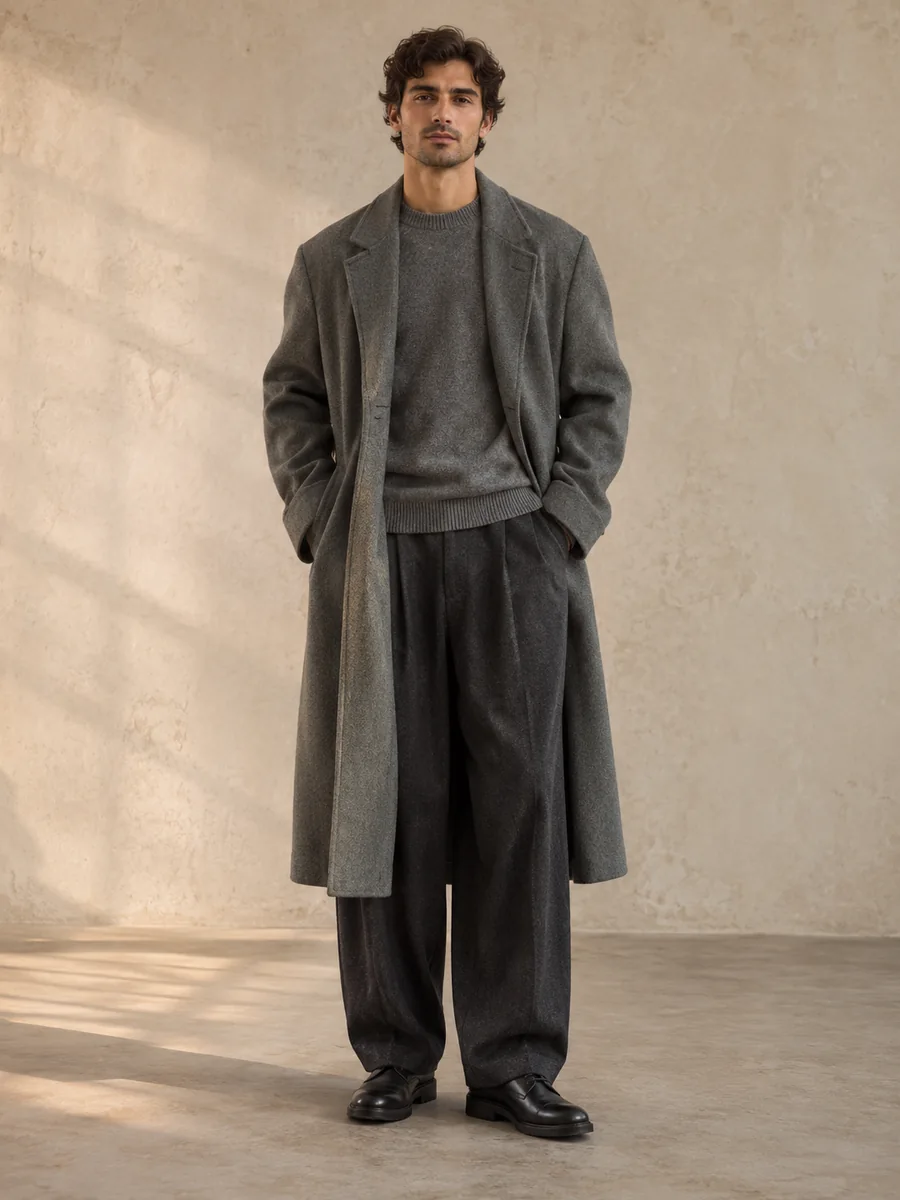
Grey knit, charcoal trousers and a long grey coat
Keep the light shirt formula restrained
An ecru linen-looking shirt with sand trousers and plain brown sandals uses a softer neckline and lower silhouette. A textile belt supports the waist rather than becoming a separate focal object. The texture is an illustration; it does not establish fiber content, breathability or comfort at a particular temperature or in a specific setting.
Choose actual coverage and material for your day. A relaxed collar and broader trouser can remain readable when their hems are deliberate. Check how much sandal is visible and keep fabric clear of the ground, instead of assuming a soft-looking combination needs to become unstructured in every part of its outline.
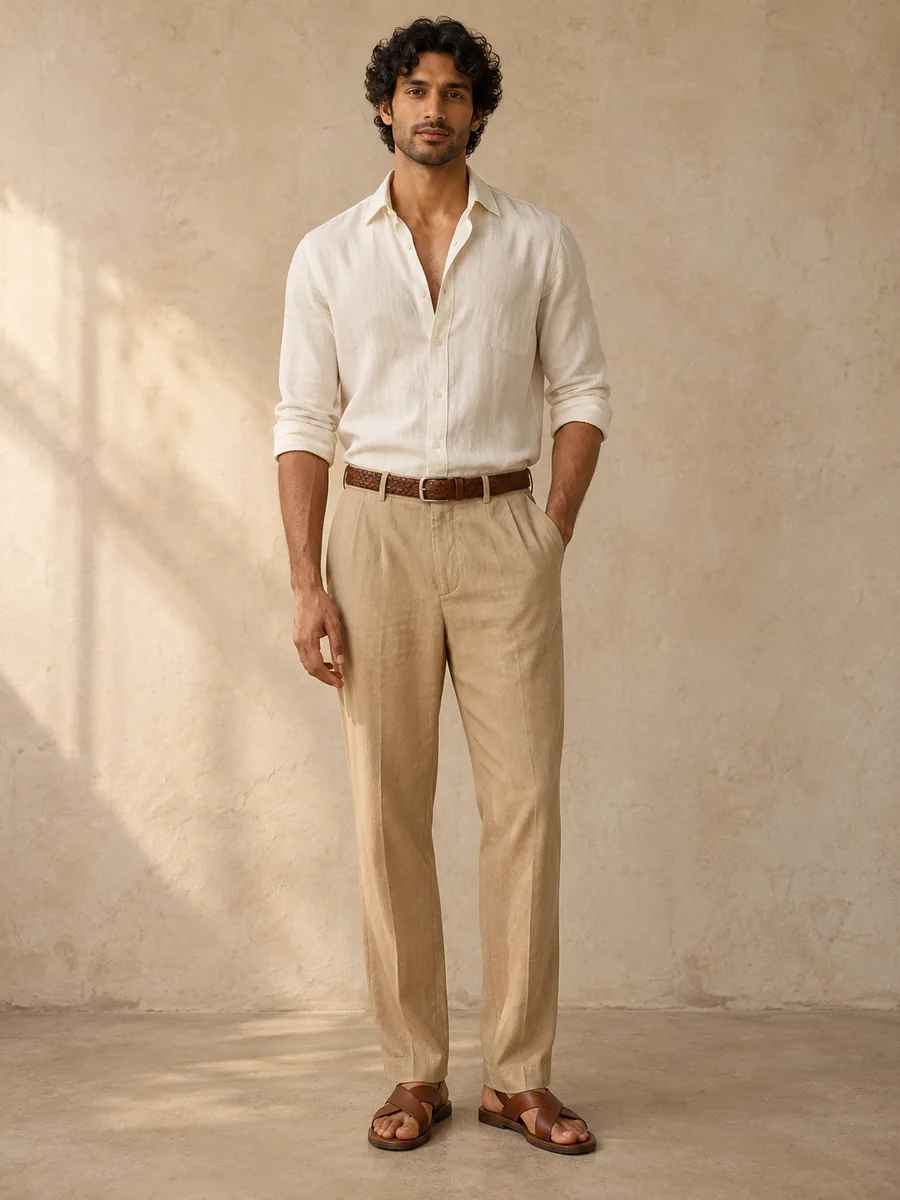
Ecru linen-style shirt, sand trousers and brown sandals
Edit a capsule using verified combinations
Choose a few pieces that support actual arrangements rather than multiplying every top by every bottom and shoe. The capsule builder should enumerate the combinations it supports and show which disappear when you remove a piece. A larger theoretical number is not necessarily a more useful rotation of clothing.
Keep notes about why a formula works with your real wardrobe: its shorter jacket, quieter shoe or particular shade difference. Those decisions make the outfit repeatable. You can add another surface later without rebuilding the entire palette or treating simplicity as a rule that prevents any personal detail.
Explore more outfit ideas or compare the style files.