Make pale color part of a formula
Light academia uses shirts, knitwear and tailoring references with cream, beige, light gray and pale blue. Start with the layer arrangement rather than choosing the palest possible version of everything. A cardigan around a shirt, vest exposing its sleeves and blazer above it create distinct upper structures even when all their colors are quiet.
The style is a clothing reference rather than a requirement to perform a scholarly lifestyle. Ordinary shoes and trousers can keep it practical. Use a familiar base and compare one lighter frame above it so the effect remains clear, instead of replacing the whole wardrobe and then trying to discover which change improved it.
Separate pale neighbors with surface and light
Cream, sand and ecru may coordinate when lightness or texture distinguishes them. Check real garments in ordinary illumination rather than relying on their color names. A white collar inside a cream cardigan creates another boundary without a strong saturated accent, giving the upper outline a small amount of structure.
Pattern is not the only route to interest. An opening, sleeve edge or trouser pleat may be enough to make the silhouette readable. When areas merge more than you want, alter one shade or length before adding a bright accessory that creates another focal point and changes the original calm palette.
Frame pale blue with a cream cardigan
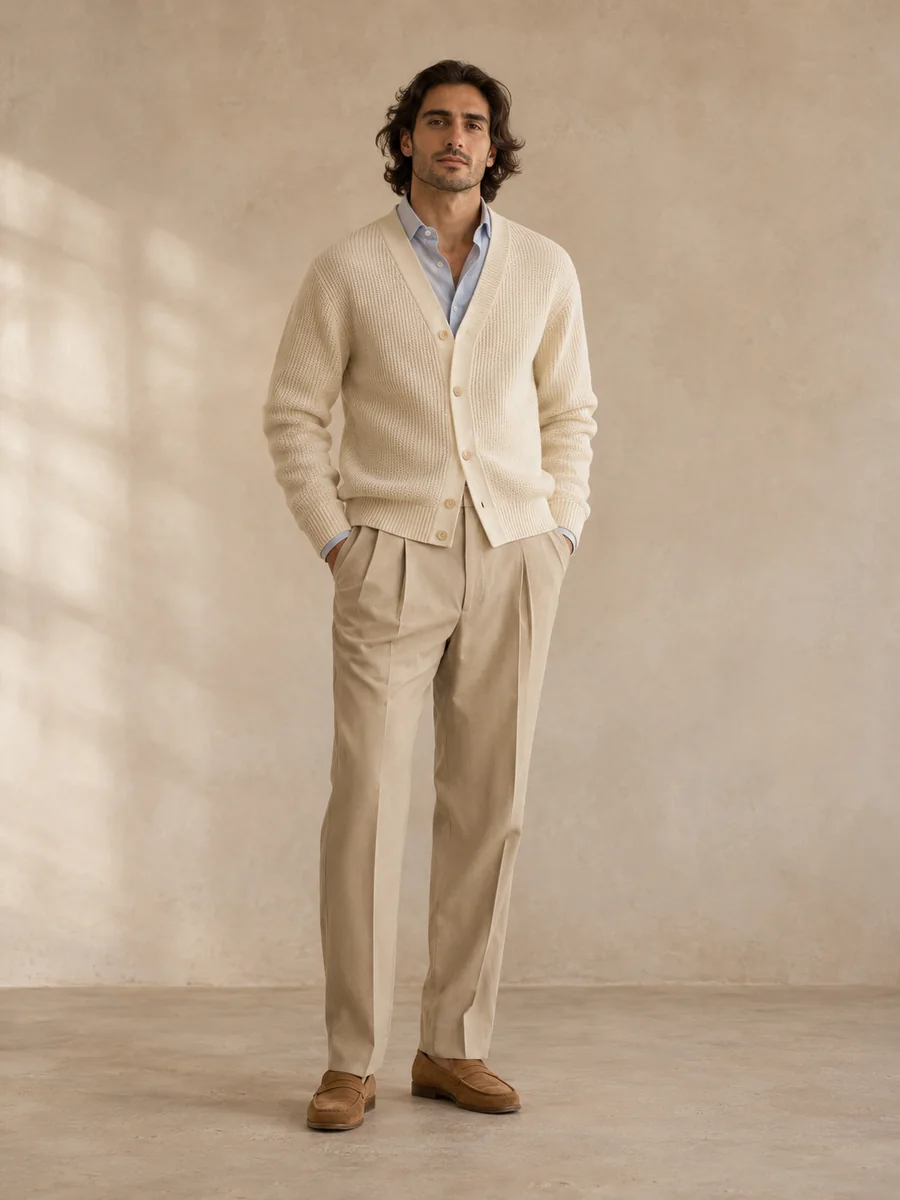
A cream cardigan over a pale-blue shirt gives the center a gentle color division. Beige pleated trousers continue the lighter lower half and light-brown loafers supply a grounded endpoint. Collar and cardigan opening make the layer order visible without requiring a blazer, print or another accessory near the face.
Inspect actual sleeves beneath the knit and the two hems at the waist. Pleats need room to fall rather than open under strain. Choose the length with your own loafers and assess seated movement, not only the front pose. Similar pieces can reproduce the relationship without implying the illustrated cloth has verified content or properties.
Cream cardigan with pale blue and beige pleats
Use a sand vest around white sleeves
A sand knit vest leaves the white Oxford collar and sleeves exposed above straight ecru trousers. Brown boat-style shoes make the formula quieter than a suit with a sharply structured shoe. The vest darkens the torso slightly without turning the pale arrangement into an emphatic black-and-white contrast or introducing another patterned surface.
Test the real vest and shirt together through armholes and chest. Fabric caught there can change how the collar sits. Keep the trouser line simple so the knit-and-shirt relationship remains central, then select sock visibility and shoe opening according to your actual preference rather than treating them as obligatory pieces of the label.
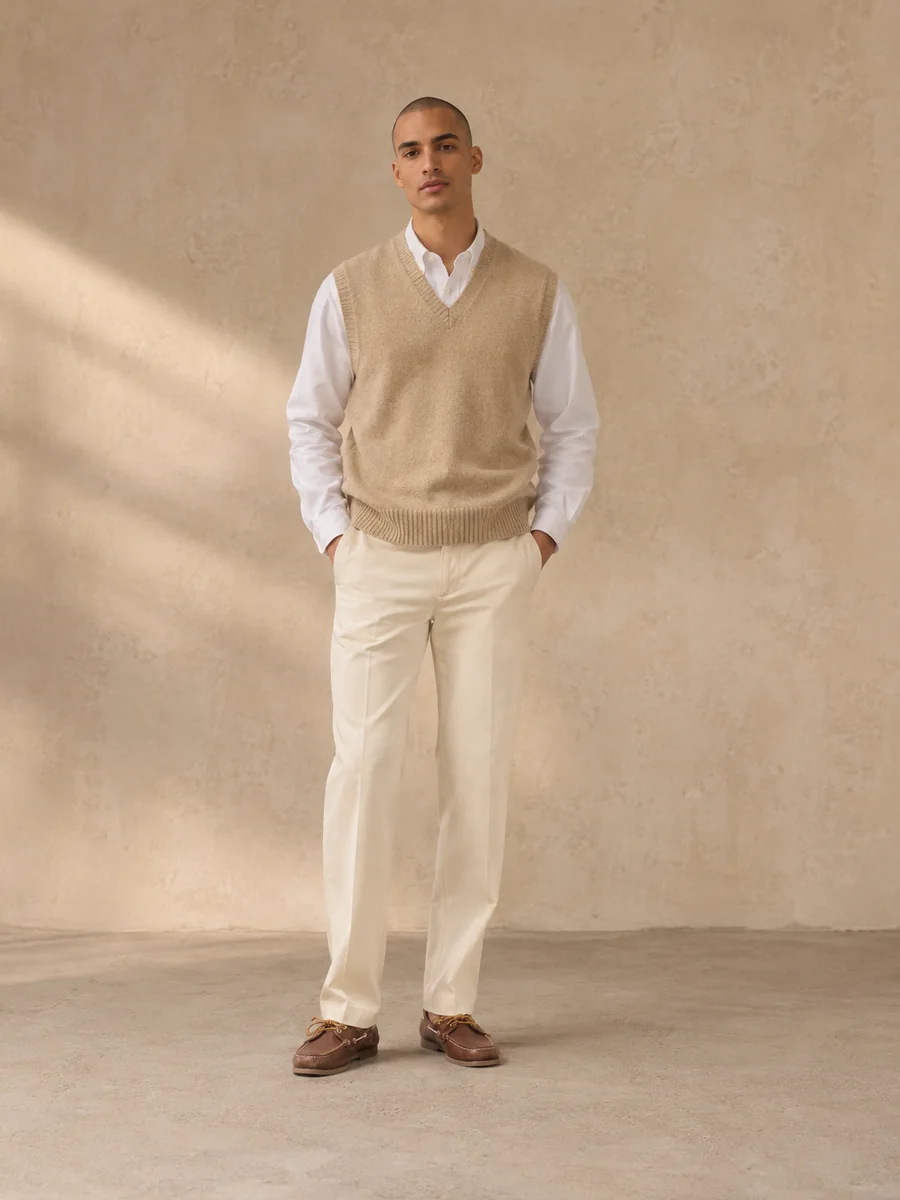
Sand knit vest over a white Oxford
Let a beige blazer add structure
A soft beige blazer above a white shirt and light-gray trousers gives the shoulders a clearer frame than knitwear. Medium-brown loafers add a smaller warm endpoint. The gray separates lower and upper areas without a strong saturated color, making it useful to compare with the more tonal cream-cardigan formula.
Check shoulder placement and sleeve room over the real shirt. A soft-looking jacket in a concept cannot establish construction or comfort. Choose the amount of tailoring from the actual setting; neither its pale color nor its academic reference certifies that a particular combination suits every office, event or other place you might wear it.
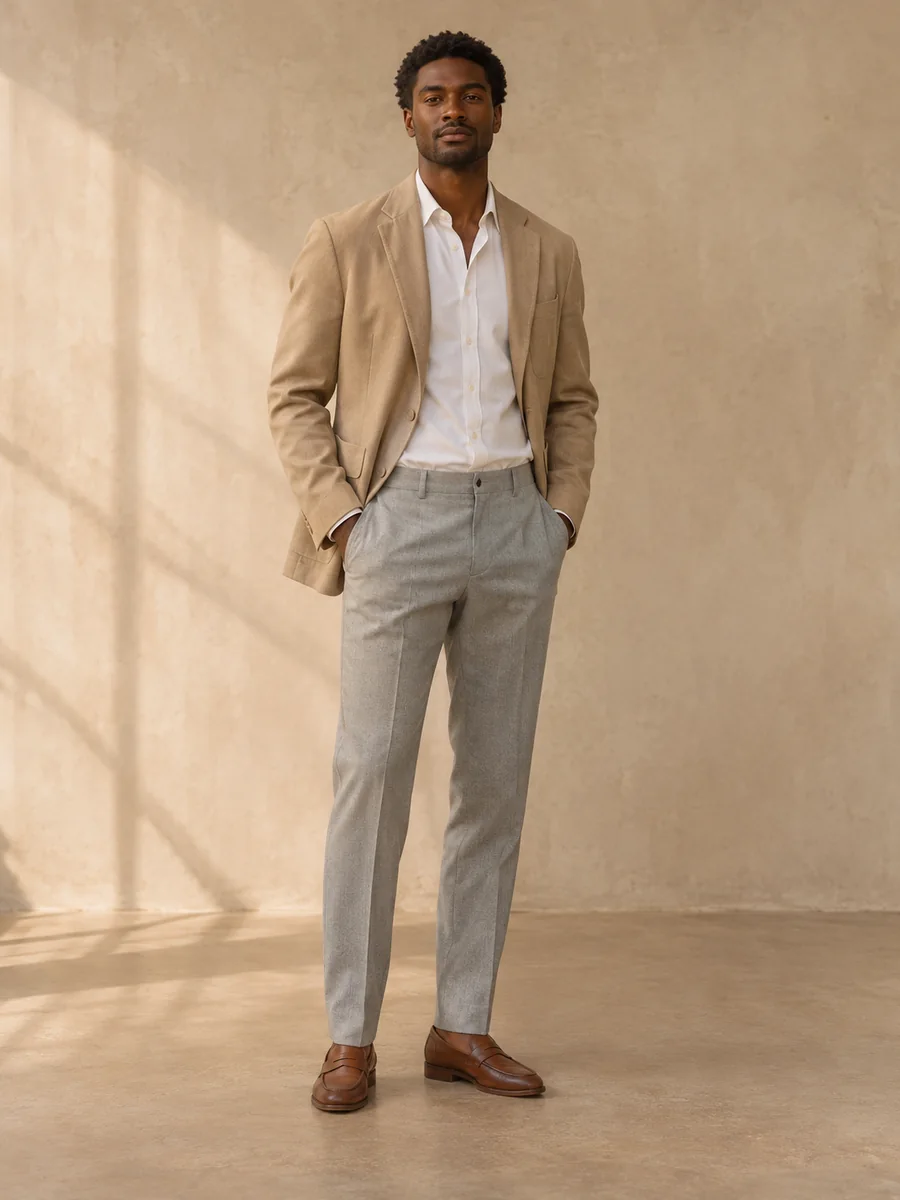
Soft beige blazer with light grey trousers
Keep the open-shirt version readable
An ecru linen-looking shirt above wide taupe trousers emphasizes a softer neckline and a generous lower line. A fine cream cardigan offers an optional extra layer and brown shoes finish quietly. The shirt and trouser should have a useful relationship even when the cardigan is removed, rather than depending entirely on it to create the shape.
Check real coverage and material for the day, since a generated texture does not prove linen or breathability. Use the intended shoe to set the wide trouser hem and keep cloth above the heel. A lighter palette can support volume without requiring every garment to become either restrictive or shapeless.
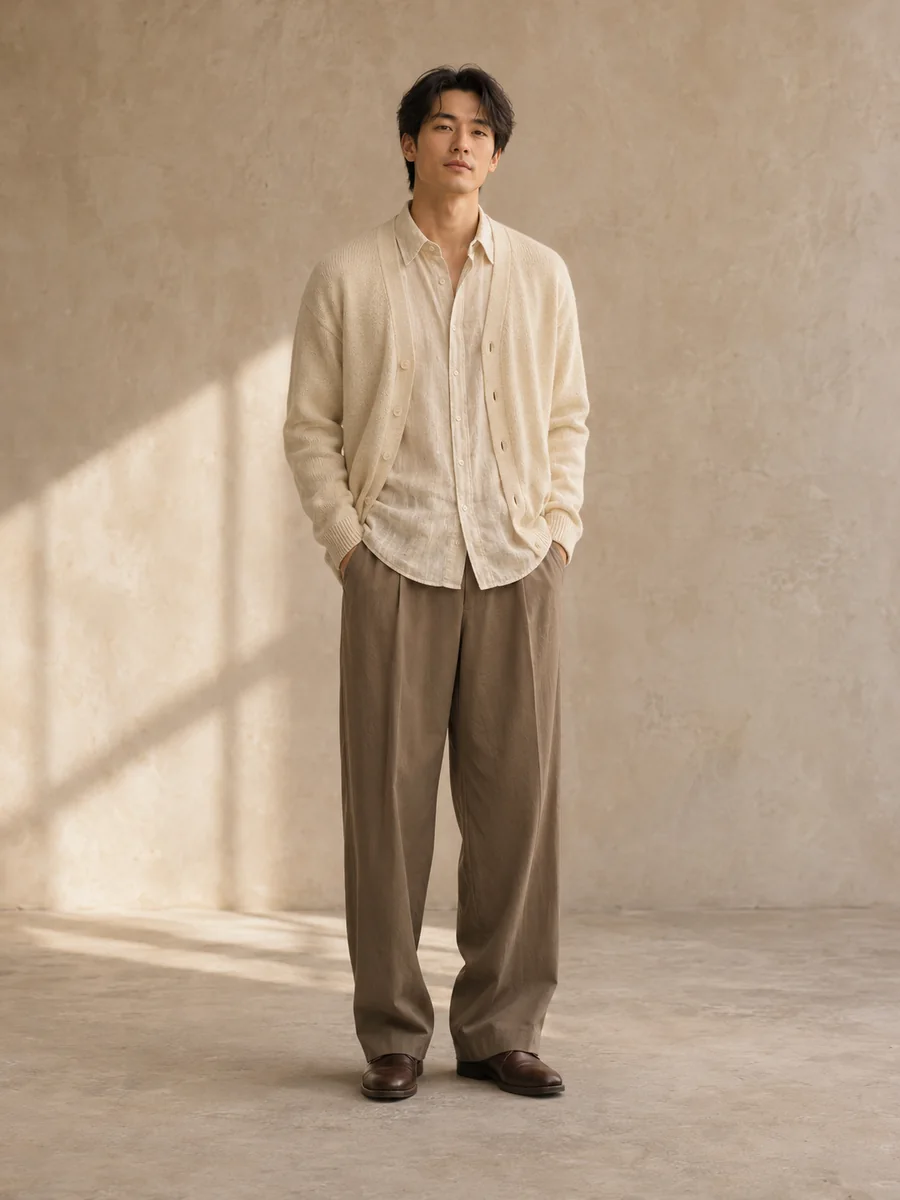
Ecru linen-look shirt with taupe wide trousers
Build a capsule from supported pale combinations
Choose the shirt, knit and trouser roles that genuinely repeat. A cream cardigan may work around several bases, but similar colors alone cannot prove those garments fit together. Use the capsule builder to enumerate arrangements and the color tool to compare how the brighter and deeper areas are placed across the body.
Dark academia supplies deeper references, while old money-inspired formulas may quiet the visible collar-and-knit emphasis. Compare those neighbors before adding another piece. Keep notes about the neckline and hem that worked with your real clothing, so the result becomes a useful rotation rather than a collection of aesthetic labels attached to nearly identical images.
Explore more outfit ideas or compare the style files.