Begin with one outdoor-looking piece
A gorpcore-inspired outfit may start with a hooded jacket, fleece, padded vest or trail-looking shoe. Choose the shape or surface that interests you and decide how much of the surrounding clothing should reinforce it. A plain tee and everyday trouser can leave that single reference clearer than a head-to-toe collection of technical details.
This is a styling guide rather than equipment testing. A rugged sole, hood or smooth surface cannot establish waterproofing, traction or insulation. Select the actual products for your conditions and activities first, then use these formulas to compare color, volume and visible layer order without replacing practical checks with the aesthetic name.
Balance surface detail and trouser shape
A fleece supplies texture without a print; a cargo adds pockets and another leg outline. If both compete, simplify one area before adding another object. An ordinary tee or quieter trouser gives the outdoor-looking garment room, making its construction more legible than a crowded arrangement of equally strong surfaces.
Inspect upper hem against the pocket and waistband. A longer jacket conceals more lower detail, while a shorter one exposes it. The same shoe appears more substantial beneath a narrow opening than a broad one, so select those dimensions together instead of assuming each category can be chosen independently.
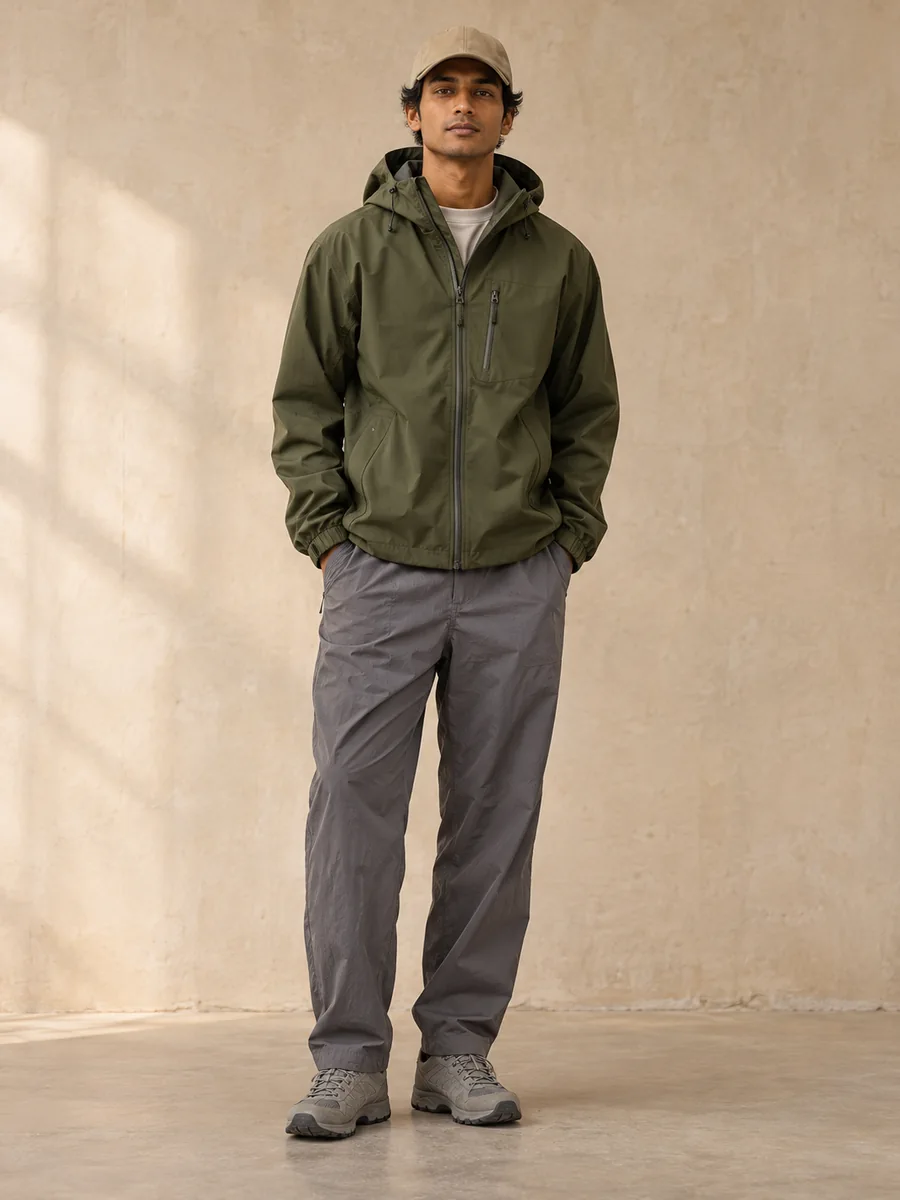
Frame gray trousers with an olive hood
An olive hooded jacket above gray nylon-looking trousers makes a clear utility-oriented outline. Gray low hiking-style shoes continue the lower color and a beige cap stays quieter above. The restrained palette leaves the jacket shape and trouser line important rather than dividing attention between several equally vivid accents.
Test the actual jacket over the intended base, then inspect the hem around the real shoe. Neither fabric behavior in rain nor sole performance can be read from the illustration. Borrow the proportions only once your own practical needs have been resolved, and keep the length usable while walking rather than merely in a still frame.
Olive hooded jacket with grey nylon-style trousers
Let a cream fleece carry the texture
A cream zip fleece around a gray tee above navy utility trousers gives the upper surface the strongest role. Gray trail-style sneakers keep the lower endpoint quiet. The tee makes a smaller tonal transition instead of another large print, helping the fleece and trouser pockets remain distinct within the outfit.
Try the actual fleece both open and closed to see how its collar and hem settle. When the neck feels crowded, simplify the base or remove another layer before replacing the trousers. A soft-looking image is not evidence of comfort, warmth or fiber content, so make those assessments on real clothing rather than the generated texture.
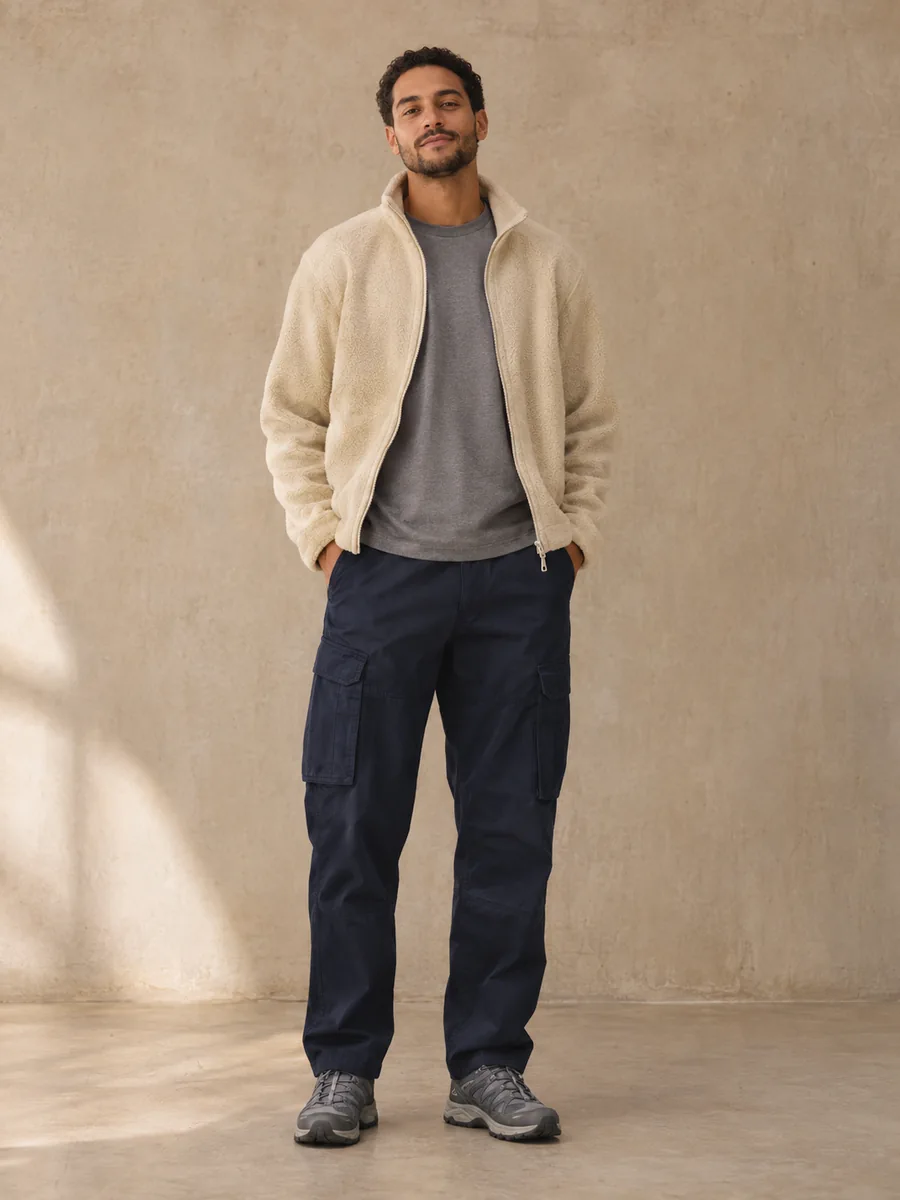
Cream zip fleece with navy utility trousers
Use a vest to expose the sleeves
A brown padded vest around a gray sweatshirt leaves the base sleeves visible and concentrates more volume at the torso. Olive technical-looking trousers and brown trail-style shoes connect the warm upper frame to the lower line. That exposed arm boundary makes the formula visibly different from a full jacket even with similar overall colors.
Inspect actual armholes and sleeve room instead of assuming any thick sweatshirt fits below a vest. This may suit one mild context or form part of another arrangement, but it is not a certified winter outfit. Select coverage for real conditions, then use the concept to compare how the layers meet around shoulder, waist and shoe.
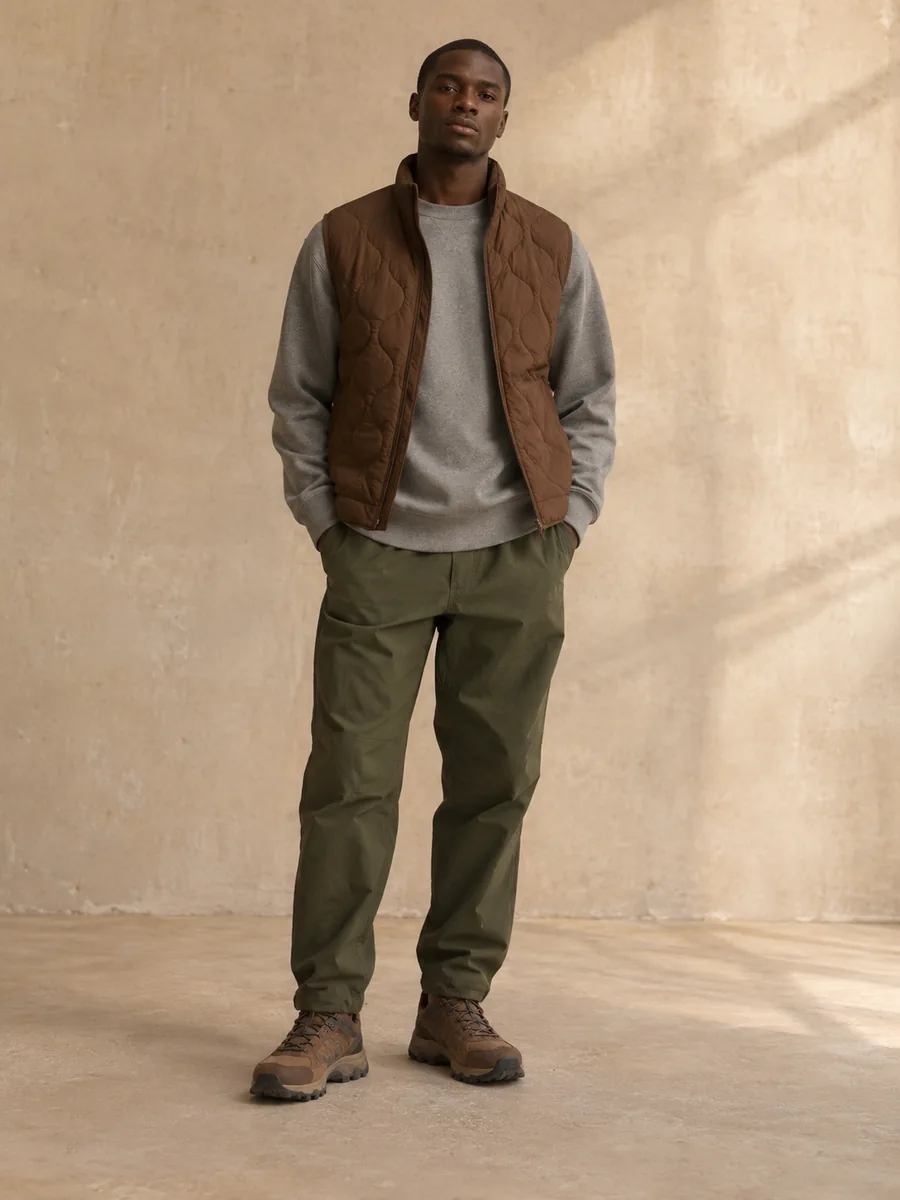
Brown quilted vest with grey sweatshirt and olive trousers
Compare a jacket above broad shorts
A deep-blue light-looking jacket with a white tee above broad black shorts gives the reference another amount of coverage. Gray trail-inspired sneakers remain visible beneath the exposed lower leg. The white center separates the upper frame while short width determines how relaxed the lower outline feels against the stronger shoe shape.
Inspect the actual short, sock and sneaker together because they are not hidden below a full-length trouser. Decide whether the jacket is a useful removable layer for the day. Its visual lightness does not verify temperature comfort or protection, and the shoe’s outdoor reference cannot establish performance for a particular activity.
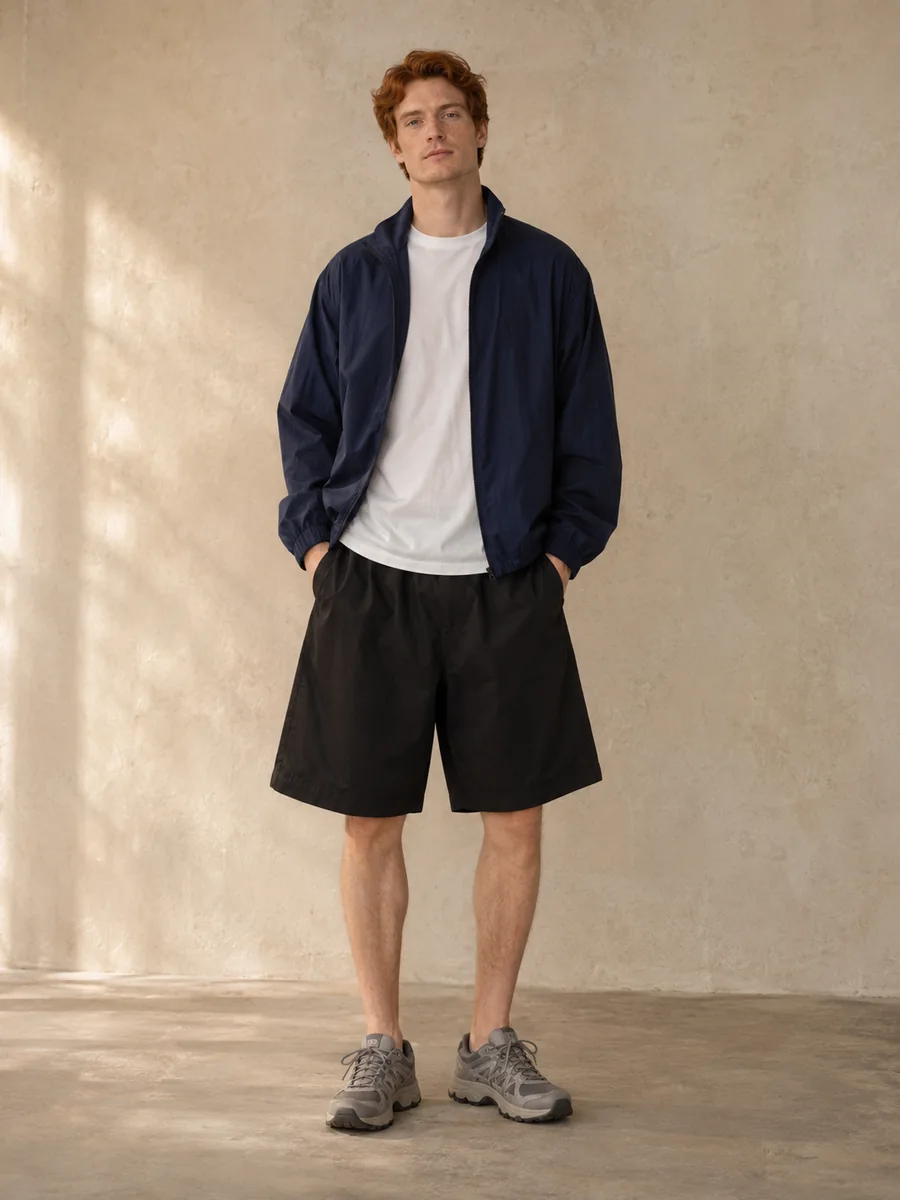
Deep blue shell-style jacket with wide black shorts
Adapt the reference to the day
Compare workwear and techwear-inspired galleries to identify whether outdoor surfaces, utility pockets or technical-looking lines are the feature you want. One borrowed element can change familiar clothes without forcing a complete wardrobe switch. The finder should respect the chosen starting piece and announce when another constraint prevents an exact match.
For travel or a changing day, list the actual garments in the packing tool rather than relying only on a screenshot. Check their real material, care and practical suitability separately. That distinction allows an aesthetic gallery to remain useful for outfits without turning it into unsupported advice about outdoor equipment or weather protection.
Explore more outfit ideas or compare the style files.