Start with a comfortable denim line
An emo-inspired formula can begin with dark jeans you like wearing, then add finer layers, a stripe or a deliberate waist detail. Slim-comfortable and straight legs give different choices without requiring a restrictive fit. Try the actual seat, thigh and knee while seated and walking before deciding the outline should become closer.
This is a clothing reference rather than a declaration of music taste or personal identity. Choose a familiar black or gray jean to keep one part stable while comparing tops. You can borrow a useful stripe or jacket relationship without replacing the entire wardrobe or recreating a musician’s photographed outfit.
Make the finer layers visible
A hoodie framing a striped tee makes different boundaries from a thin overshirt around gray. Keep sleeves, neck and hems clear enough to explain those differences. Several equally long black layers may obscure the feature you wanted, while one shorter edge can reveal the construction better than adding another accessory.
Choose supporting detail by its location. A belt draws attention to the waist; a stripe leads the eye across the torso; a bracelet sits elsewhere. Decide which area should be the focus before adding a second item, then check that the main detail remains visible when the jacket or hoodie is worn normally.
Frame stripes with a black zip hoodie
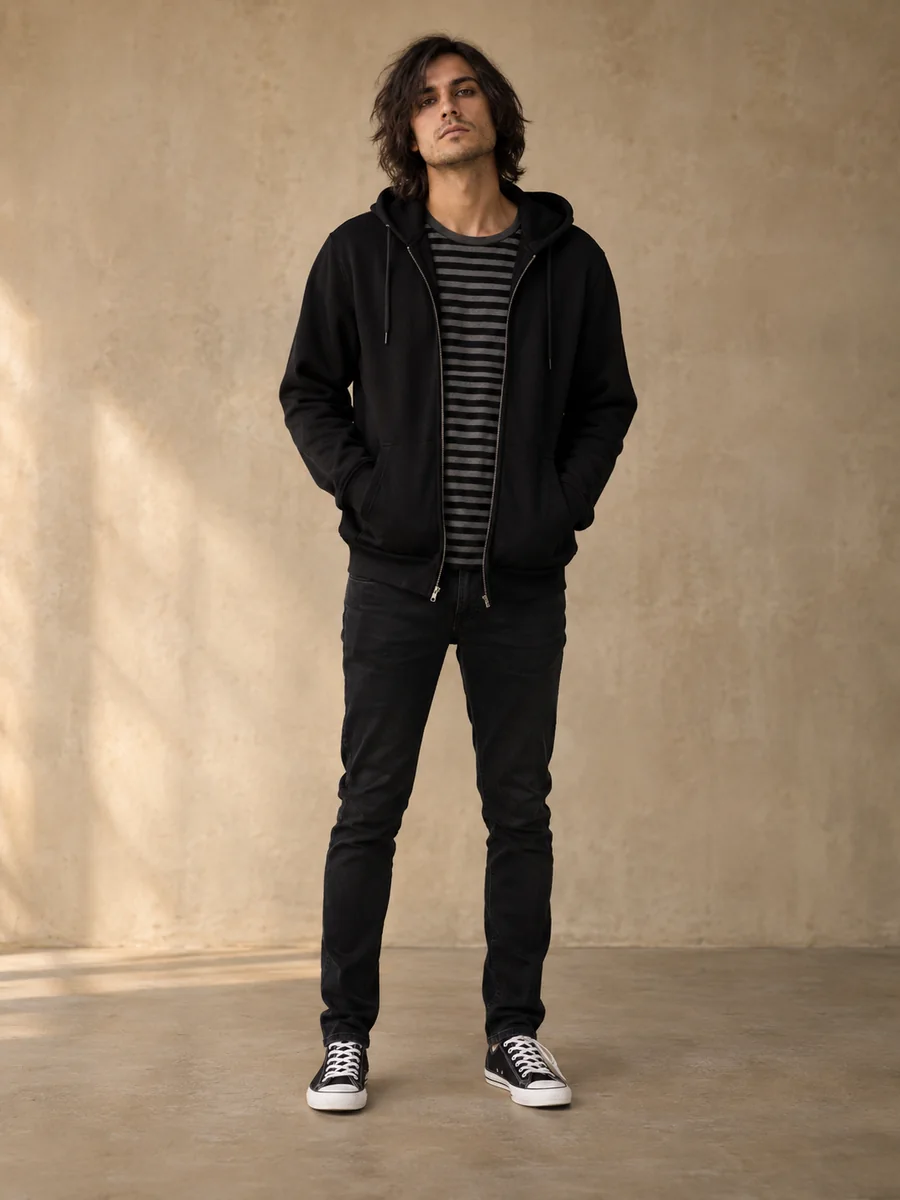
A black zip hoodie around a black-and-gray striped tee makes the pattern a clear center. Comfortable slim black jeans and black-and-white low sneakers give a closer lower line than broader grunge or skater examples. The shoe repeats a little lightness from the top without introducing a large new area of color.
Check the opening and amount of tee shown under the hoodie. Real jeans should allow normal movement rather than only look close in a picture. If the lower line feels restrictive, compare a straight dark pair before replacing the top; the finer-layer formula can support more than one practical width.
Black zip hoodie over narrow grey stripes
Keep a light overshirt around gray
A faded gray tee inside a thin black overshirt adds another surface without a strong print. Straight black jeans and low black shoes quiet the rest. This provides a restrained entry point when an obvious stripe or accessory is not the part you want to wear, while still making the dark layer order deliberate.
Wear the real overshirt open over its base and inspect both hems. A light layer can still bunch when the ending is unclear. Select a version that hangs naturally during ordinary movement instead of arranging it only for an image. A smaller fit adjustment may make these familiar pieces more useful than another statement detail.
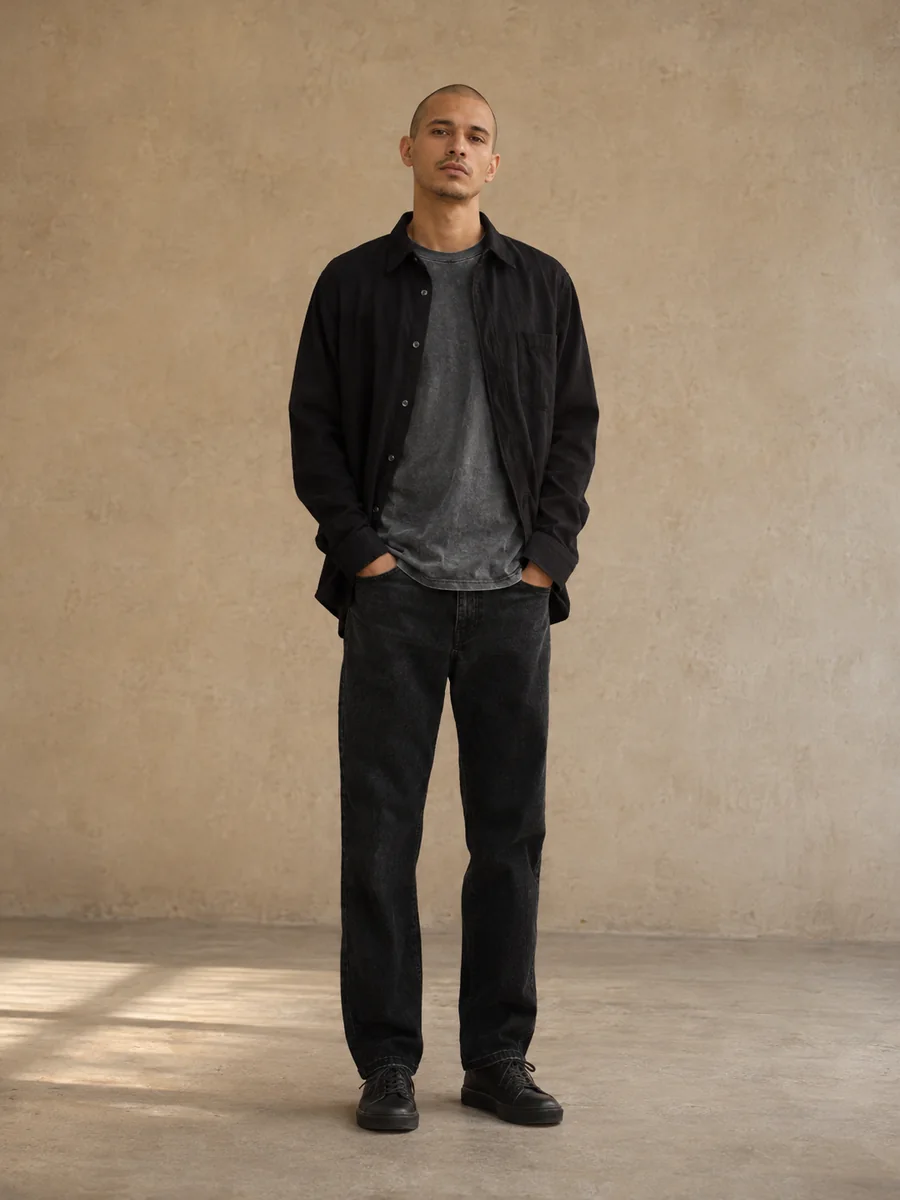
Washed grey tee with a thin black overshirt
Put the stripe in knitwear
A black-and-burgundy striped sweater above closer gray jeans makes the knit the leading surface. Black sneakers quiet the foot and a simple bracelet adds a smaller supporting detail without competing at the neck. The burgundy shifts the palette while the darker overall outline remains connected to the other formulas.
Inspect the sweater’s natural hem and jean break above the intended shoe. A horizontal pattern makes upper width more noticeable, so compare a slightly different knit length with the same bottom when necessary. The decisive change may be the relation between top and waistband rather than a completely different type of garment.
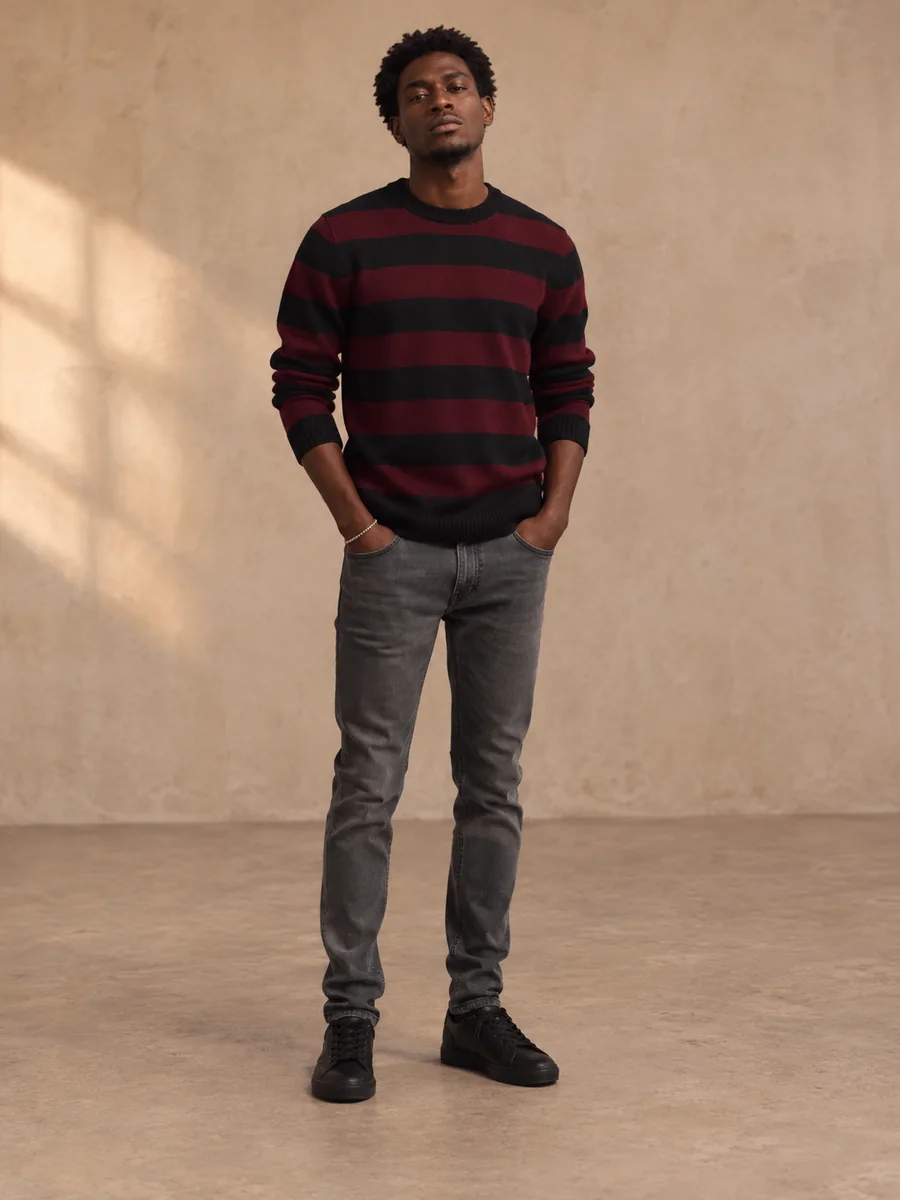
Black and burgundy stripes with grey denim
Let a shorter denim jacket reveal the waist
A short black denim jacket above an off-white tee and black jeans creates a light center within a dark frame. A restrained eyelet belt gives the waist a distinct detail and black low sneakers keep the endpoint simple. Wash and the tee opening separate the two denim garments even when their colors are close.
Check comfort and usefulness of the belt with the real waistband rather than choosing it solely as decoration. Jacket length controls whether it stays visible. Keep the tee from covering it accidentally, or deliberately soften the effect with more exposed fabric; the chosen relationship should remain stable through a day, not depend on a single pose.
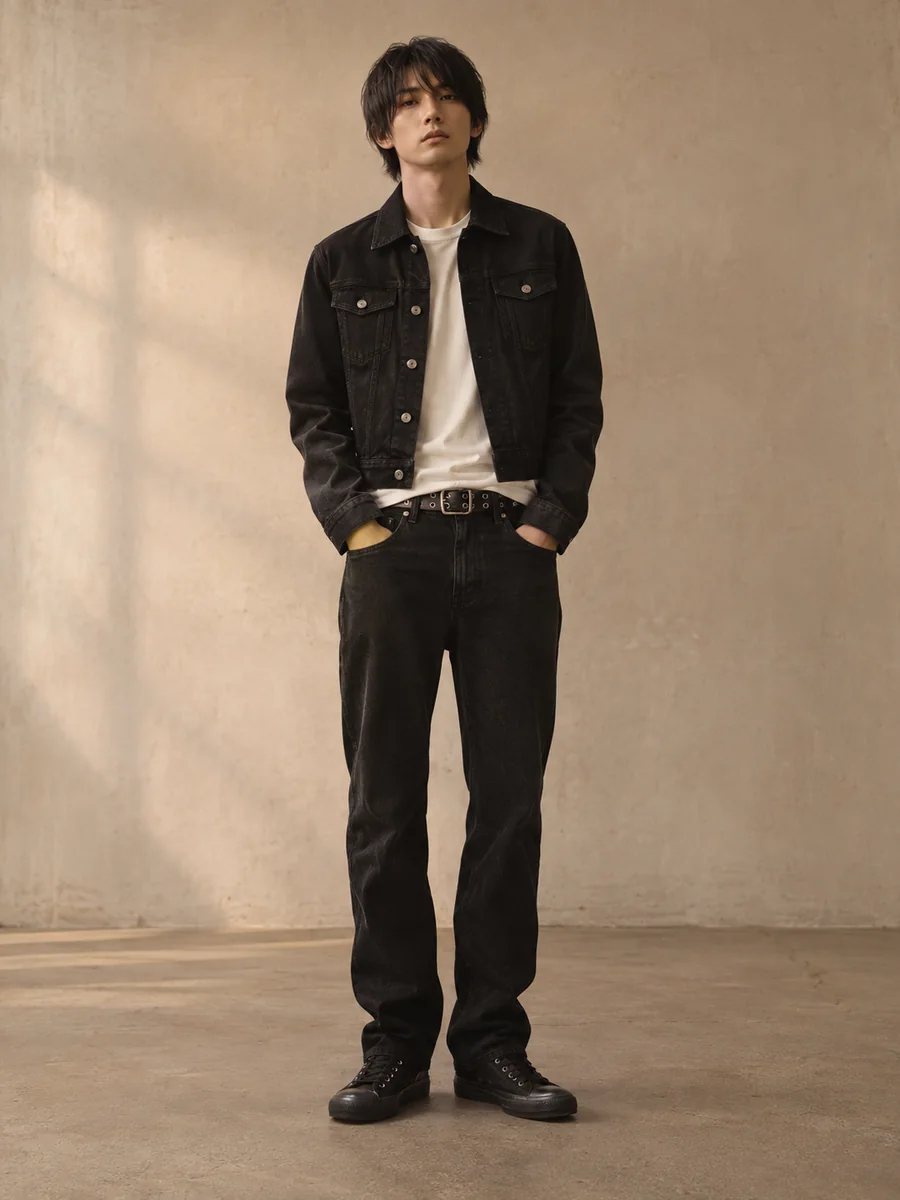
Short black denim jacket with an ecru center
Choose the detail you can repeat naturally
Compare punk, goth and grunge examples to identify whether the closer denim, stripe, shorter jacket or finer dark layer is what you enjoy. Clothing can support several directions without needing a separate wardrobe for each aesthetic. Keep the actual garment relationship clearer than the label attached to the reference.
Use wardrobe records for real pieces and fit notes, then let the finder hold one item as a starting constraint. Confirm the match before linking a generic jean or shoe to your own clothing. This keeps the result honest and makes the next variation easier to understand instead of implying that one image precisely describes every similarly colored garment.
Explore more outfit ideas or compare the style files.