Start with a clothing relationship
Dark academia can begin with an Oxford below knitwear, a textured blazer around cream or a rollneck inside a longer coat. The reference comes from those relationships and the deeper palette, not a decorative book or the performance of an imagined academic life. Begin with a garment you already like to wear.
The examples range from blazer-and-pleat structure to a cardigan with denim. Decide how much tailoring the day needs instead of treating every darker knit as part of one fixed uniform. A piece can work across several aesthetic labels without requiring a separate wardrobe or another similar purchase for each direction you want to explore.
Give the neckline room to read
An Oxford collar interrupts the top differently from a rollneck; a vest exposes shirt sleeves while a cardigan adds another edge around them. Try the actual layers so armholes and collars sit comfortably. A traditional-looking arrangement in a concept cannot establish whether your real clothing has enough room through chest, shoulder and neck.
Treat texture separately from color. Brown corduroy-like trousers can add surface below a quieter navy knit, while a textured blazer may need a smooth shirt as its neighbor. Cream provides a pause inside deeper tones without requiring the strong jump of a black-and-white outfit. Compare the actual garments in ordinary light when choosing those differences.
Frame a cream Oxford with brown tailoring
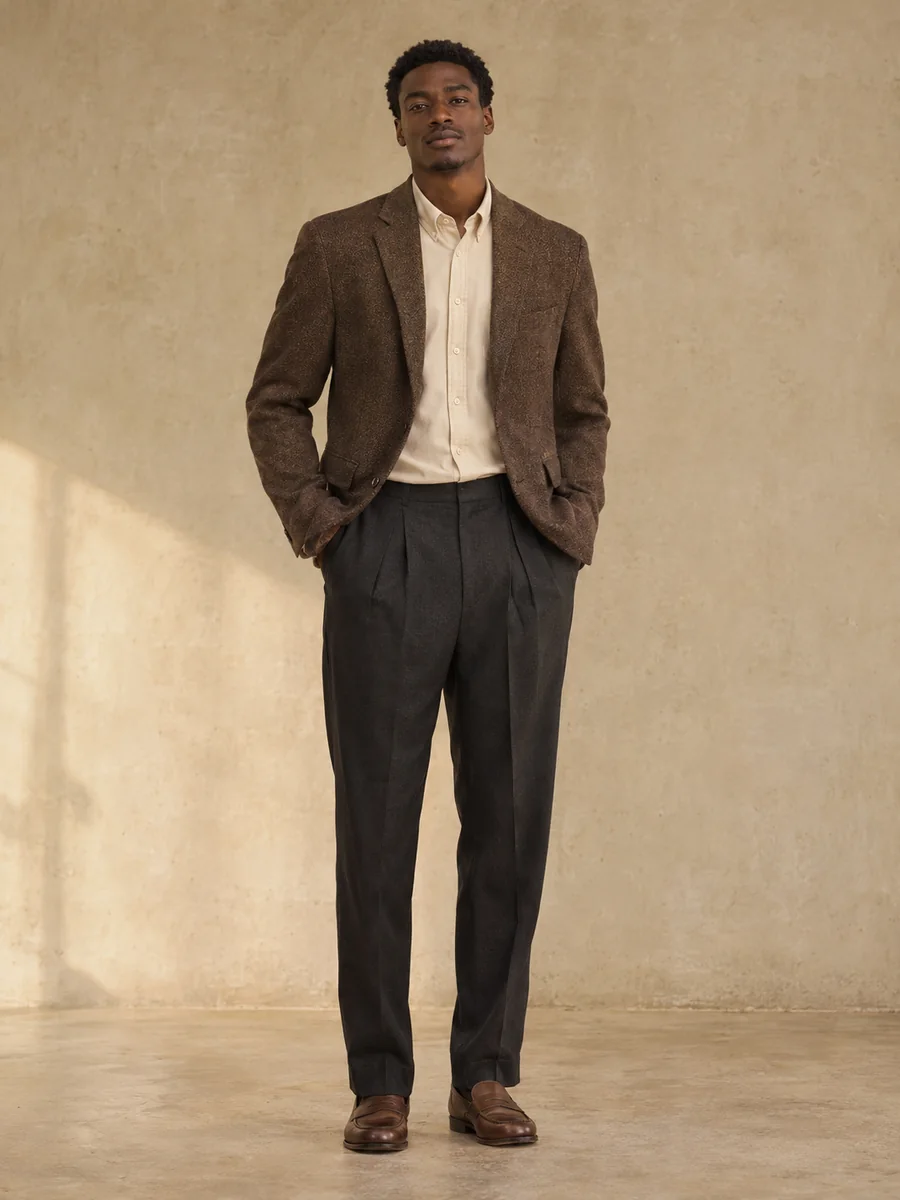
A textured brown blazer, cream Oxford and charcoal pleats create a clear tailored frame. Brown loafers echo the warmer upper surface at the foot. The shirt brightens the center, letting the jacket texture remain visible without another large pattern competing with its surface or a heavy accessory obscuring the neckline.
Check real shoulder and sleeve room above the shirt. Pleats can allow movement while preserving a relatively clean line. Set the hem with the loafers you plan to wear and inspect it from behind as well as in front. The illustration cannot establish a personal size or the quality and weight of a particular textile.
Brown textured blazer with an ecru Oxford
Deepen the base with a navy rollneck
A navy rollneck and brown corduroy-looking trousers create a continuous neckline above a warmer lower surface. A charcoal coat supplies the longest outer frame, while black derby-style shoes keep the endpoint restrained. Several deep shades can remain coherent without needing to be exactly the same or becoming a fully black outfit.
Check the actual coat over the knit around collar and upper arm. The trouser surface should fall naturally instead of bunching heavily at the shoe. Choose real coverage and materials for the conditions; a substantial-looking coat in a generated concept is not a temperature rating and does not establish insulation or water protection.
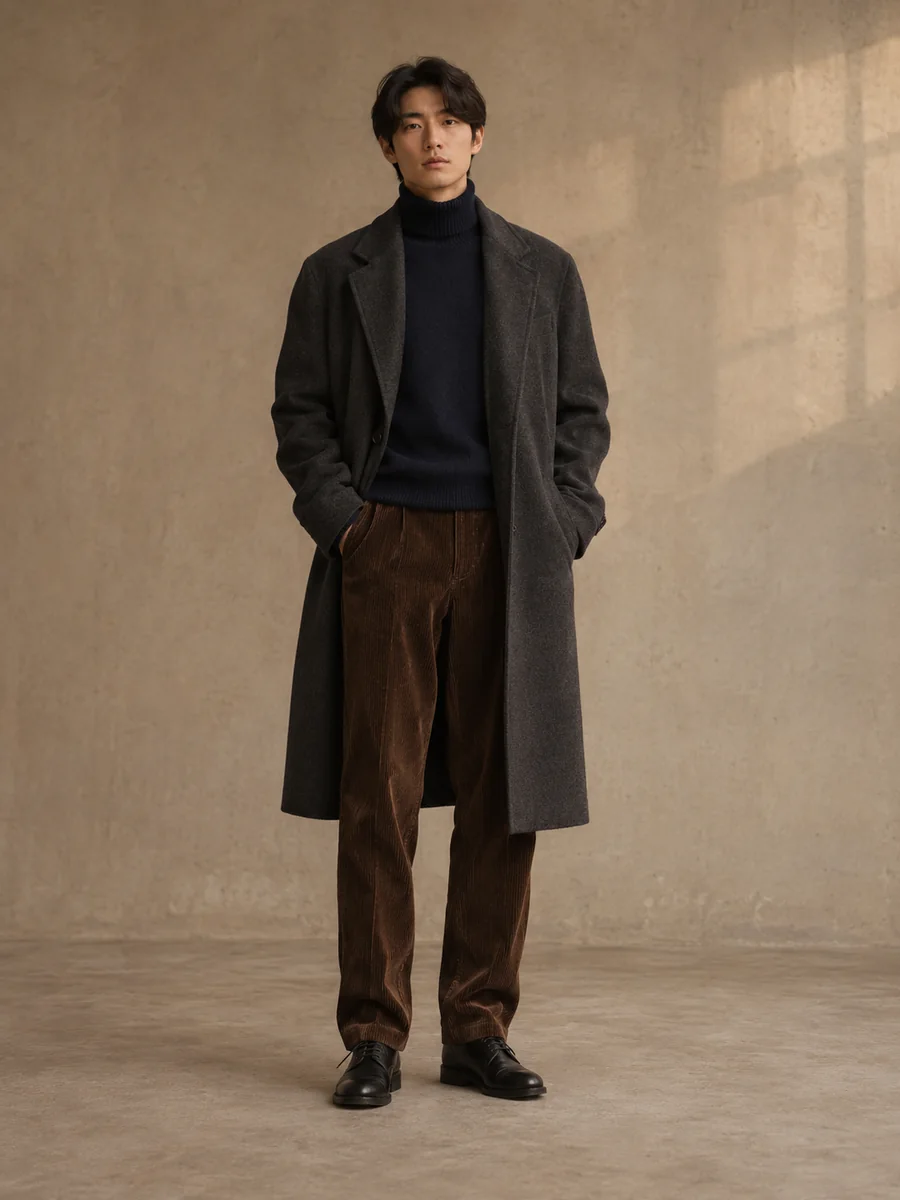
Navy turtleneck with brown cords and a charcoal coat
Expose Oxford sleeves with a vest
A dark olive knit vest above a white Oxford leaves a lighter sleeve and collar visible, unlike a full cardigan or blazer. Dark-gray trousers quiet the lower half and brown shoes add a warmer endpoint. The main construction is the torso frame around the shirt rather than an accumulation of several neck accessories.
Inspect the real armholes and shirt volume to avoid uncomfortable gathering at the chest. Let the collar sit naturally above the knit. If the upper half feels crowded, solve that relationship before adding a scarf or tie. Another detail may conceal the useful layer order instead of making the academic reference clearer.
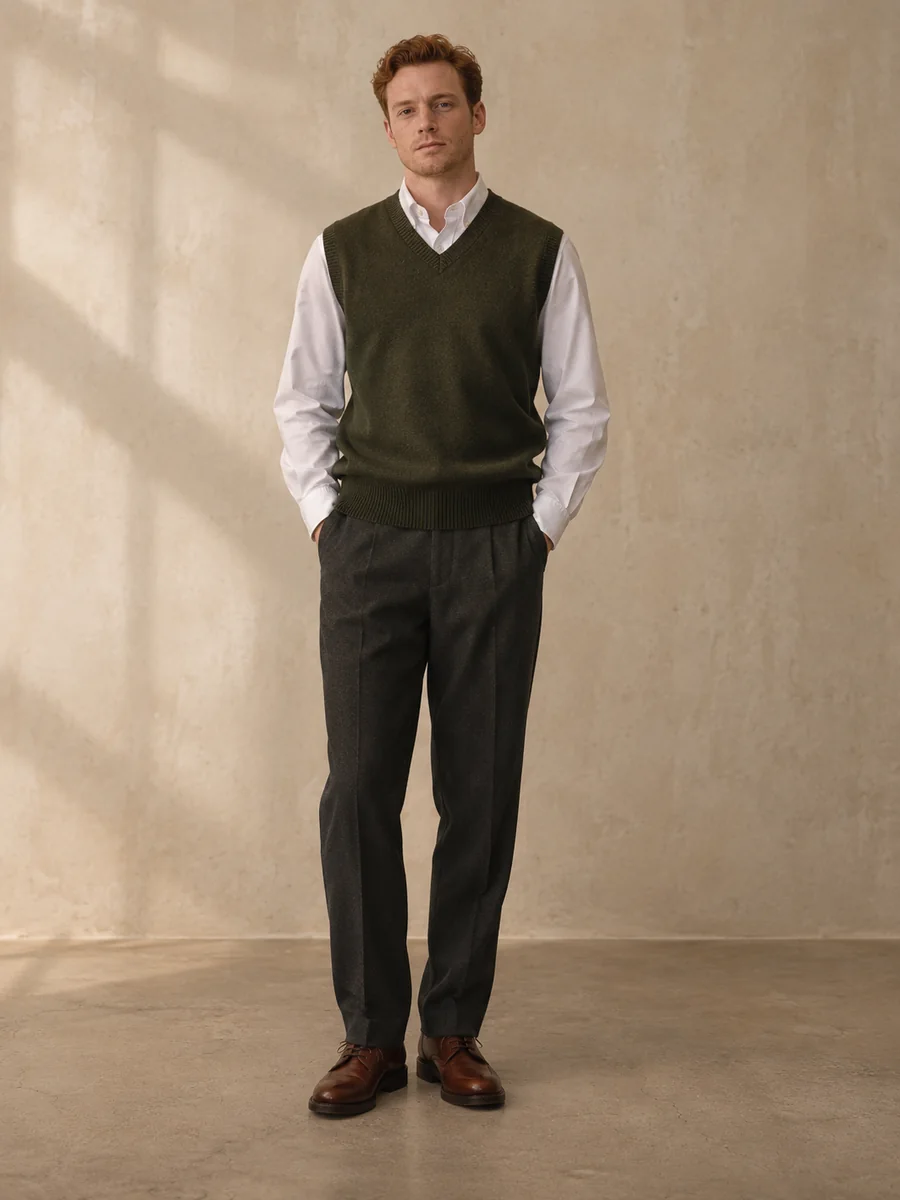
Dark olive knit vest with a crisp white collar
Keep denim connected through a cardigan
A burgundy cardigan around a cream tee softens the frame above straight indigo jeans. Brown ankle boots ground the lower line and a dark-gray scarf can make another controlled neckline layer. This is less tailored than the blazer formula but retains a deeper palette and visible knitwear as its main reference.
Try the combination without the scarf first so the cardigan opening is easy to judge. Add it only when its actual bulk works with the neckline. Check the jean over the intended boot shaft rather than assuming the casual lower half needs large stacks of fabric or extra length to look relaxed.
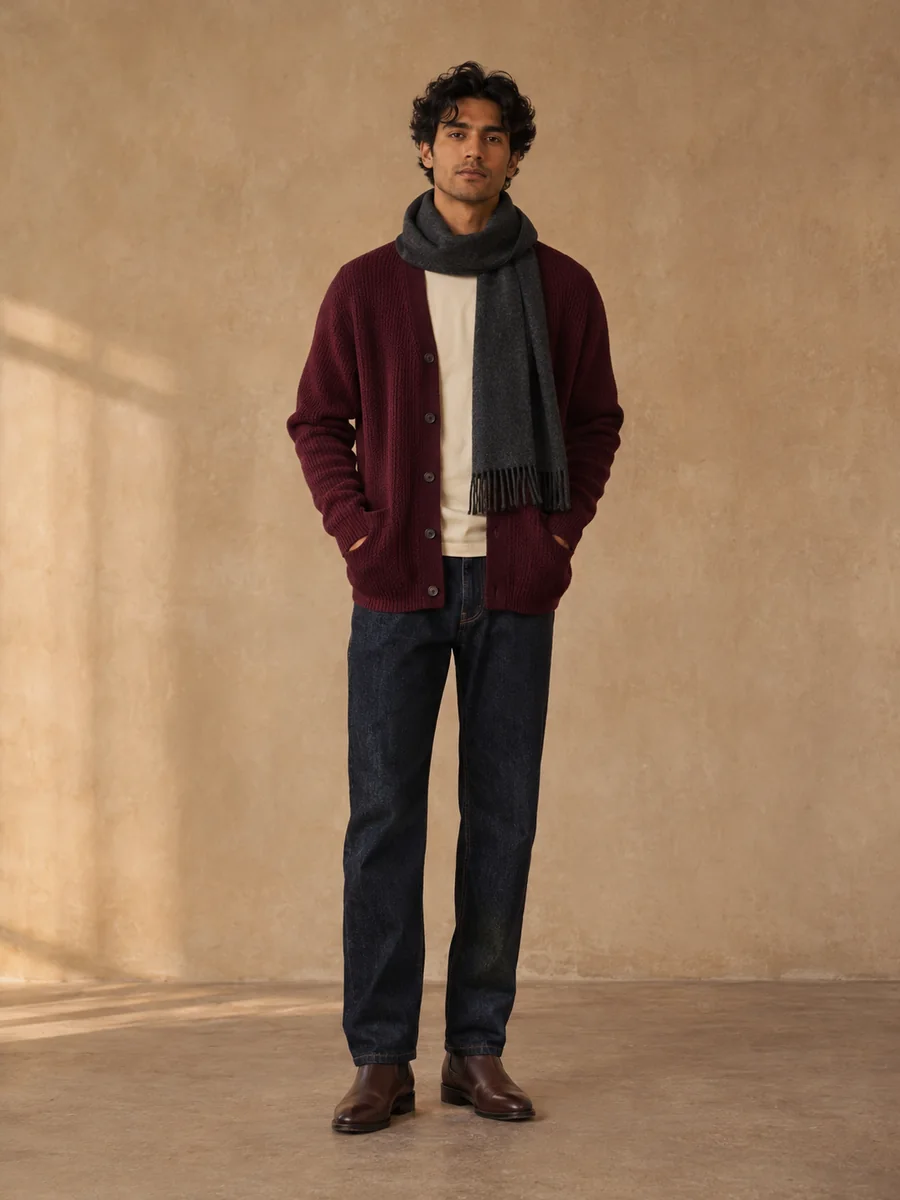
Burgundy cardigan with dark denim and a grey scarf
Build a small set with changing emphasis
A cream shirt, quiet darker trouser and textured knit can support several formulas when their actual proportions are compatible. The capsule builder should list those supported combinations and recalculate after a piece is removed, instead of treating every top and bottom as automatically interchangeable because they share a broad aesthetic label.
Save useful versions with notes on collar, hem and layering. Light academia changes palette and surface impression; poetcore can soften tailoring and emphasize a more unhurried arrangement. Their overlap is useful. Compare whole outfits to choose what works with your clothes rather than buying another nearly identical garment simply because it belongs to a different named mood.
Explore more outfit ideas or compare the style files.