Start with one familiar base
A useful casual outfit starts with a combination you can repeat: a top, a bottom and shoes whose proportions work together. Choose the jeans or chinos you already enjoy wearing, then decide where the top should end above them. An unusual garment is not necessary to make that choice intentional.
Try the base while standing, seated and walking before adding an outer layer. A tee pulling across the waistband or fabric slipping beneath the heel is a practical issue rather than a lack of accessories. Solve those relationships first so a jacket can change the mood instead of hiding an awkward fit.
Make the plain pieces feel deliberate
Plain clothes can still differ clearly through texture, lightness and shape. White inside navy makes a more visible center than gray against olive. Choose the contrast that appeals to you and let the remaining surfaces support it, rather than assuming every casual outfit needs another strong color or print.
Look for one clear boundary at the neckline, waist or shoe. If several layers finish in an unclear band around the hip, move one hem or remove a piece. That small adjustment can make familiar basics more legible without requiring replacement clothes or an accessory that changes the whole direction.
Use an open overshirt around denim
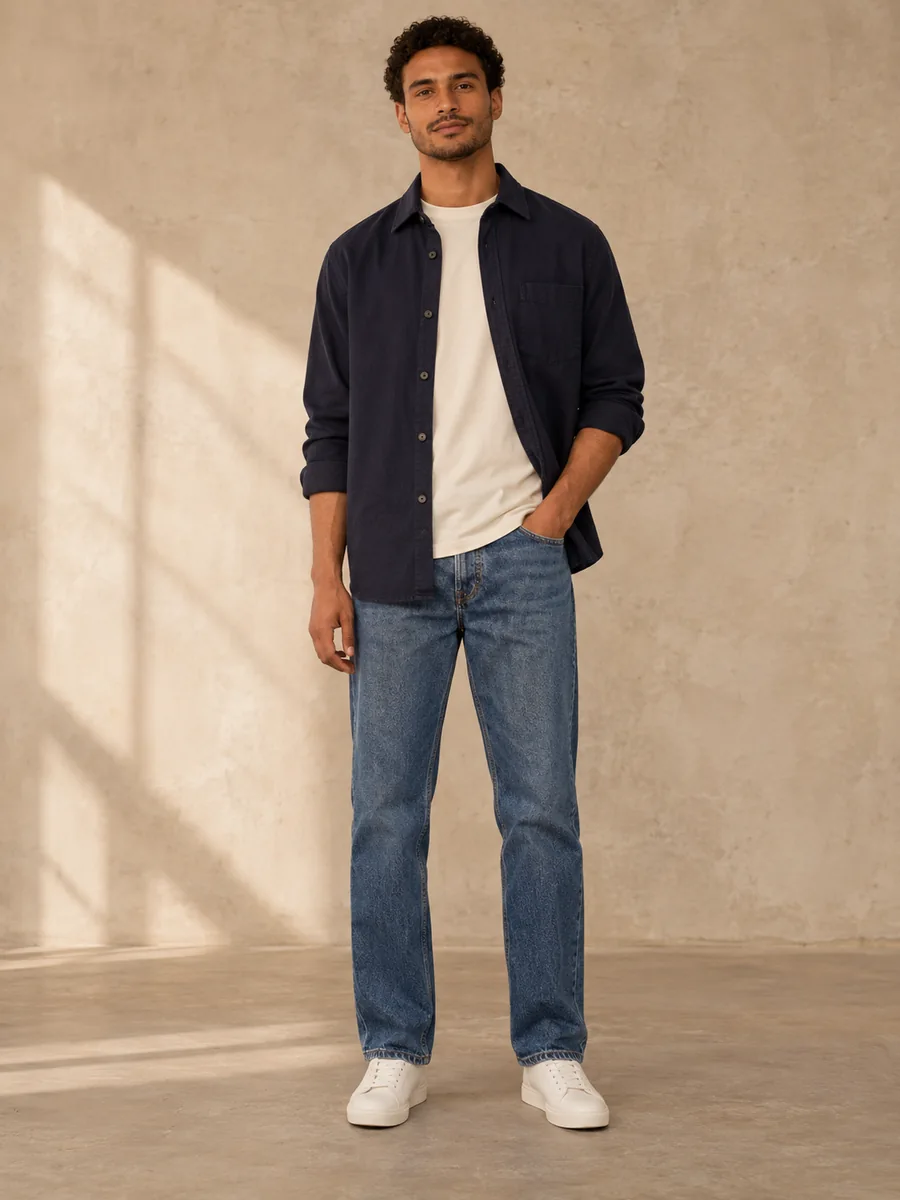
The navy overshirt, off-white tee and straight blue jeans formula puts a darker frame around a light center. White low sneakers echo that center at the foot. Keep enough of the shirt opening visible for the base to read, rather than closing every surface into a continuous block of dark color.
A straight jean offers a useful starting line without needing an extremely short or oversized top. Set its hem over your actual sneakers, then compare a shorter tee if too much cloth gathers at the hip. Similar pieces can create the same relationship without matching the image or buying a complete illustrated kit.
Navy overshirt with ecru tee and straight jeans
Warm the palette with olive and beige
A gray henley, olive chino and beige short blouson creates a warmer variation without a loud accent. The compact jacket exposes more trouser rise, while the henley changes the neckline. Ecru sneakers finish quietly so the three larger areas of color remain the useful differences instead of competing with the shoe.
Check the real jacket over the henley through the upper arm and shoulder. If the shirt extends far below it, decide whether that strip improves the outline or only adds another horizontal edge. Adjust the layer lengths together rather than choosing each garment solely from its individual size or category name.
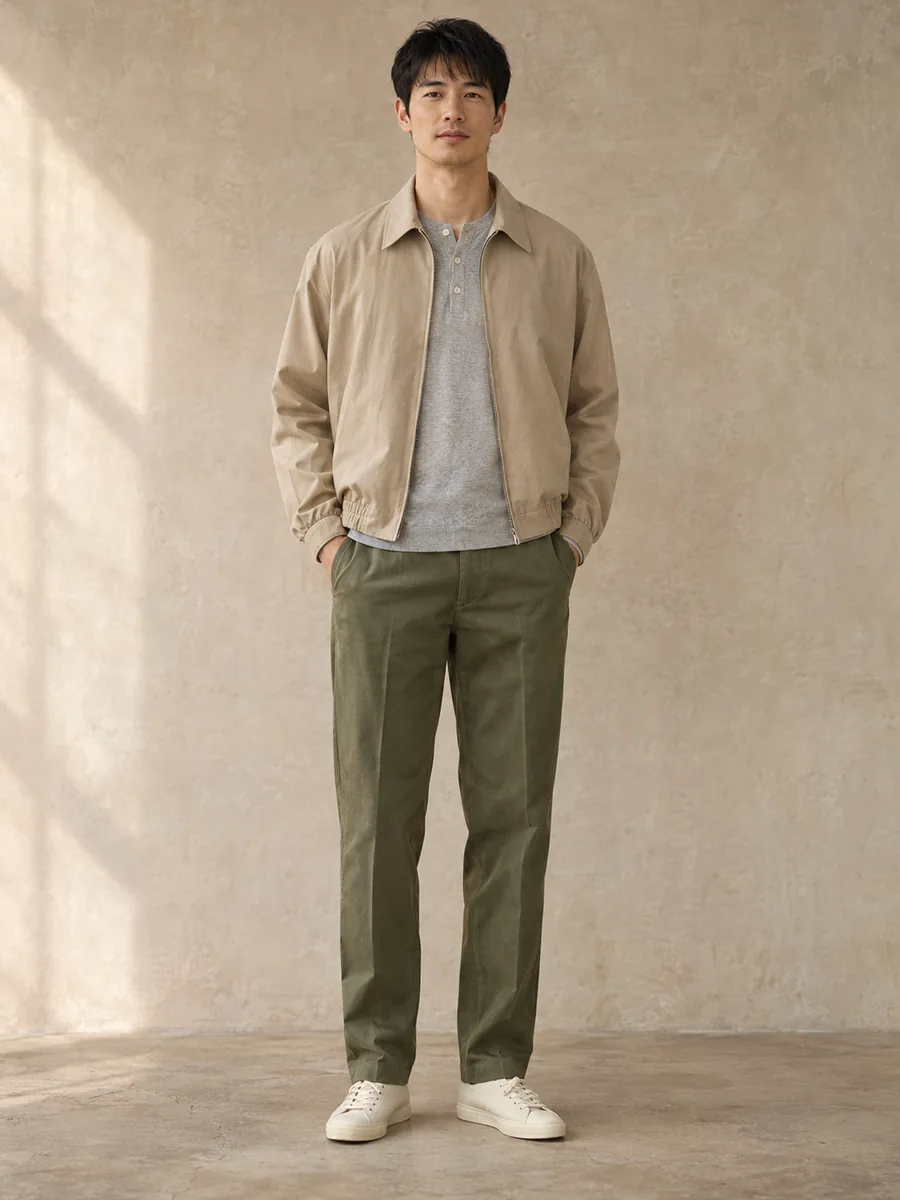
Grey Henley, olive chinos and a short beige jacket
Give a simple shorts outfit clear proportions
A navy-and-cream striped tee above beige knee-length shorts uses pattern as the main detail. Brown boat-style shoes create a quieter endpoint than a large sneaker, while a plain navy cap repeats a color already present. The result comes from those relationships rather than several unrelated accessories placed around a simple base.
Assess short width and length separately. A long short is not necessarily roomy through the thigh, and a broad one need not cover the knee. Try the real shoes and any preferred socks so that the spaces between hem, leg and footwear feel intentional, instead of copying only the amount of leg visible in a photograph.
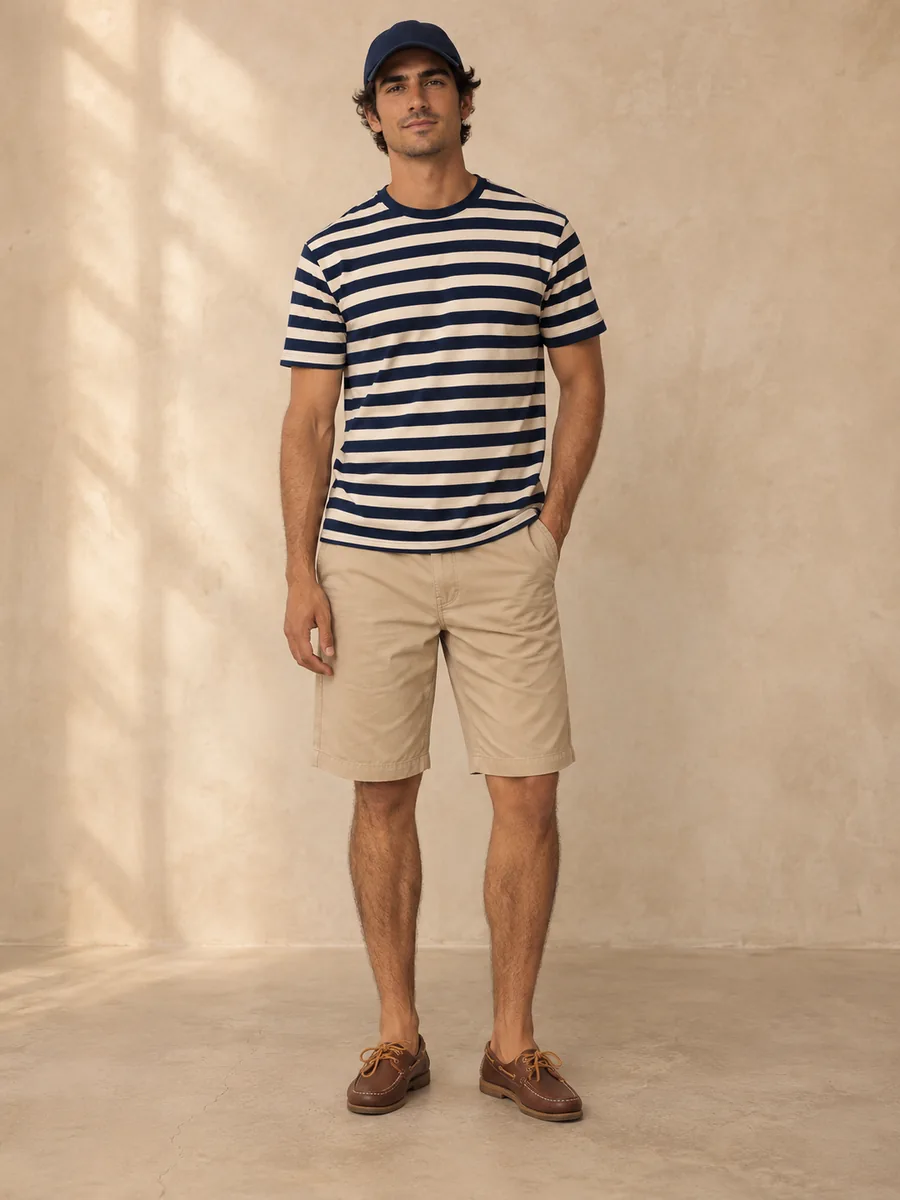
Navy stripes, beige shorts and brown boat shoes
Let one sweatshirt color lead
A burgundy sweatshirt above straight black denim makes the upper color the clearest difference. Gray sneakers and a charcoal light jacket support it quietly. Compared with the overshirt formula, the basic structure remains uncomplicated but the strongest area of color moves from a darker frame to the torso inside it.
Check where the sweatshirt settles naturally around its ribbed hem. Do not hold it in a temporary crop to resemble an image. If its length hides more denim than you prefer, compare another layer arrangement or a stable fold, keeping the actual clothes comfortable during a day rather than only for a pose.
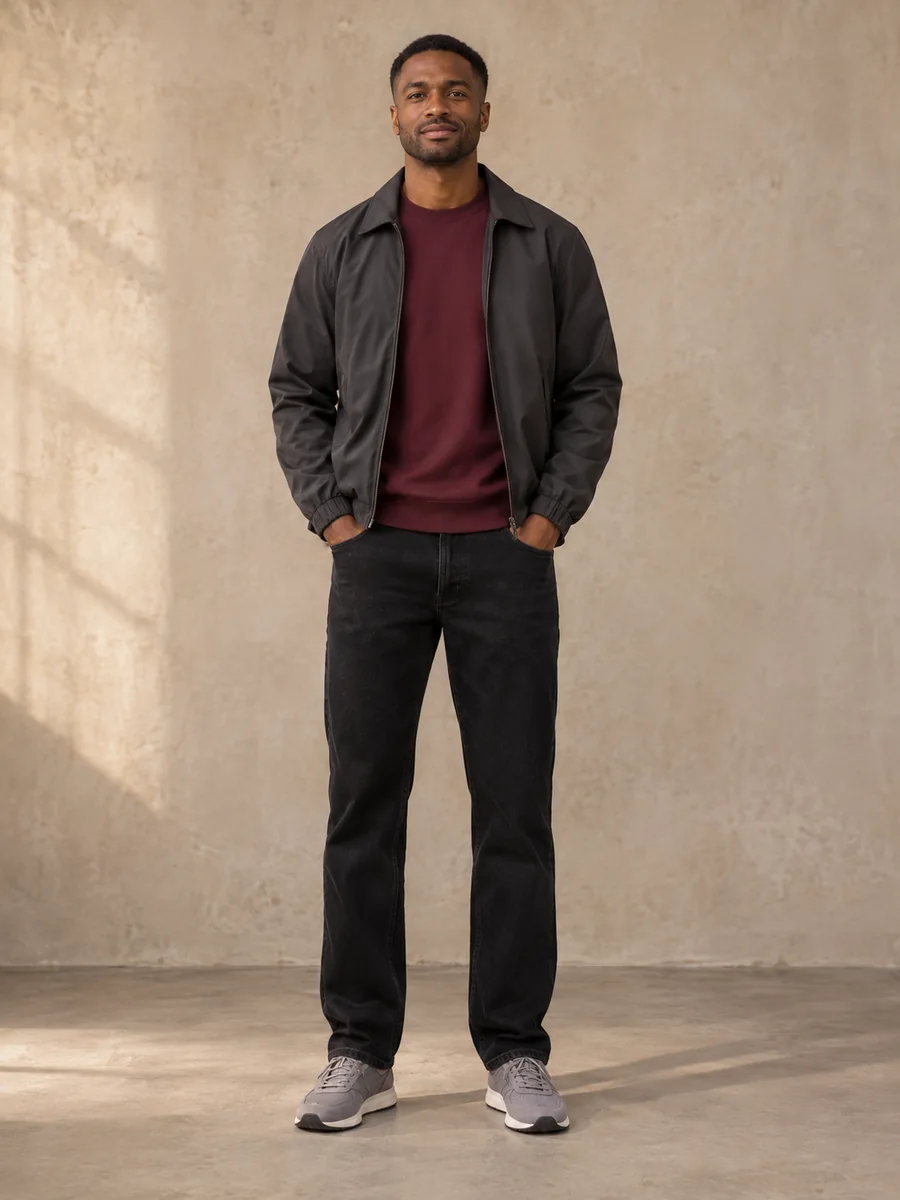
Burgundy sweatshirt with black jeans and a charcoal jacket
Turn the formulas into a real rotation
Record the actual tops, jeans, chinos and shoes you own, then connect a look to those pieces only after confirming category, color and fit. A generic black shoe shown in a concept does not automatically describe the pair in your closet. A reasonable match should remain visible as an approximation when necessary.
Use the planner to repeat a useful bottom with different upper layers and save notes about the lengths you prefer. Change one part when a combination feels wrong so you can identify what helped. The aim is a small set you can use rather than near-identical screenshots that each appears to demand another purchase.
Explore more outfit ideas or compare the style files.