Let the shirt be the starting point
Blokecore here means bringing a football-shirt reference into an everyday outfit. Begin with the shirt you actually want to wear, then choose trousers and shoes that give it a clear setting. You do not need matching shorts, team accessories or a collection of logos for the reference to be readable.
Look at its collar, sleeve length, surface and amount of visible print. A broad graphic behaves differently from an all-over stripe. In the examples, the supporting clothes keep enough space around that detail for you to notice the shirt rather than a pile of competing references.
Use denim to keep the first version familiar
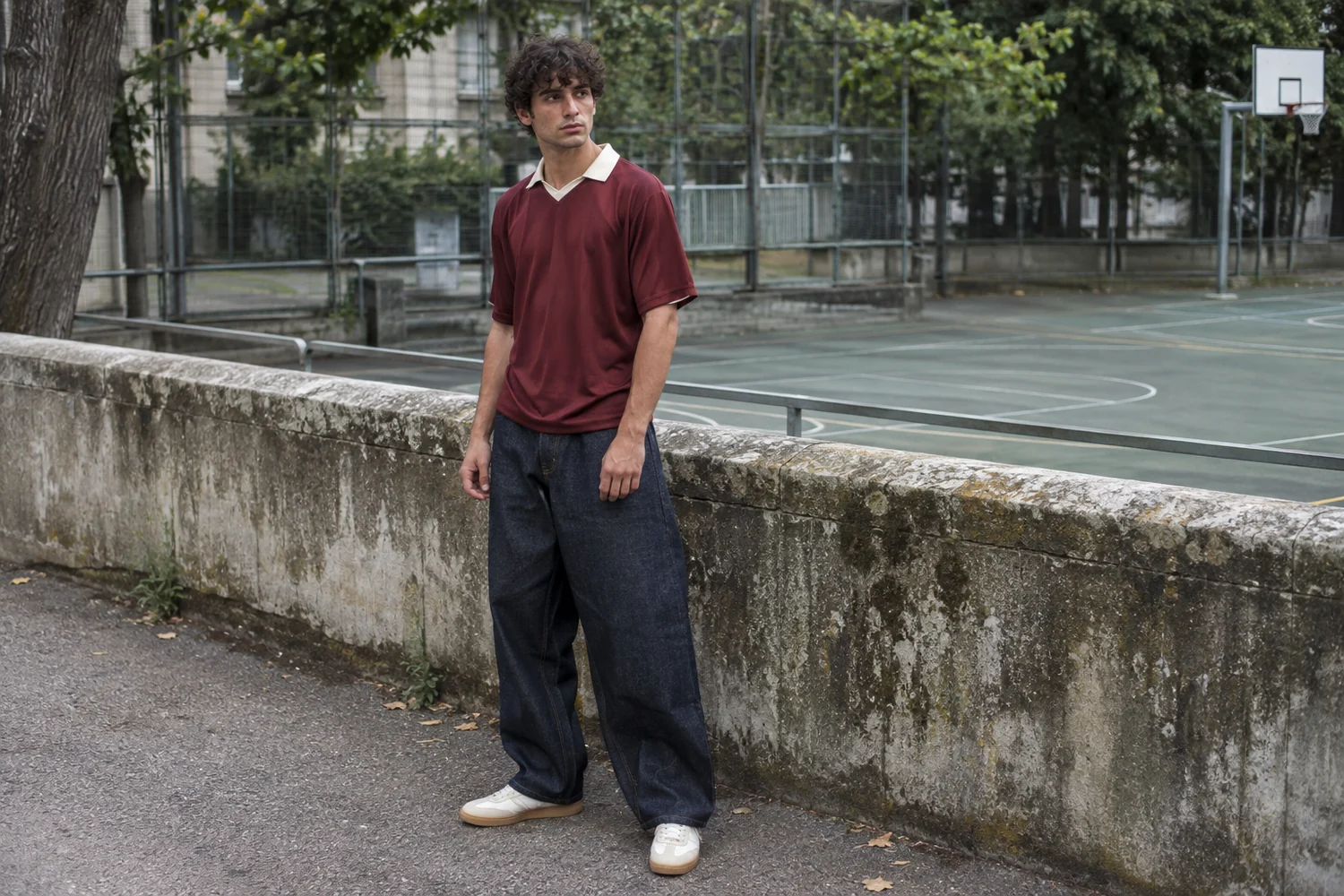
Burgundy football shirt, wide indigo denim pairs a burgundy football-style shirt with dark wide denim. The wider leg gives the shirt a relaxed lower half; the dark denim keeps the larger color area above the waist clear. Start with jeans you already like, at their usual waist position, before experimenting with a different cut.
Check where the shirt ends when your arms are relaxed. If it hides the trouser line you want to show, try a gentle front tuck or another shirt length. A fold that stays comfortable while seated is more useful than a temporary adjustment held in place for a photograph.
Add a jacket without hiding the whole idea
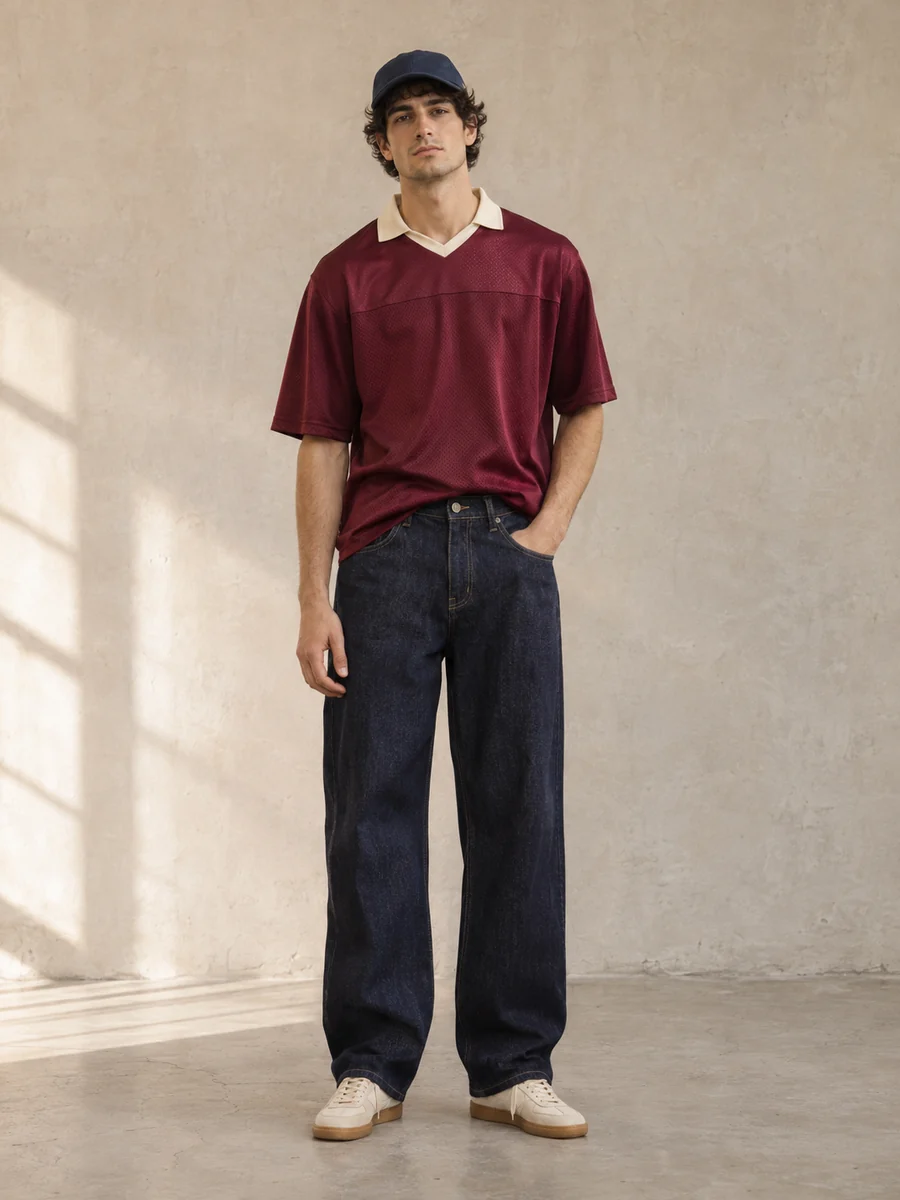
White football shirt under a navy bomber places a white football-style shirt beneath a navy bomber and above grey trousers. The jacket edges create a frame around the lighter center. Open it enough to show the shirt detail when that is the focal point; the closed version should still feel like a complete combination.
Try the jacket with the actual shirt underneath. A stiff collar or bunched sleeve can change how it sits. If the layers compete, choose a simpler neckline or a lighter outer layer instead of adding another accessory to draw attention away.
Change one supporting piece at a time
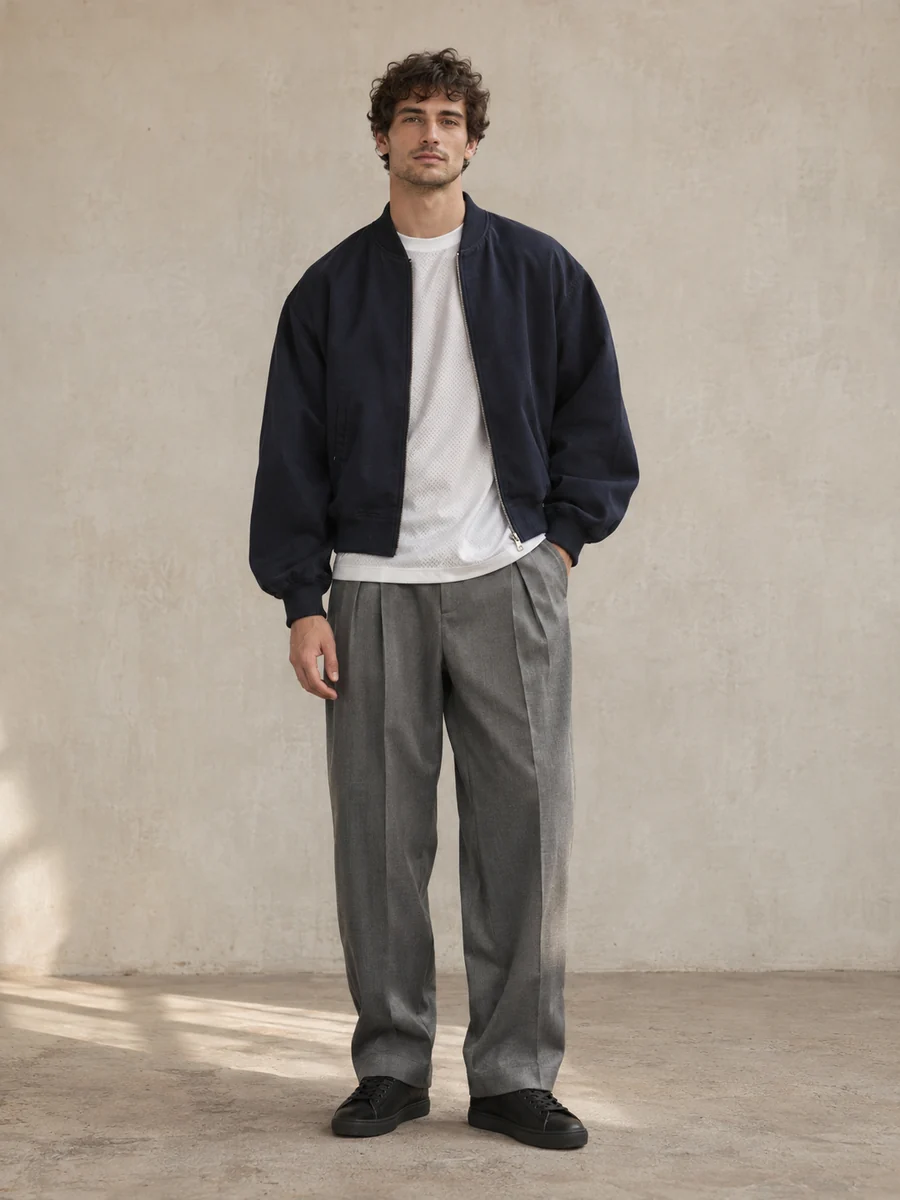
A football shirt with pleated trousers can feel more composed; the same shirt with loose denim feels more casual. Neither version requires changing every item. Keep the shirt and shoes constant while testing the new trouser opening and length.
Choose the shoe by how it meets the hem, rather than assuming this style requires one brand or sole shape. A slimmer shoe can remain visible beneath a clean hem; a fuller shoe creates a different endpoint. Inspect the side and back before deciding the pair has disappeared.
Use a broad-short example as a contrast, not a shopping requirement
Green retro-style jersey with black shorts and white sneakers provides a useful neighboring example: a green retro-style jersey above broad black shorts, with white shoes and socks. It puts more of the lower-leg outline on show than the denim and bomber combinations. Compare the amount of patterned or colored shirt against the visible shorts before deciding that the football reference needs a particular trouser.
For a practical test, keep one football-style shirt and one pair of shoes. First try your usual jeans; next try a plain straight trouser; finally try shorts if they suit the day. Look at the different boundaries at the waist and knee. You are testing the supporting shapes, so there is no need to change the shirt color between those three versions.
If a bag strap covers the shirt detail, check the combination wearing the bag rather than adjusting it only for the mirror. A useful outfit should still communicate the part you enjoy after you add the things you actually carry. Save the version you can repeat, with a note about the shirt arrangement rather than an assumption that another jersey will have the same length.
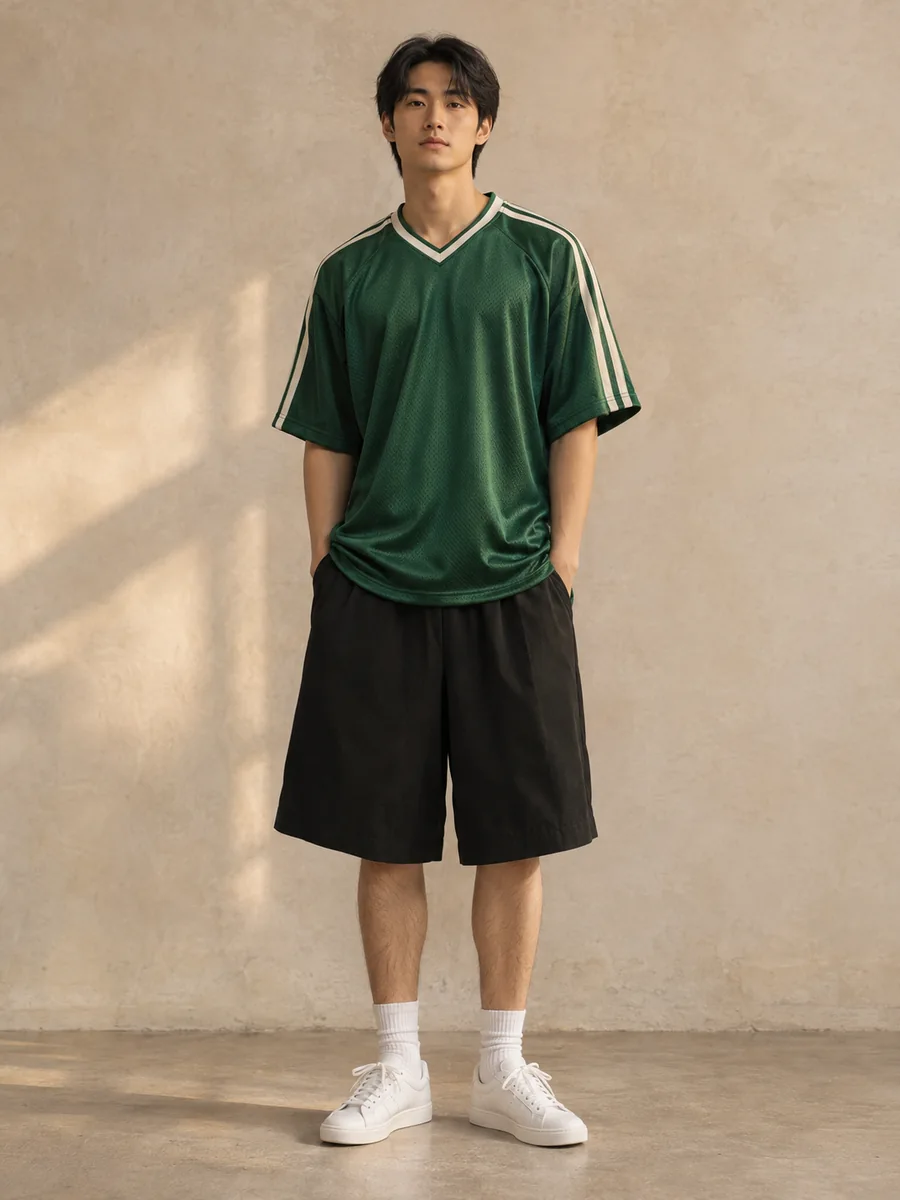
Green retro-style jersey with black shorts and white sneakers
Keep a repeatable formula
Save the combination that works with your ordinary day. Record whether you prefer the shirt tucked, the jacket open and the trouser hem cleaner or more gathered. Those choices are easier to reuse than a long list of products to buy.
The football-inspired concepts use generic garments. When a real team shirt or named product is shown elsewhere, check its actual photo and reference rather than treating a concept illustration as proof of an exact item.
- Keep the football shirt as the clearest reference.
- Check its hem against the actual waistband.
- Change denim, tailoring or the outer layer separately.
Explore more outfit ideas or compare the style files.