Spend effort on the silhouette first
You can build a Y2K leaning outfit without replacing every item you own. Start with a relaxed lower half, a top whose length works with it and a shoe that stays visible beneath the hem. Then choose one detail that gives the combination its character.
Budget is personal, so this guide does not promise a complete outfit for a fixed price. The aim is to reduce unnecessary purchases. Before searching for something new, list the pieces you already have and identify the one missing element that would create the most useful combinations.
Separate basics from the piece that leads
A plain tee, dark zip hoodie or simple belt can support several outfits. Your leading piece might be the denim shape, an unusual jacket or a textured knit. Keeping that distinction clear helps you avoid buying several strong pieces that only work with each other.
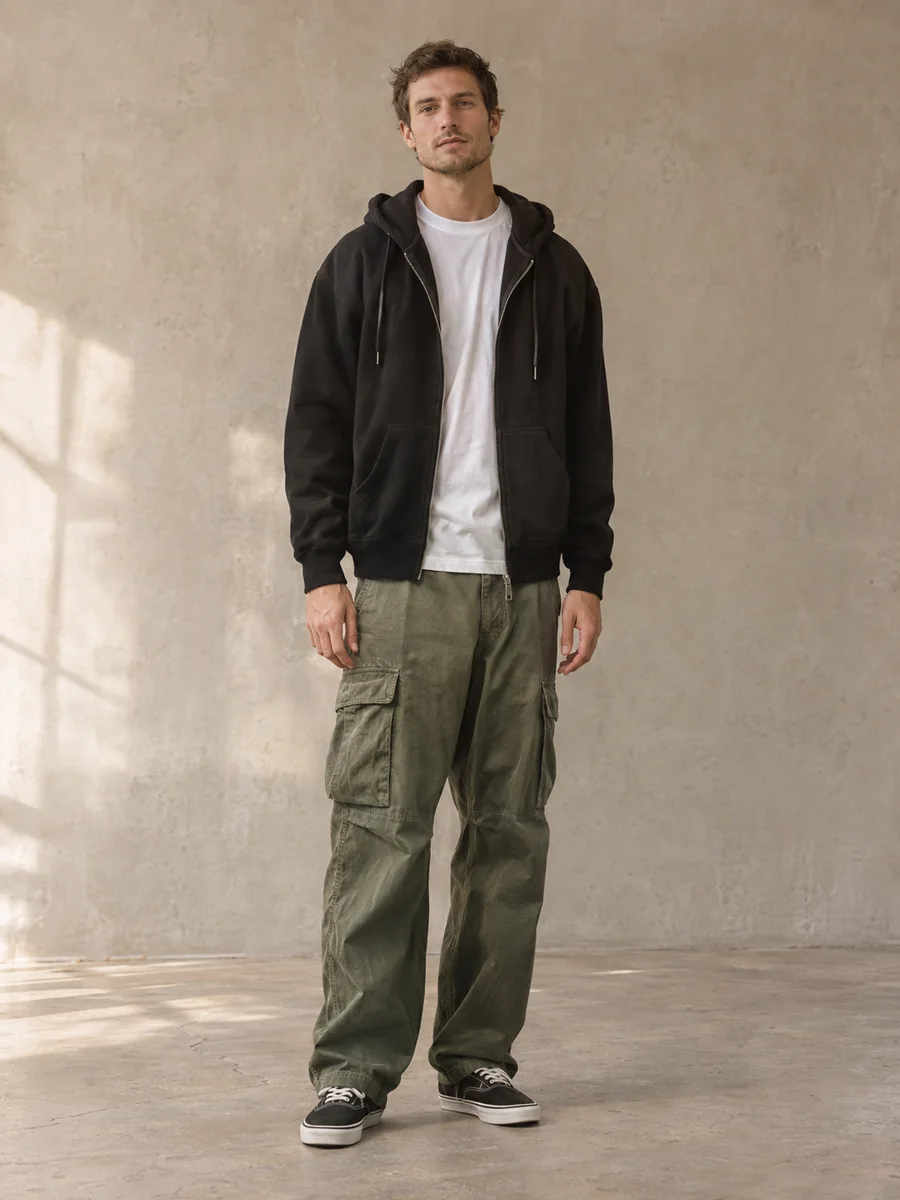
Olive cargos with a black zip hoodie are a useful example. If those pieces are already in your wardrobe, you may need no new clothes to try the formula. Adjust the tee length and shoe choice first. A different accessory is an optional variation, not a condition for the outfit to work.
Black zip hoodie, olive cargos
Reuse the same denim in different ways
A pair of baggy blue jeans can anchor a washed hoodie outfit, a short jacket combination and a plain white tee look. The changes above the waistband create different moods while the jeans and shoes remain the same. That makes the denim a more useful purchase than a piece with only one planned match.
Try writing three outfits before buying a garment. Use specific items you own rather than imagined future purchases. If a new jacket requires a new tee, belt and shoe to make sense, compare that total commitment with a simpler jacket that already fits your wardrobe.
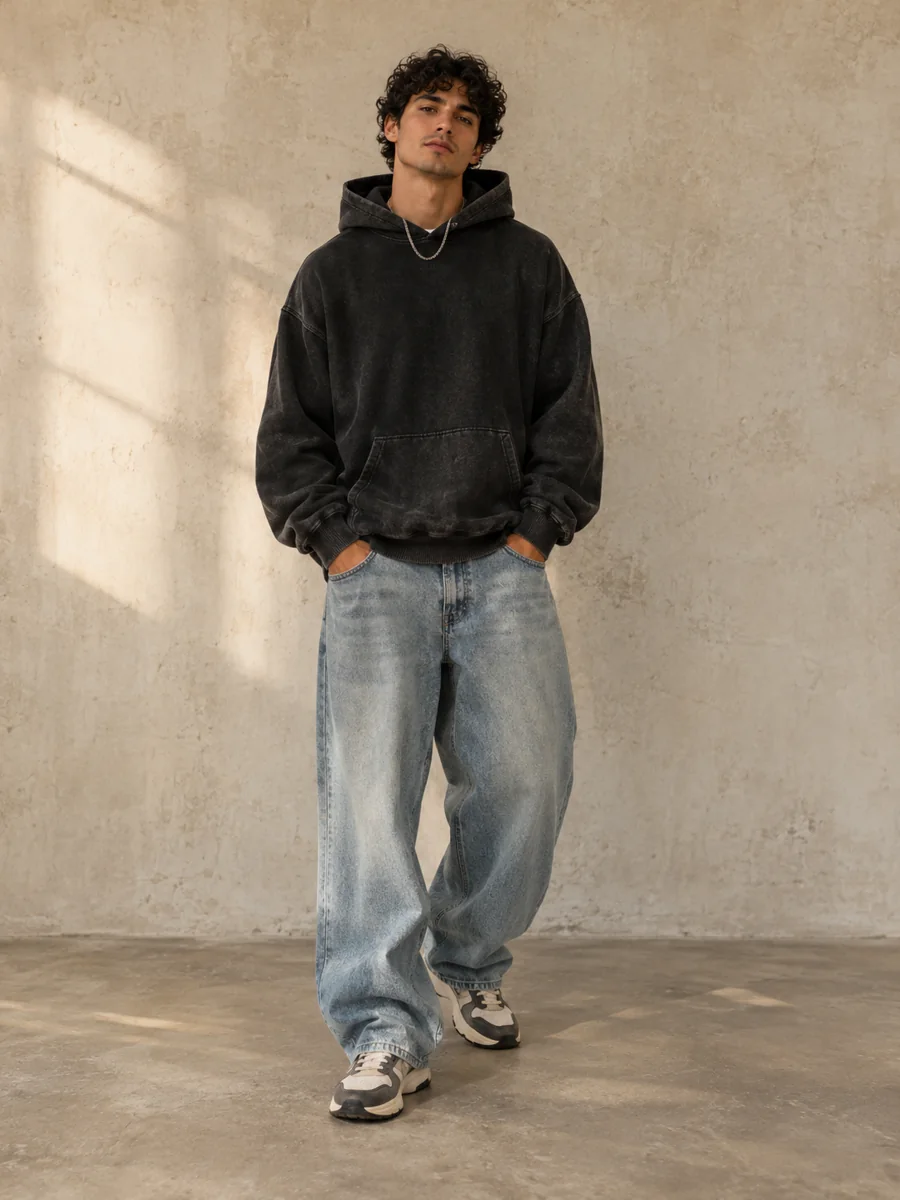
Washed hoodie, baggy denim
Use a plain tee as a deliberate choice
A white tee with grey denim can carry the style through shape and contrast. You do not need a graphic on every top. Look at the sleeve width, neckline and hem before deciding that a plain tee feels too ordinary. A better proportion can create more impact than another print.
If you want a visual detail, begin with an accessory you own. A belt or watch can complete the combination without becoming the reason for it. Give yourself time to wear the base outfit before adding extras; photos of a single styled pose can make accessories seem more essential than they feel in daily use.
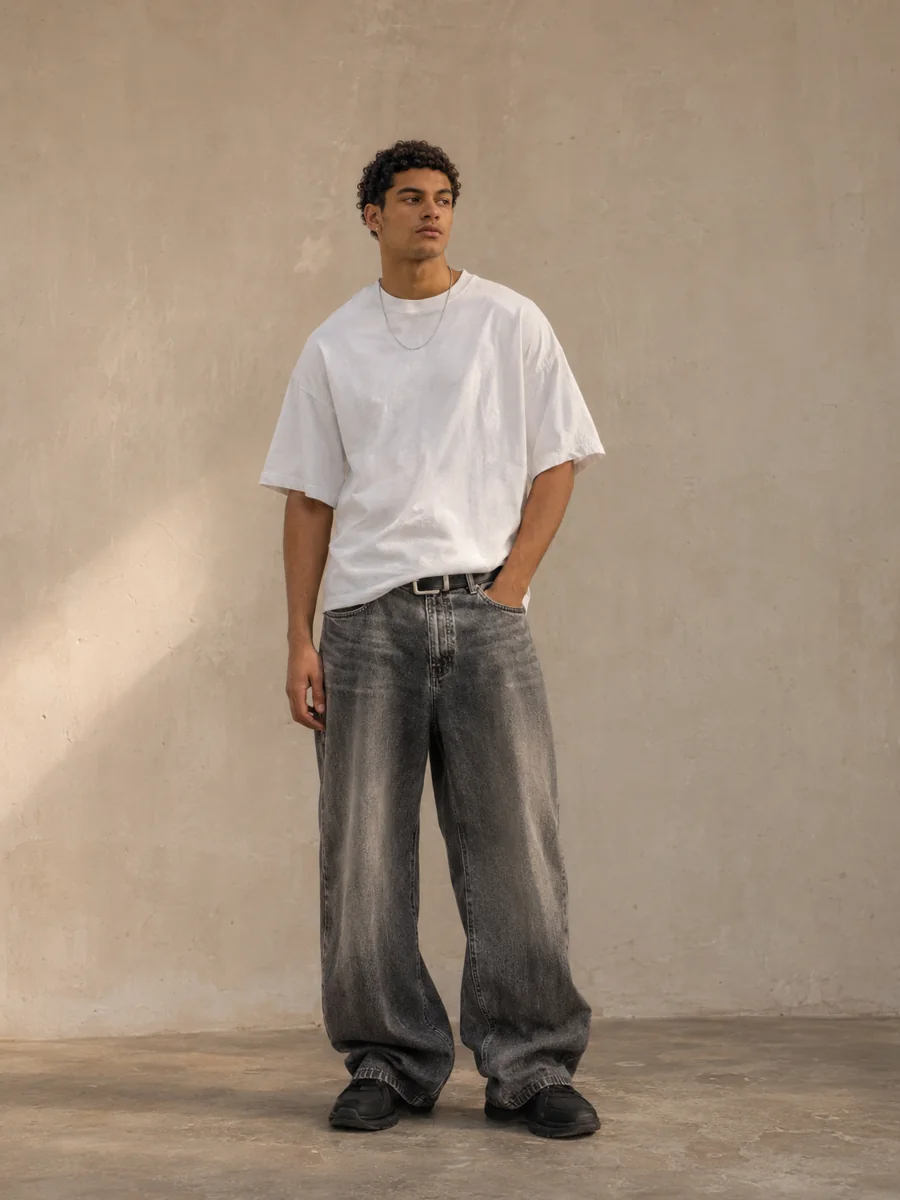
White tee, grey jeans, silver details
Check practical costs before choosing a piece
The purchase price is only one part of the decision. Consider whether you can wash the garment with your existing routine, whether the hem needs alteration and whether you would actually wear the fabric in your local conditions. A bargain that needs several changes may be less useful than it first appears.
Secondhand shopping can offer interesting textures and shapes, but check measurements, condition and the seller’s stated terms carefully. Size labels vary. Compare garment measurements with a similar item that fits you rather than assuming the same letter or waist number always means the same shape.
- Write down the missing piece before browsing.
- Check total charges and stated return conditions before any purchase.
- Compare measurements with a garment you already like.
- Keep room in your budget for a necessary alteration.
Buy a different role, not another version of the same top
Once you have a working tee-and-denim outfit, a rugby shirt can add more variety than another near-identical tee. The navy-and-cream rugby with broad jeans illustrates a change in collar and pattern while leaving the lower-half idea familiar. That does not make a rugby compulsory. The useful purchase is the one that changes combinations you already wear, whether it is a different neckline, a layer or a better-fitting trouser.
Write down the new outfits a potential item would create using clothes you own. If every imagined combination also requires new shoes, another jacket and an accessory, it is not a small addition to the current wardrobe. Try finding a version that works with at least one complete base first. When browsing second-hand or new options, check actual measurements, condition, care information and the seller’s terms. A low asking price is only useful if the garment fits its intended role and does not immediately create another set of purchases to make it wearable.
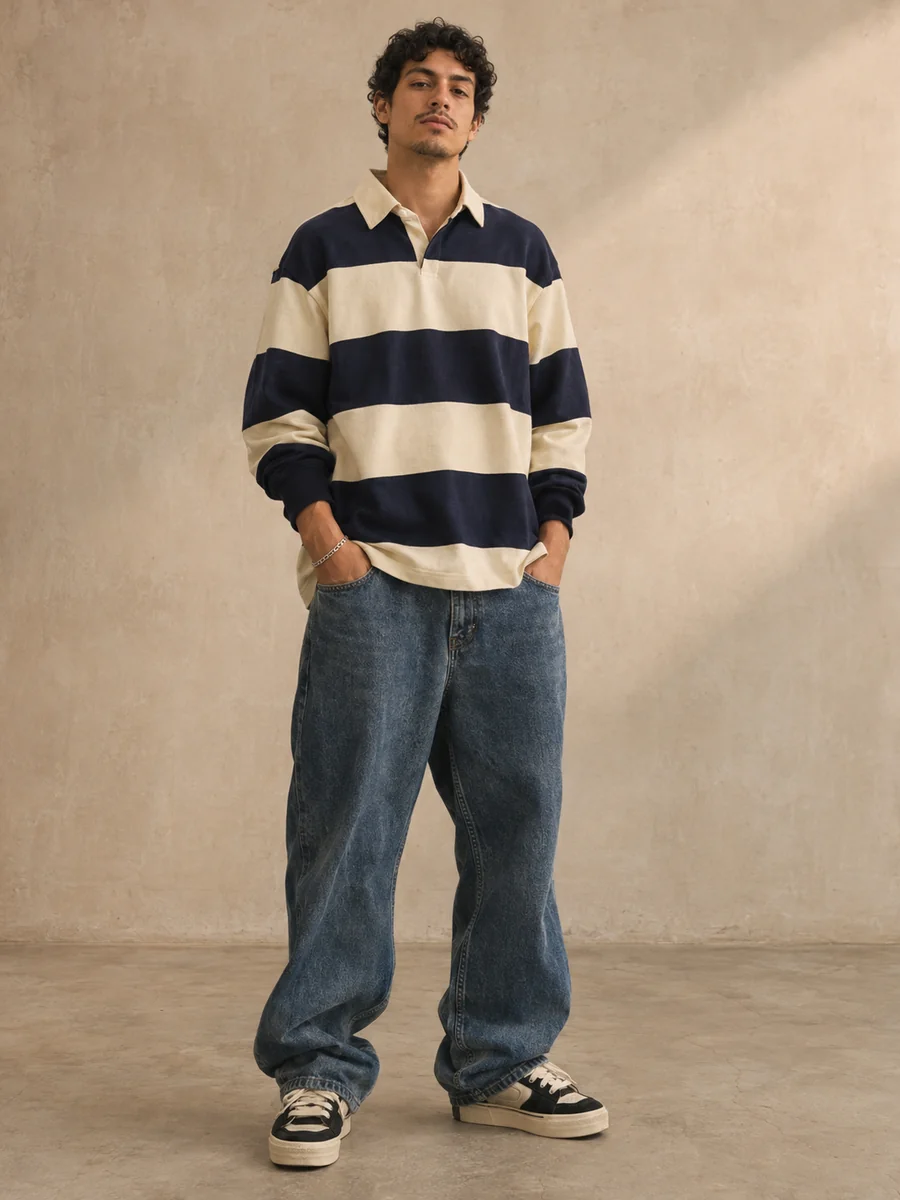
Navy and cream rugby with baggy denim
Build a small repeatable rotation
Choose two lower halves, a few compatible tops, one layer and shoes you already use. Make combinations that work for the days you actually have. A hoodie and jorts formula can suit a different season from a puffer and wide jeans; you do not need both complete versions immediately.
Save the looks you want to try, mark similar pieces you own and revisit the remaining list after a few wears. If the same missing garment keeps appearing across several combinations, it becomes a stronger candidate. Let repeated use guide the next purchase rather than trying to complete every look at once.
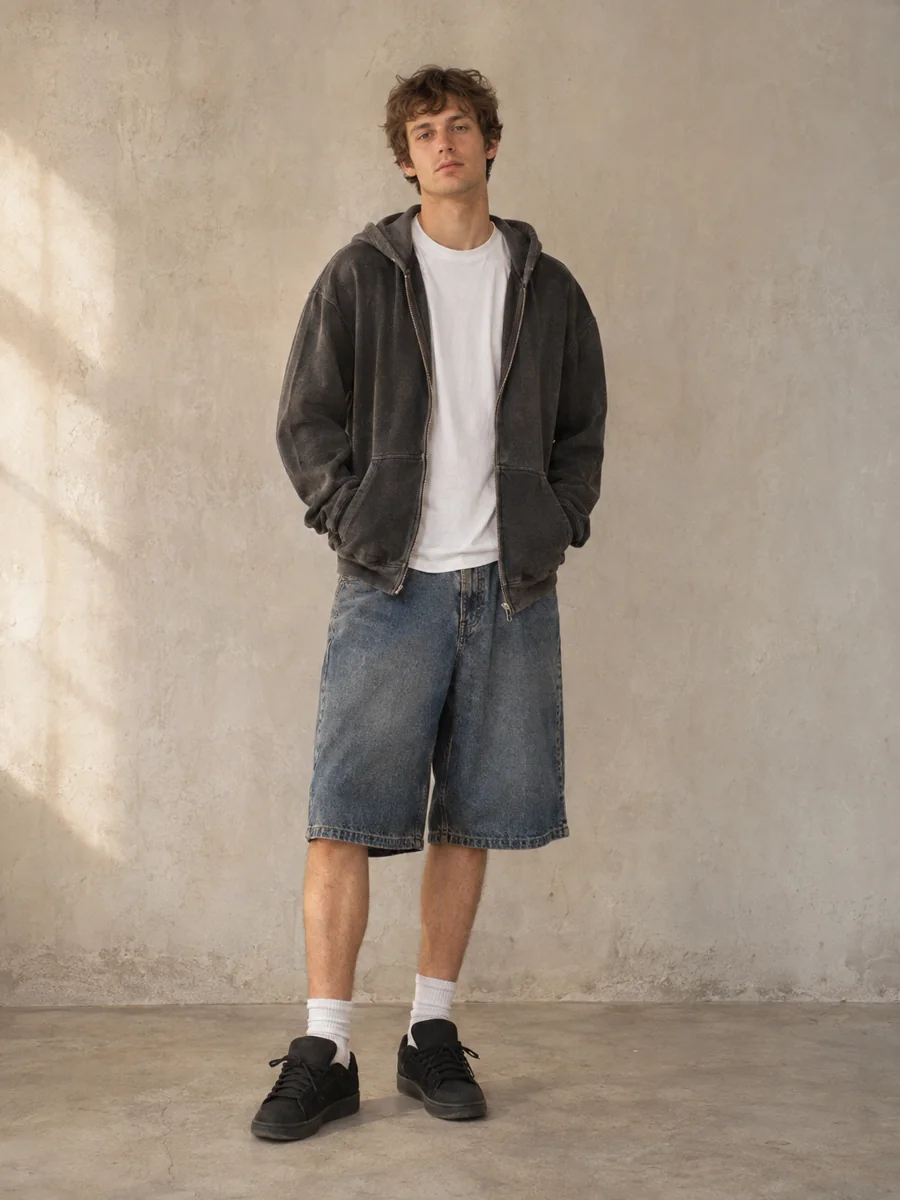
Zip hoodie, long denim shorts
Explore more outfit ideas or compare the style files.