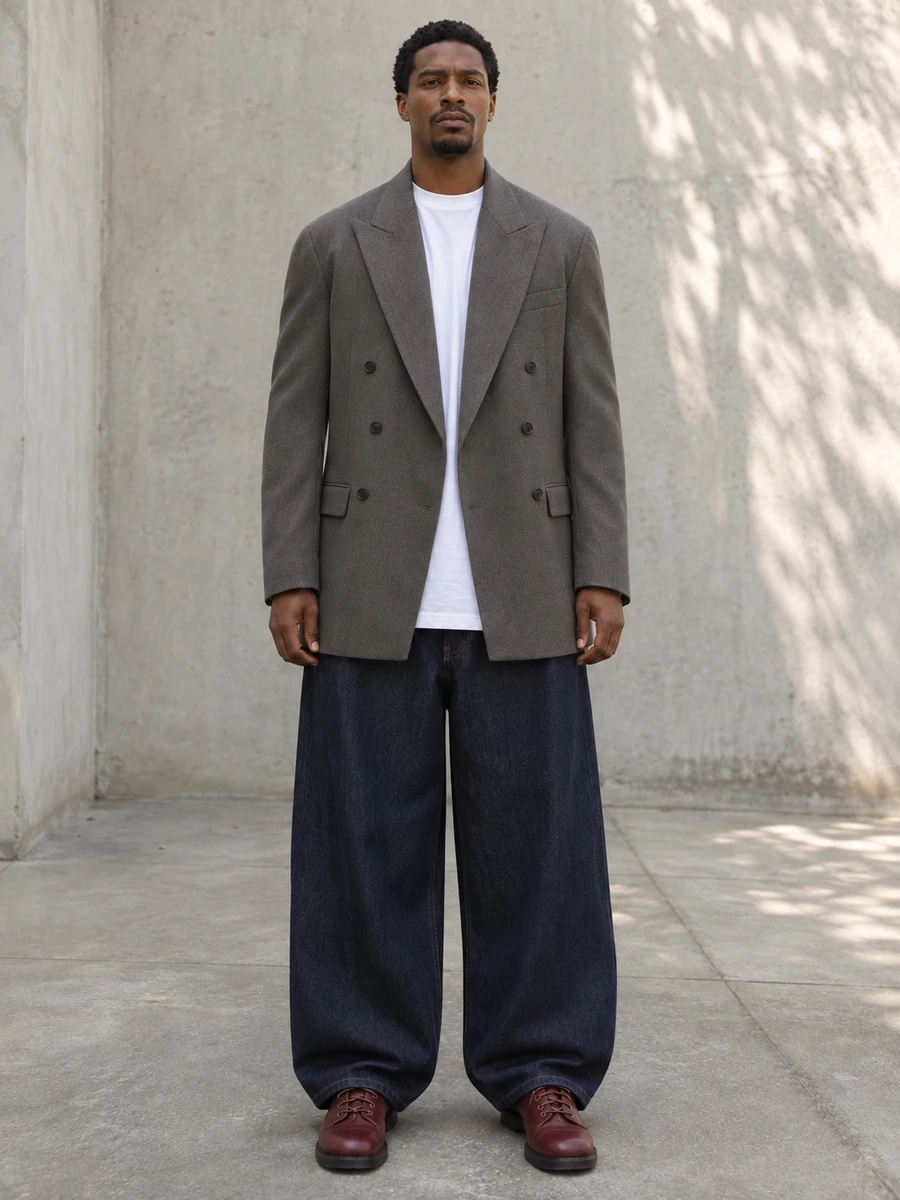
Begin with a reference, rather than an outfit stereotype
Choose a relationship you enjoy: a sports-inspired top with a full leg, a compact jacket over a quieter center, or a longer upper block with a deliberately exposed shoe. Start there before choosing accessories. The cultural reference is broader than any one of these arrangements. The Museum at FIT describes hip-hop style as inventive, varied and influential across sportswear, luxury and everyday fashion; it also challenges the tendency to reduce that history to a few oversized pieces.
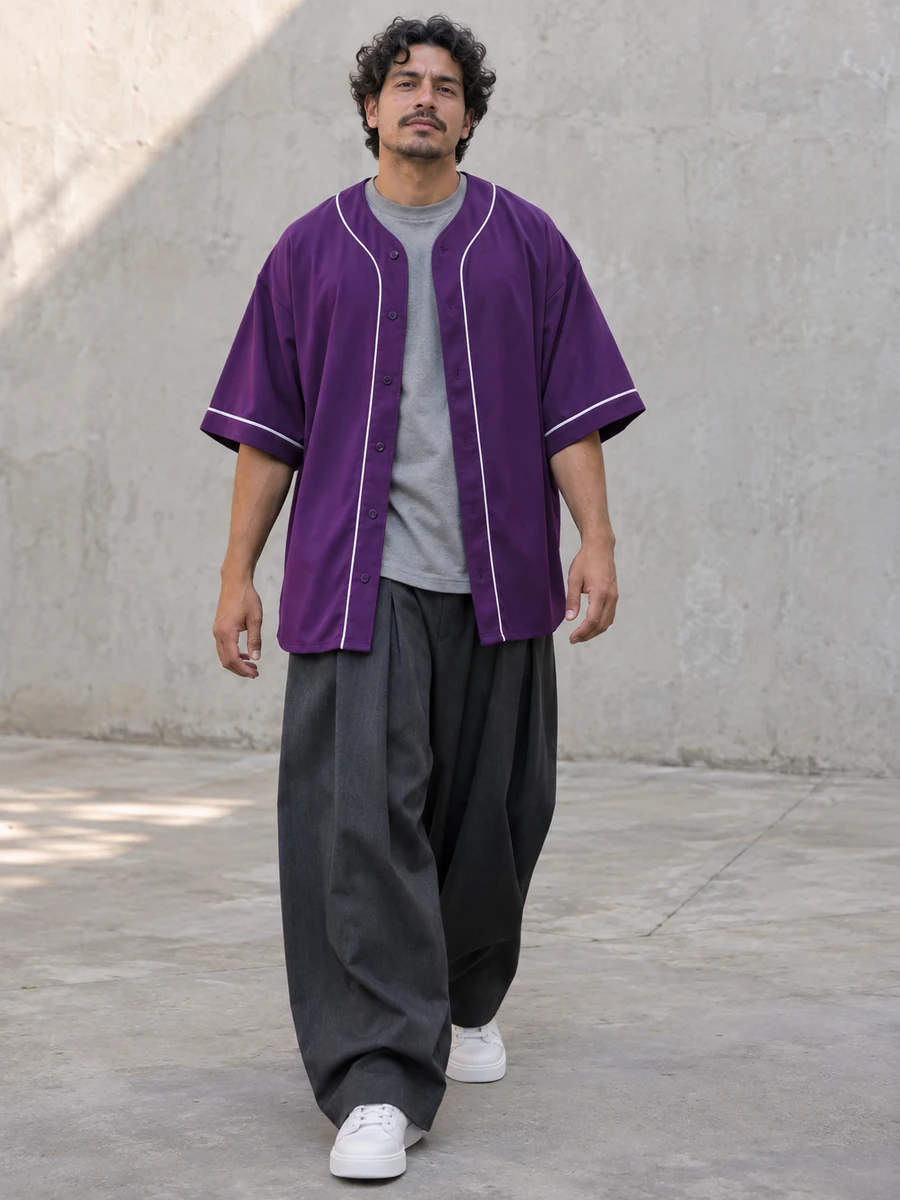
The looks linked here are contemporary generic interpretations. They do not reproduce an artist’s outfit or document a particular neighborhood, date or brand. Use their visible proportions as something to compare. You can retain the central idea while changing the colors, the amount of volume or the garment you already own.
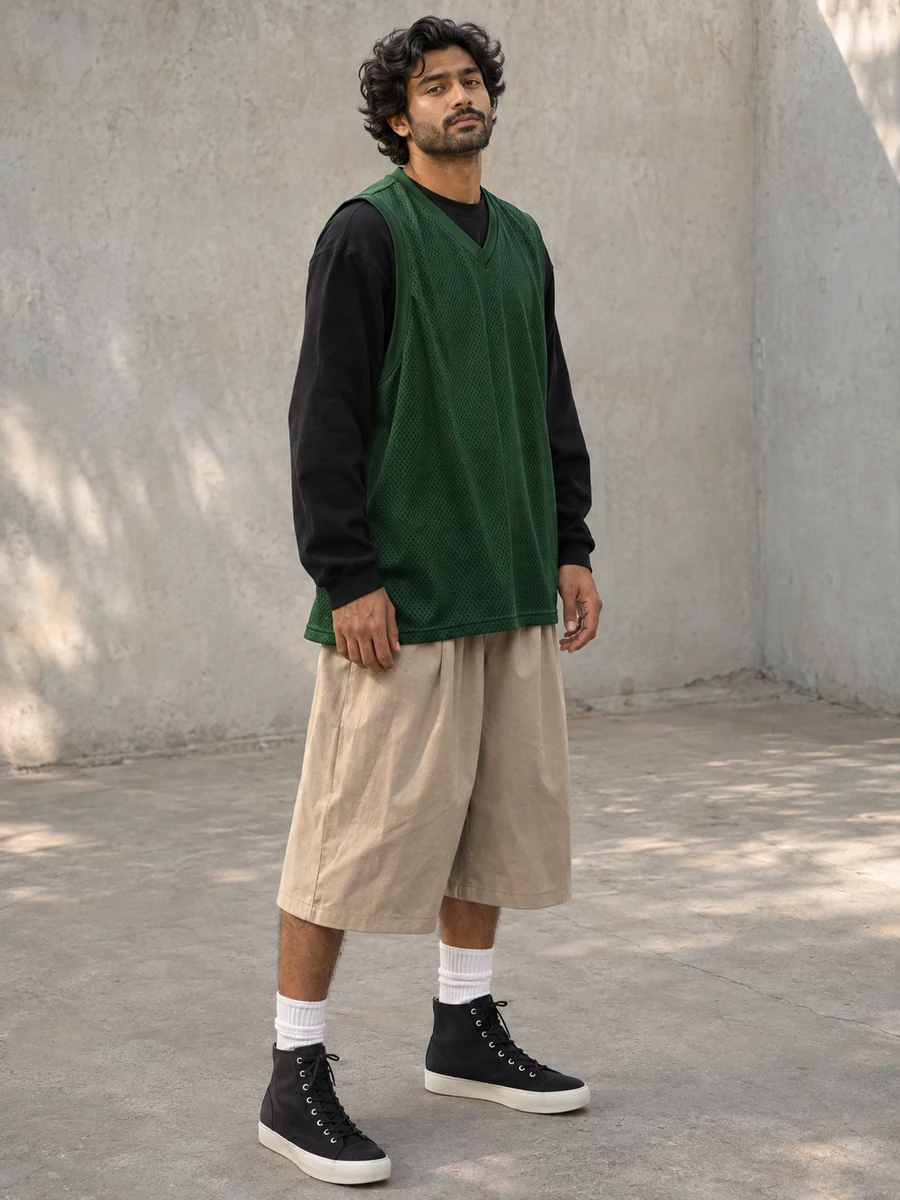
Decide whether the top is long, compact or framed
A longer top creates a broad continuous block through the torso. Pair it with a familiar trouser first so you can see what the added length does. A compact upper shape exposes more of the waistband and upper leg, which can make a fuller trouser easier to read. Neither approach needs a tight top. Body length, sleeve width and shoulder shape work together, so changing only one measurement may not create the outline you intended.
An open jacket introduces a third option: two outer edges around a visible inner top. Compare it closed and open, then remove it. The base should remain a combination you want to wear. If the jacket and inner top end at nearly the same point, decide whether that single thicker boundary is deliberate or whether a clearer difference would help.
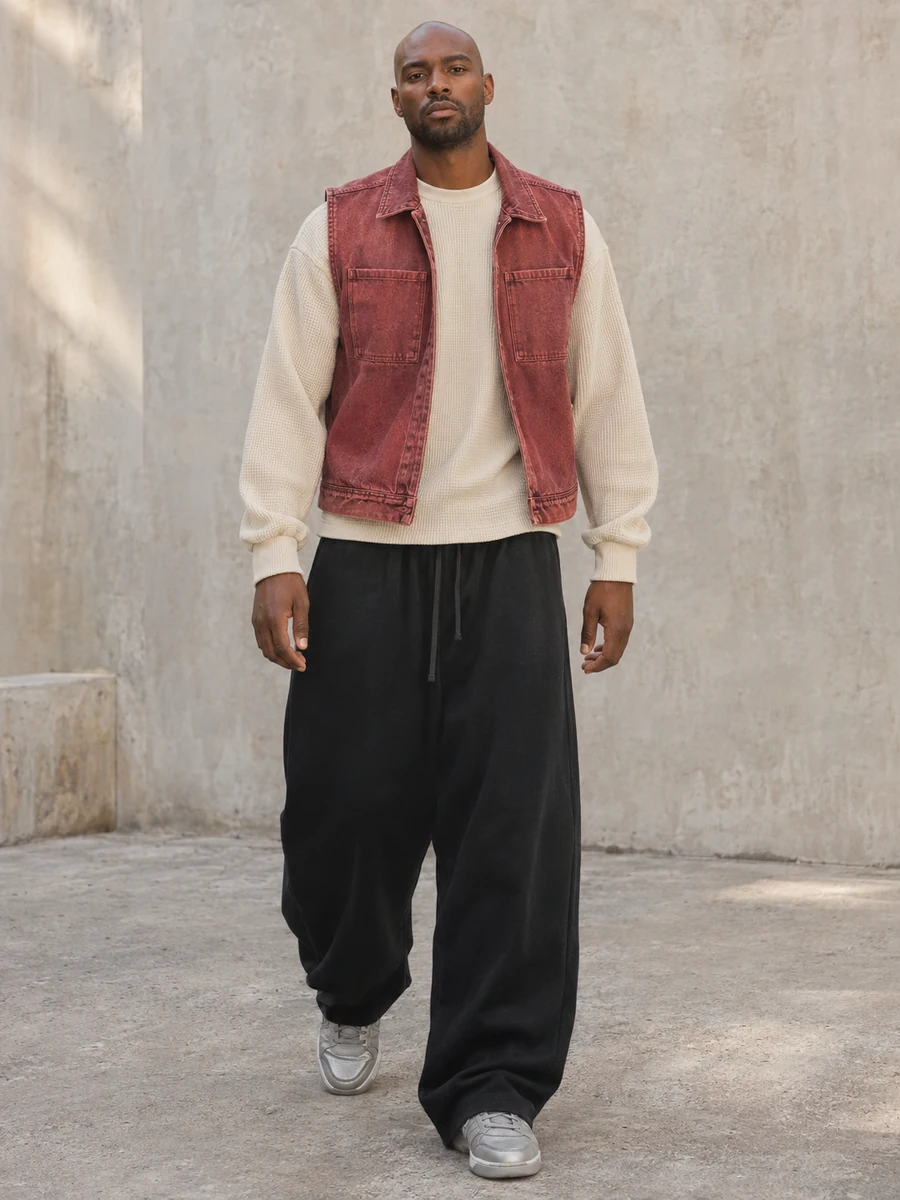
Give a full trouser a stable starting point
Put the waistband where you actually wear it, then inspect the room through the seat, thigh and lower leg. A genuinely roomy cut is a different choice from a pair that only appears loose because the waist is too large. Keep the fit question separate from the style label. You should be able to sit and move in the real garment without repeatedly holding its position for the silhouette to appear.
Now inspect the trouser against the shoe. A broad opening can leave a toe or sole edge visible, or cover more of the upper for a continuous lower block. A straighter leg can give the same sneaker more presence. Compare the back above the heel as well as the front fold. A small change in length can alter the relationship without changing the identity of the outfit.
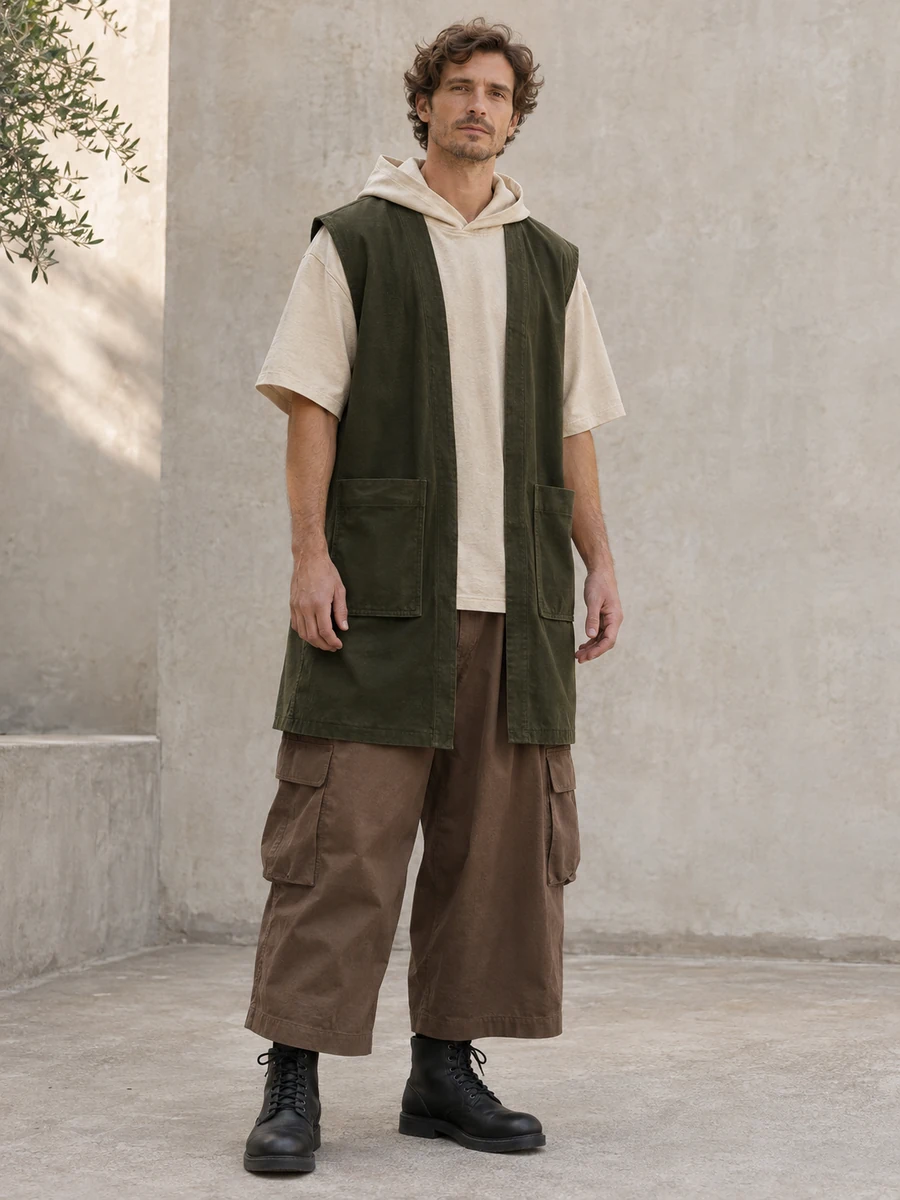
Use sportswear references without requiring a logo
A contrast sleeve, ribbed edge, jersey-like neckline or coordinated casual set can establish a sportswear reference through shape. A recognizable mark is one possible detail in actual clothing, but it is not necessary for this exercise. The LookSprout concepts use generic garments. If you add your own real sports top, preserve that item’s identity and any details you want to keep while adapting the other roles.
Choose whether a color block belongs mainly to the top, the outer layer or the lower half. Repeating a small color in the shoe can connect the two areas, but exact matching is optional. When several large blocks compete, keep the arrangement still and change only one. That makes the effect easier to understand than replacing the top, shoes and trousers at the same time.
Build three different cores around one item
Keep your chosen jacket or top fixed. For the first direction, compare it with a straight lower line. For the second, use more room through the trouser and a different hem effect. For the third, change the layer order or use shorts if your real setting and wardrobe support them. The resulting outfits should differ in their main shapes. Swapping a watch or cap does not create another core composition.
Use the linked examples to identify these differences, rather than assuming that similar-looking garments are one shared physical item. In the builder, an owned item stays separate from a public reference. When supporting pieces are missing, retain the gap instead of counting an imagined trouser as something already in the wardrobe. Save the complete result you can inspect.
Keep hip-hop context and streetwear navigation connected
Streetwear is a useful neighboring hub when you want a wider set of casual contemporary combinations. The hip-hop-inspired guide gives a narrower context to the references being explored, while recognizing that many garments and outfits cross those boundaries. You do not need an exclusive category before wearing a mixed look. Look at what leads: top length, sportswear detail, tailoring contrast or an outer silhouette.
Once you have chosen a direction, record the useful decision in plain language: shorter outer frame over a longer center, full leg with a visible shoe edge, or coordinated colors with one darker endpoint. That note can guide the next composition without turning a culture into a shopping checklist. Use it with the actual garments, then plan the version that remains usable through your day.
Sources and useful references
Explore more outfit ideas or compare the style files.