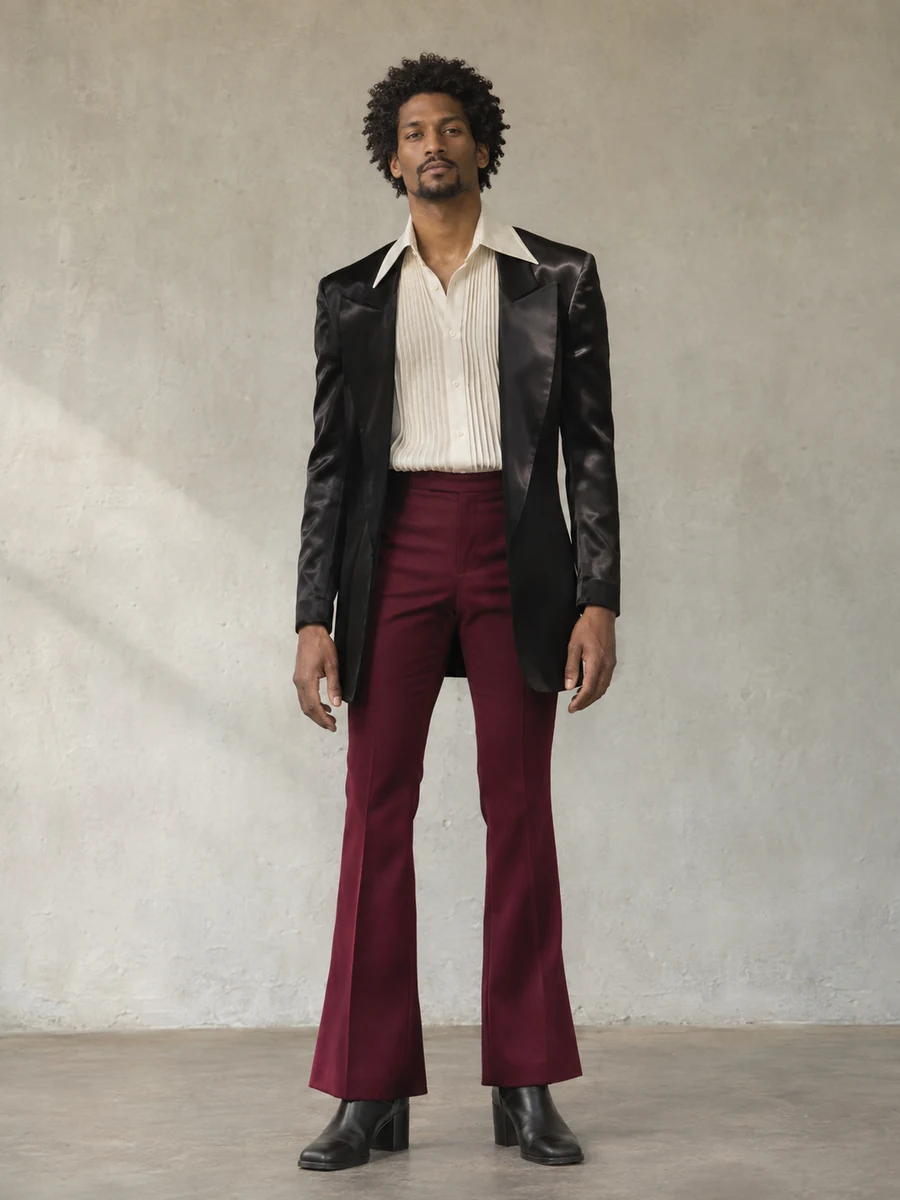
Choose one dramatic decision to make first
Start with the feature you actually want to wear: a pronounced collar, a fuller lower line, a compact outer shape, a glossy-looking surface or a shoe that gives the outfit a strong endpoint. Build around that decision before adding more decoration. A single expressive feature can give an ordinary base a clear direction. Combining several is another option, but you will understand the result more easily after seeing each change on its own.
The V&A places clothing within the creative performance of artists such as Freddie Mercury and David Bowie. That is context for the style’s expressive possibilities. These LookSprout concepts are contemporary generic outfits, not copies of archive costumes or instructions to present yourself as a particular performer.
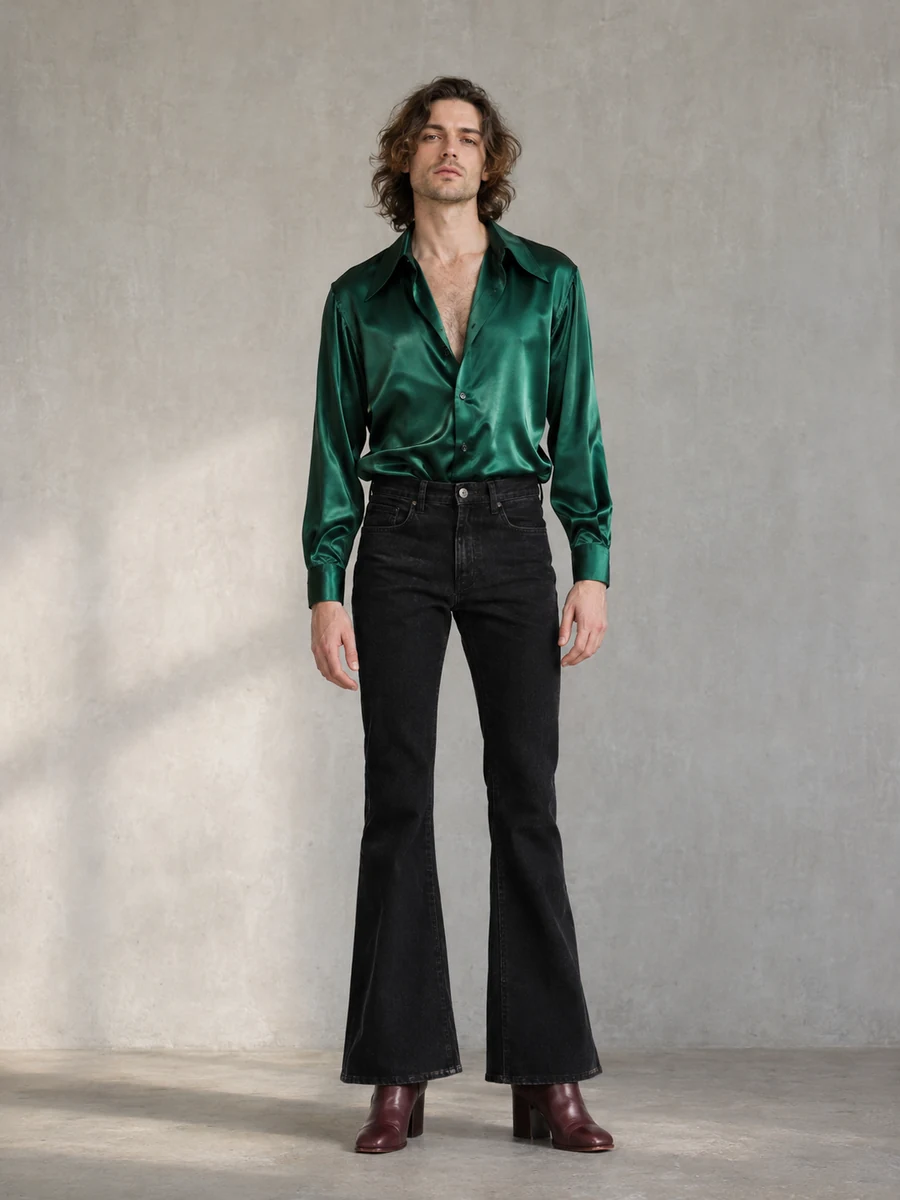
Read the lower shape before choosing its label
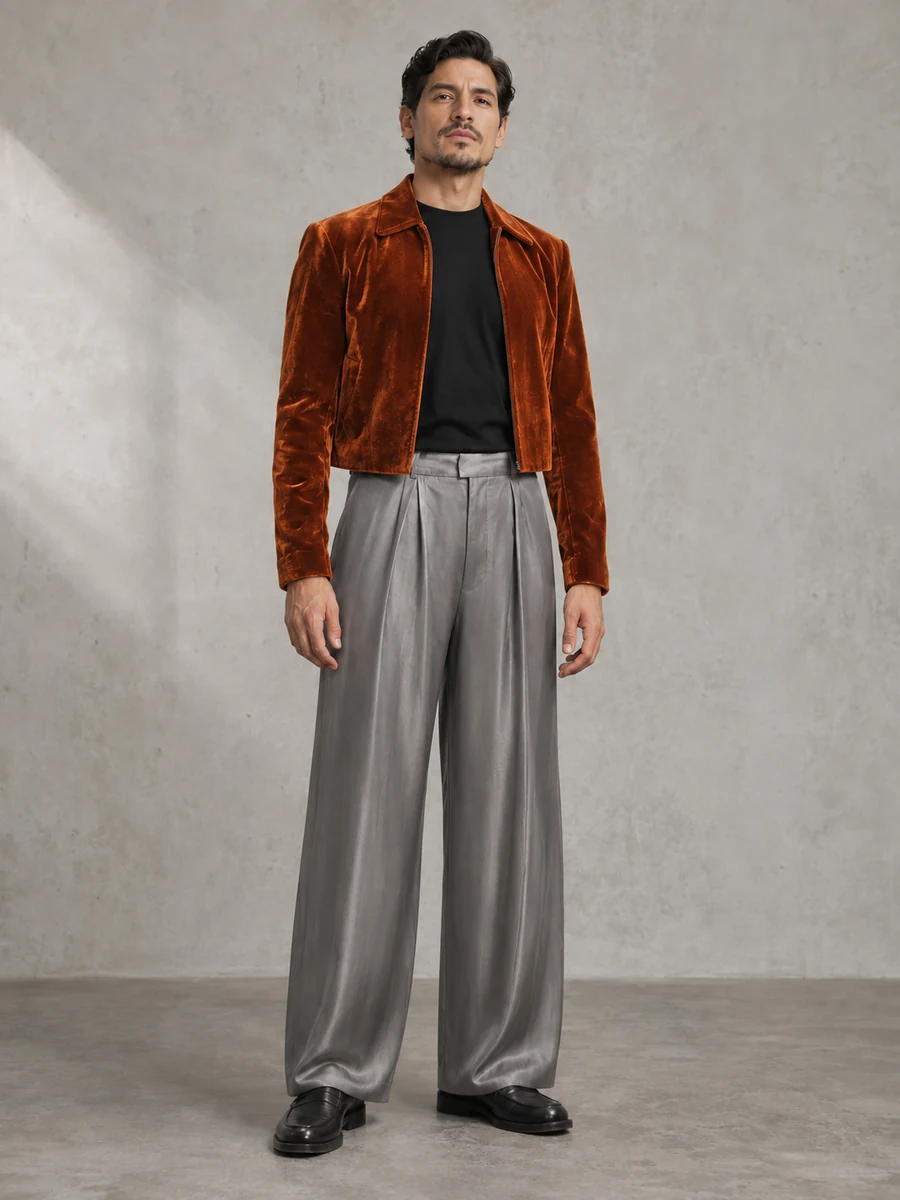
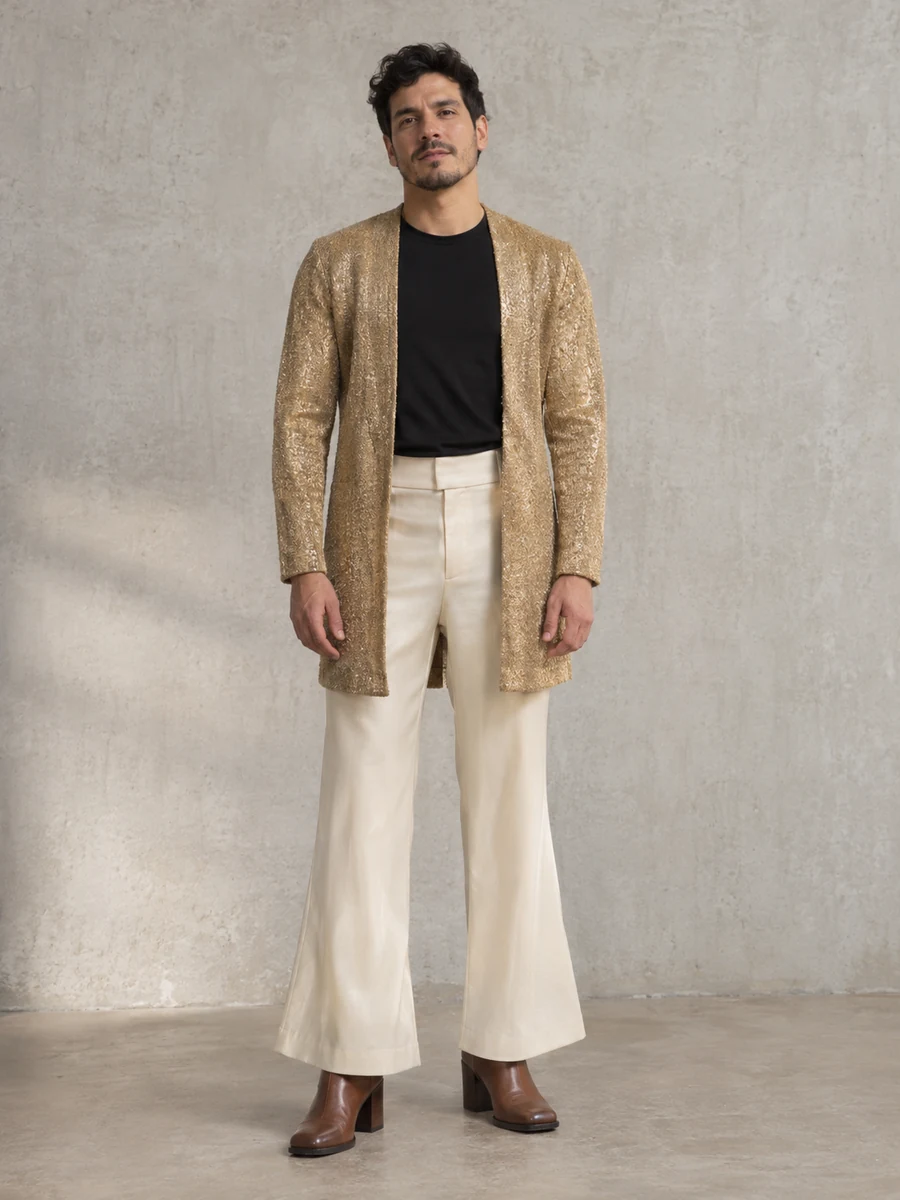
A wide trouser has substantial room, but it is not automatically flared. Look from the knee toward the hem: where does the outline widen, narrow or stay straight? A more pronounced lower opening changes the amount of fabric around the shoe. A full leg from the thigh creates a different shape even when the opening is equally broad. Those differences are useful when choosing what you want the outfit to emphasize.
Compare the linked examples by the lower line rather than assuming every one demonstrates the same cut. Keep your actual waistband position when trying the idea. A photograph taken while you lift the trousers can change the apparent relationship without showing a repeatable fit. If you need an alteration, bring the intended footwear into the comparison before deciding the finished length.
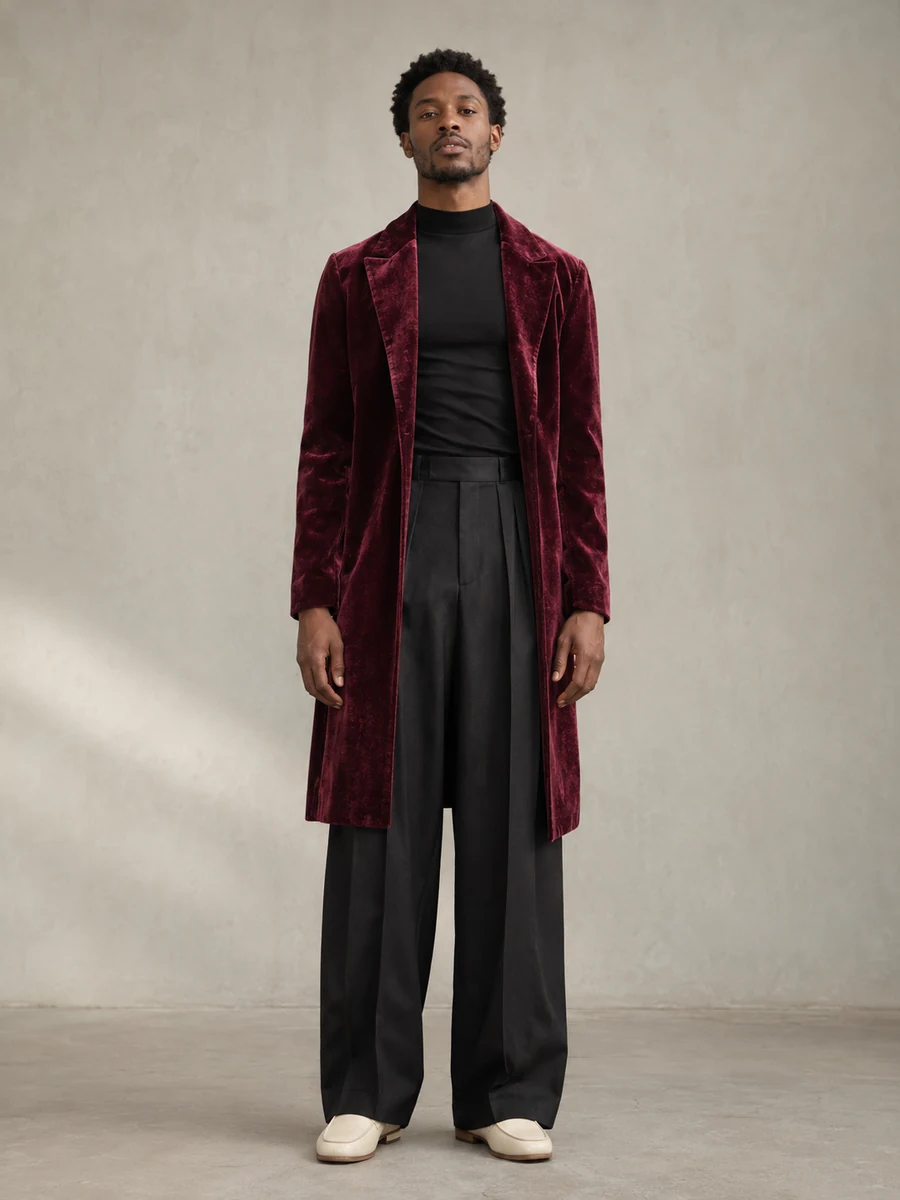
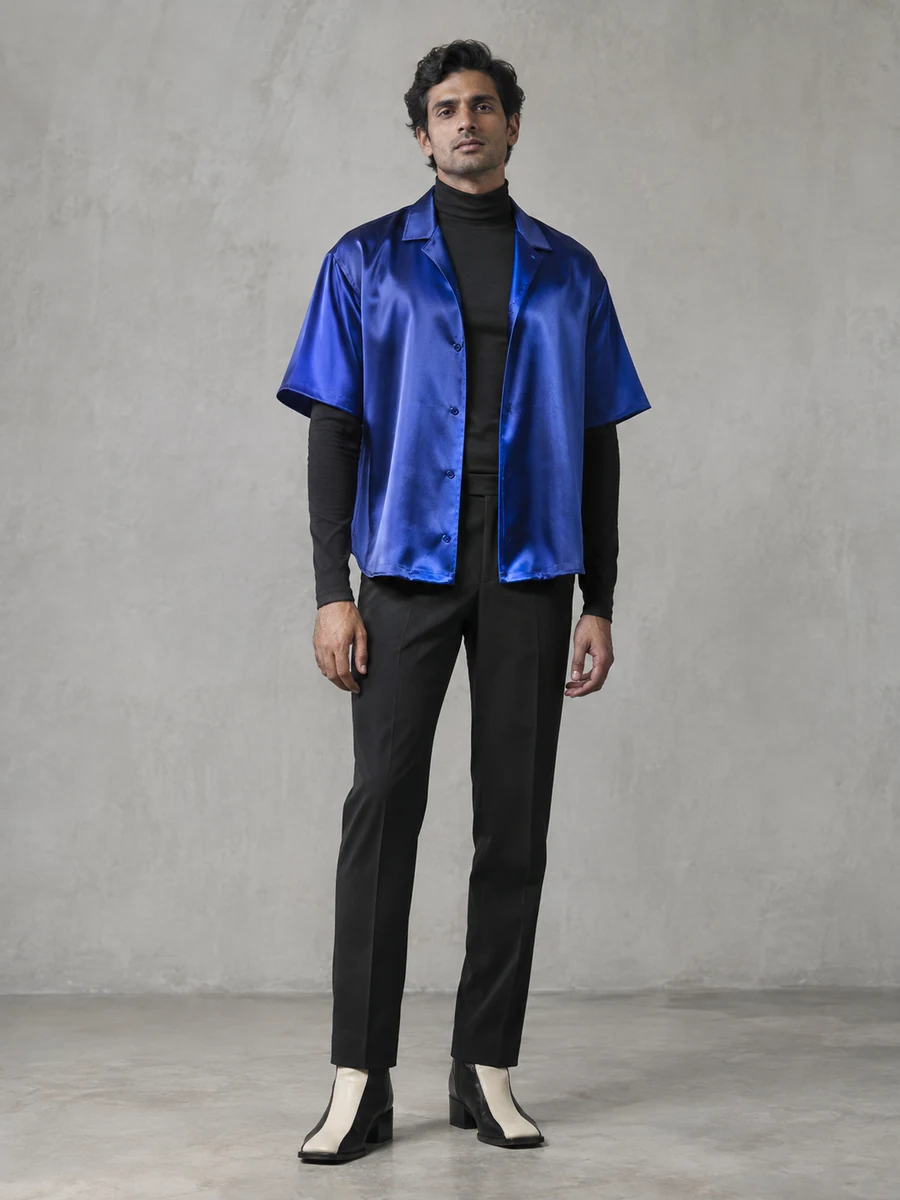
Give a dramatic leg a deliberate upper boundary
A compact jacket can create a clear change of scale above a fuller lower half. A longer top can instead join the leg into one continuous outline. Try the same trousers and shoes with both before choosing a jacket solely because it is short. The shoulder, sleeve and front opening contribute to the upper shape as much as the lower hem.
An open outer layer can frame a shirt collar or a simpler center. Check that the collar sits naturally and that the visible inner length is the amount you intended. Several competing hems are a possible expressive choice, but they can obscure the more important boundary between torso and leg. Remove one layer briefly to see whether the main line becomes clearer.
Use shine as an area, not a fiber claim
A glossy-looking shirt can form one concentrated surface above matte-looking trousers. A reflective-looking jacket can instead carry the effect around a quiet center. Think about the size and position of that area when judging the whole outfit. A small shiny trim behaves differently from an entire bright upper block, even if the colors match.
A concept photograph shows an appearance. It cannot verify satin, silk, leather, metallic fiber or reflective performance. When adapting the idea with real clothing, use the actual product or care information. You can still compare the visual effect without inventing a material: smooth dark shirt, light-catching outer panel or matte lower half are useful descriptions when the textile is unknown.
Choose the shoe and hem as one relationship
A defined boot can continue a dramatic trouser line, while a clearer low endpoint can make the opening easier to see. Keep the shoe still and compare a cleaner hem with a little more fabric at the front. Look behind the heel and check whether the fabric is settling or catching. More length is not automatically more dramatic if it simply hides the shape you wanted to show.
Use the actual footwear for the final choice. A shoe that looks substantial in an illustration has no verified height, internal fit or comfort record. The qualitative pairing tool can help name the contrast you prefer, then lead to complete outfits. It is a comparison aid rather than a calibrated prediction of your body or an alteration measurement.
Compare glam with neighboring rock references
A punk-inspired outfit may give more attention to disrupted layers, hardware or abrasion. Rockabilly may center a more specific mid-century shirt, waist or cuff reference. Glam-rock-inspired combinations here give line, surface and theatrical emphasis more room. The histories overlap, so the comparison explains our editorial selection rather than declaring a permanent boundary between music or clothing communities.
You can mix those references deliberately. If a dark jacket and boots already feel familiar, changing the trouser line or the collar may be enough for a stronger result. If you prefer less expression, keep the dramatic piece and simplify the surrounding color or layering. Makeup, jewelry and a particular gender presentation are individual choices, not missing requirements in a clothing formula.
Save the version that works outside the pose
Try the complete arrangement standing naturally, seated and walking. Check that the collar, outer edge and trouser opening keep the relationships you wanted without constant adjustment. A staged photo may help identify the idea, but your own trial tells you whether that version is useful for your setting. Keep that observation with the real garment records.
Lock the piece you want to retain in the builder and adapt the other roles. A public concept remains inspiration until you supply your own item or a verified exact reference. Save a complete composition you can reopen, then add it to a plan if appropriate. Record the feature that leads, such as the lower line or the surface contrast, so the next variation has a clear purpose.
Sources and useful references
Explore more outfit ideas or compare the style files.